
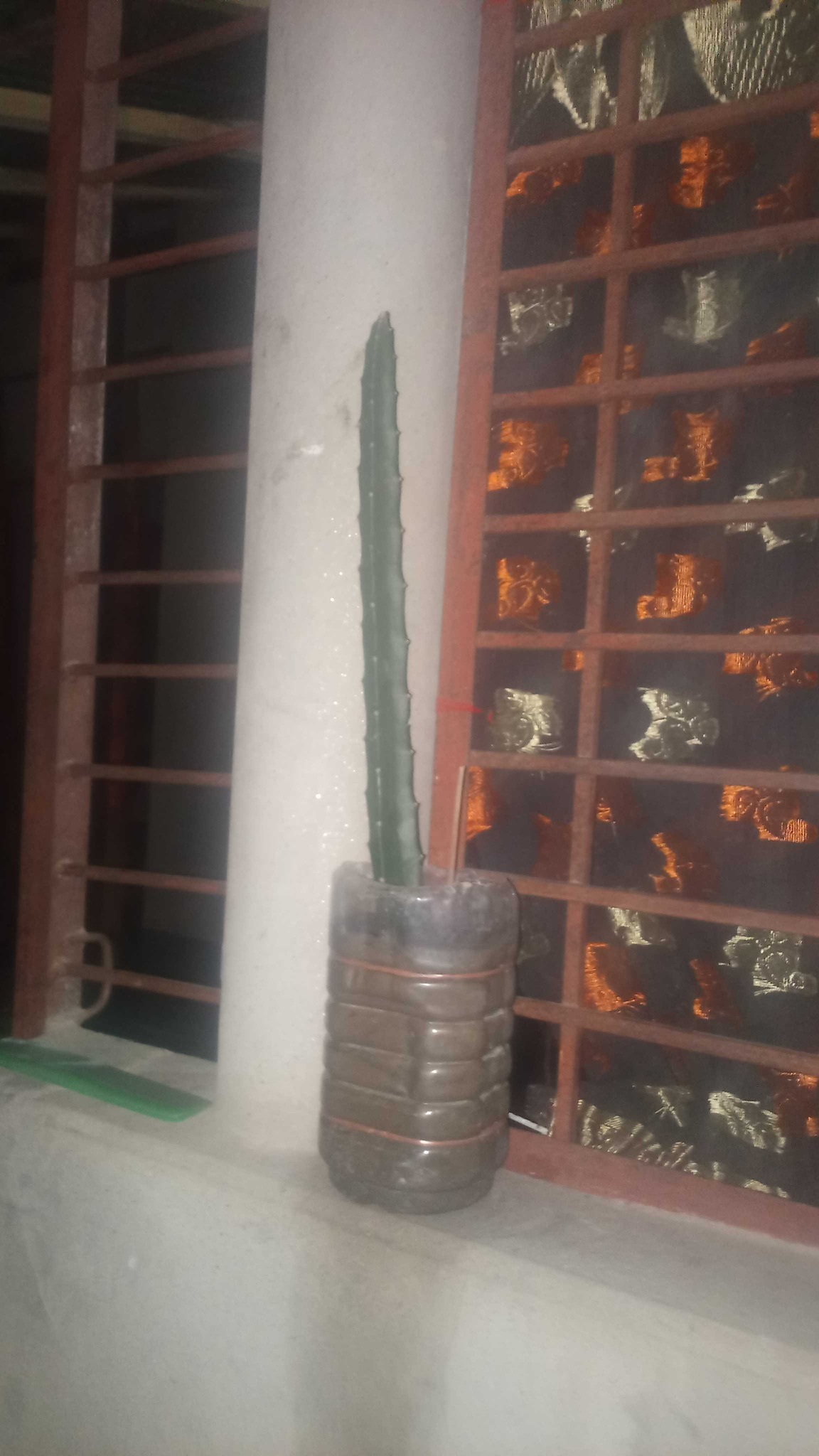
Dragon Fruit Cuttings / Night-Blooming Cereus
Selenicereus undatus
A climbing, columnar succulent cactus with distinct three-angled (triangular) green stems featuring wavy or scalloped margins and small spine-bearing areoles along the ridges.
- Light
- Full sun to bright, direct light (at least 6 hours of direct sunlight per day for robust growth).
- Water
- Drought-tolerant. Allow the substrate to dry thoroughly between waterings. Reduce watering during the winter months.
- Growth
- Perennial climbing or sprawling epiphyllous cactus. Can grow over 10 to 20 feet tall when provided with a proper trellis or support structure.
Care instructions
Provide abundant bright sunlight to prevent thinning. Water thoroughly only when the growing medium dries out completely, and ensure fast-draining soil. Apply a balanced low-nitrogen cactus fertilizer during the active growing season.
Growing details
Sunlight
Full sun to bright, direct light (at least 6 hours of direct sunlight per day for robust growth).
Watering
Drought-tolerant. Allow the substrate to dry thoroughly between waterings. Reduce watering during the winter months.
Soil
Extremely well-draining cactus or succulent mix, ideally rich in organic matter with gritty perlite or coarse sand. Soil pH around 6.0 to 7.0.
Hardiness zone
USDA Zones 10a to 11b. Sensitive to frost and freezing temperatures.
Growth habit
Perennial climbing or sprawling epiphyllous cactus. Can grow over 10 to 20 feet tall when provided with a proper trellis or support structure.
Bloom season
Summer to early autumn. Produces very large, white, night-blooming flowers that last for a single night.
Propagation
Propagated easily via stem cuttings allowed to callus over for several days before planting in dry, sandy soil.
Common pests & issues
Stem rot caused by overwatering or poorly draining soil. Susceptible to scale insects, mealybugs, and root rot.
Similar species
Selenicereus costaricensis, Acanthocereus tetragonus, and Cereus hildmannianus. Selenicereus species are distinguished by their climbing habit and prominently 3-ribbed, jointed stems.