
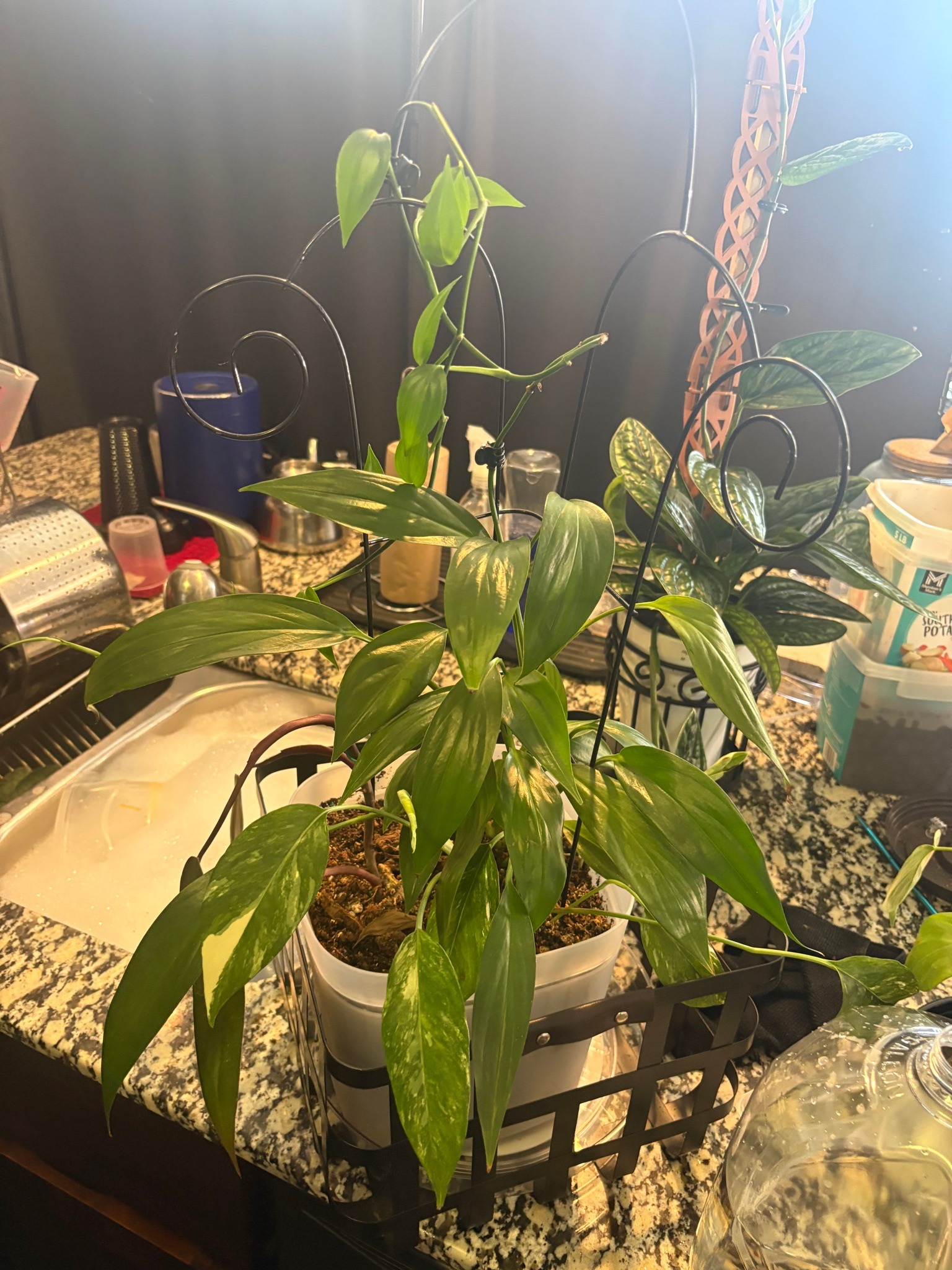
Dragon Tail Plant
Epipremnum pinnatum
A climbing tropical epiphyte featuring glossy, elongated green leaves that develop distinctive pinnate splits as the plant matures and climbs.
- Light
- Bright, indirect light for 6 to 8 hours per day; protect from direct, harsh sunlight to prevent leaf scorch.
- Water
- Water thoroughly when the top 2 to 3 inches of soil become dry. Reduce watering frequency during the winter months.
- Growth
- Vining or climbing evergreen perennial with a moderate to fast growth rate, capable of reaching several feet indoors and much taller outdoors.
Care instructions
Provide bright, indirect sunlight, allow the top few inches of soil to dry out between waterings, and use a well-draining potting mix. Feed with a balanced liquid fertilizer during the growing season.
Growing details
Sunlight
Bright, indirect light for 6 to 8 hours per day; protect from direct, harsh sunlight to prevent leaf scorch.
Watering
Water thoroughly when the top 2 to 3 inches of soil become dry. Reduce watering frequency during the winter months.
Soil
Chunky, well-draining soil mix rich in organic matter, with a slightly acidic to neutral pH range of 6.0 to 7.0.
Hardiness zone
USDA Hardiness Zones 10 through 12, typically grown indoors in cooler climates.
Growth habit
Vining or climbing evergreen perennial with a moderate to fast growth rate, capable of reaching several feet indoors and much taller outdoors.
Bloom season
Rarely blooms when kept indoors; produces specialized inflorescences consisting of a spadix and spathe in its native tropical habitat.
Propagation
Propagated easily through stem cuttings placed in water or directly in moist potting mix, ensuring each cutting includes at least one active node.
Common pests & issues
Susceptible to mealybugs, spider mites, and scale insects. Overwatering can lead to root rot, which is prevented by ensuring adequate container drainage.
Similar species
Often confused with Monstera species or Philodendron species, but distinguished by its distinct leaf fenestrations that begin closer to the midrib and its specific climbing stem characteristics.