
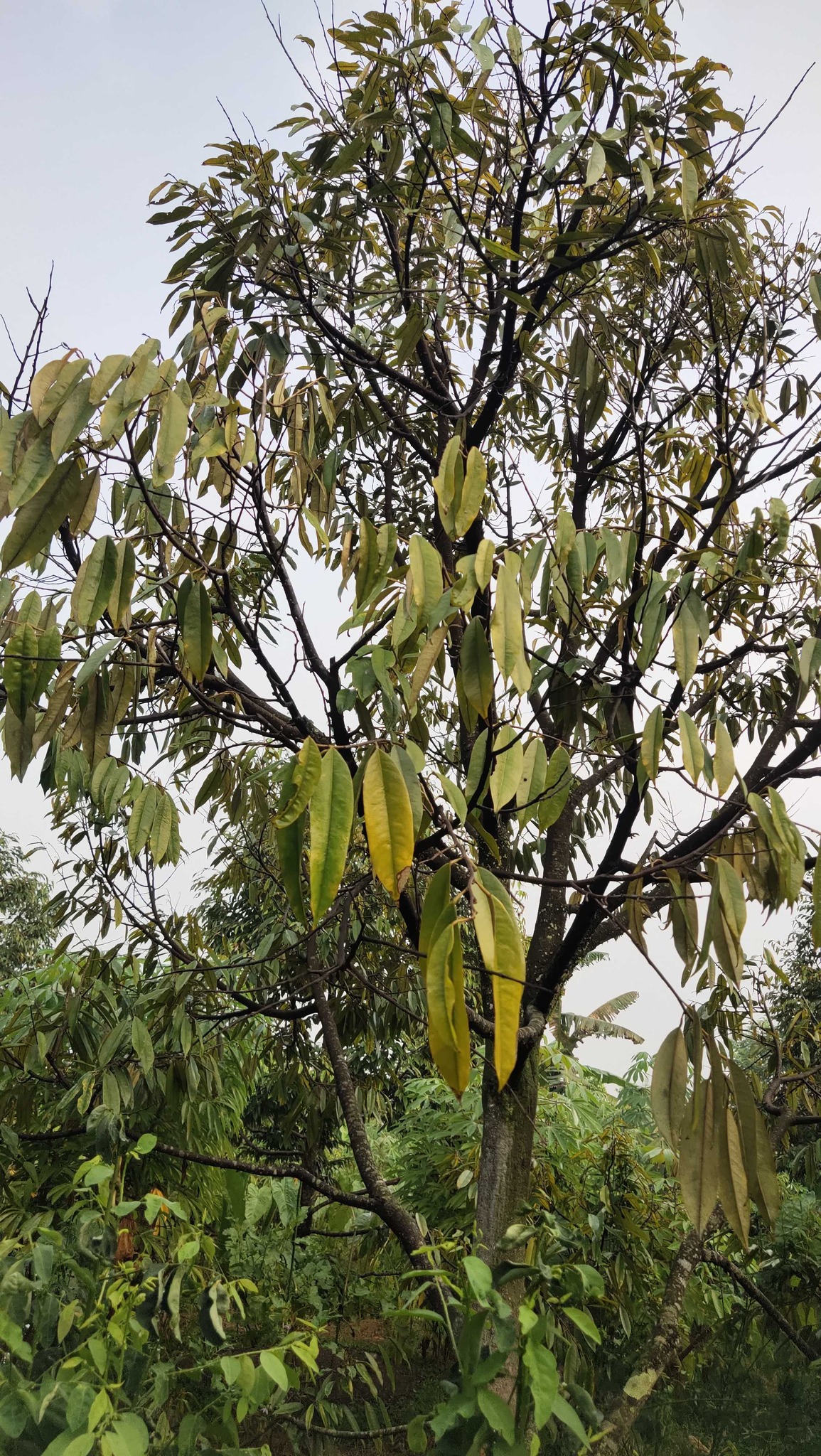
Durian
Durio zibethinus
A large tropical evergreen tree known for its massive, spiky, and pungent-smelling fruit. The leaves are elliptic to oblong, glossy green on top with a silvery or bronze-colored underside due to tiny scales.
- Light
- Full sun (6-8+ hours/day). Young saplings benefit from 30-50% shade to prevent leaf scorch until established.
- Water
- High. Requires 1,500 to 3,000 mm of rain annually. It is not drought-tolerant; however, it cannot stand waterlogged roots. Water consistently during dry spells.
- Growth
- Large evergreen tree reaching 25-50 meters in height. It has a straight trunk and a dense, spreading canopy.
Care instructions
Durian trees require a strictly tropical climate with high humidity, heavy rainfall, and no dry season. They need deep, well-draining soil and plenty of space to grow. Young trees require some shade, but mature trees need full sun. Regular organic fertilization helps fruit production.
Growing details
Sunlight
Full sun (6-8+ hours/day). Young saplings benefit from 30-50% shade to prevent leaf scorch until established.
Watering
High. Requires 1,500 to 3,000 mm of rain annually. It is not drought-tolerant; however, it cannot stand waterlogged roots. Water consistently during dry spells.
Soil
Rich, deep, loamy soil with excellent drainage; slightly acidic pH (5.5 to 6.5).
Hardiness zone
USDA Zones 10-12 (strictly tropical; sensitive to temperatures below 10°C/50°F).
Growth habit
Large evergreen tree reaching 25-50 meters in height. It has a straight trunk and a dense, spreading canopy.
Bloom season
Typically twice a year after a short dry spell; produces clusters of large, creamy-white or yellowish flowers on the main branches (cauliflorous). They are pollinated by bats at night.
Propagation
Commonly propagated via seeds (which must be planted immediately), but commercial varieties are usually wedge-grafted or budded onto hardy rootstock to ensure fruit quality.
Common pests & issues
Phytophthora palmivora (root rot) is the most serious disease. Pests include fruit borers, leaf scales, and psyllids.
Similar species
Other Durio species (like Durio kutejensis). It can be distinguished from other tropical trees by the golden-bronze, scaly underside of the leaves.