
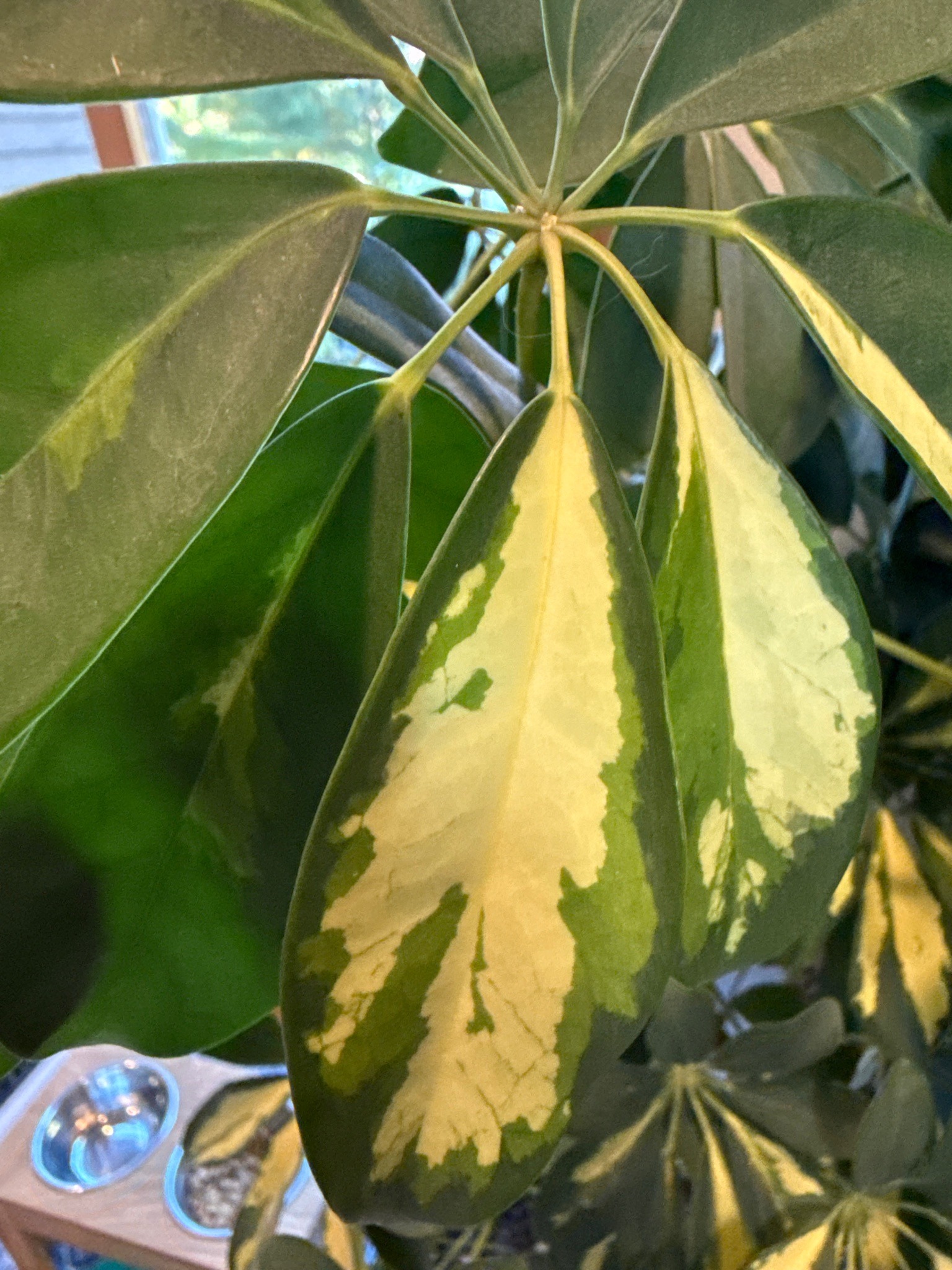
Dwarf Umbrella Tree
Heptapleurum arboricola
An evergreen shrub featuring glossy, palmately compound leaves with oval to oblong leaflets radiating from a central point, often displaying variegated green and cream patterns.
- Light
- Bright, indirect light for 6 to 8 hours per day; can tolerate partial shade but variegation may fade in low light.
- Water
- Water thoroughly when the top soil dries out completely. Reduce watering frequency during the winter months. Avoid letting the pot sit in standing water to prevent root rot.
- Growth
- Perennial evergreen shrub or small tree growing up to 10 to 15 feet tall outdoors, but typically maintained at 3 to 6 feet indoors as a potted plant with an upright, bushy growth rate.
Care instructions
Provide bright, indirect sunlight, water when the top two inches of soil are dry, use well-draining potting mix, and feed with a balanced liquid fertilizer monthly during the growing season.
Growing details
Sunlight
Bright, indirect light for 6 to 8 hours per day; can tolerate partial shade but variegation may fade in low light.
Watering
Water thoroughly when the top soil dries out completely. Reduce watering frequency during the winter months. Avoid letting the pot sit in standing water to prevent root rot.
Soil
Well-draining, peat-based potting soil with a slightly acidic to neutral pH range of 6.0 to 6.5.
Hardiness zone
USDA zones 10 through 12 when grown outdoors; primarily grown as an indoor houseplant in cooler regions.
Growth habit
Perennial evergreen shrub or small tree growing up to 10 to 15 feet tall outdoors, but typically maintained at 3 to 6 feet indoors as a potted plant with an upright, bushy growth rate.
Bloom season
Rarely blooms when grown indoors; produces small, red or dark purple flowers arranged in umbrella-like clusters outdoors in mature specimens during the summer.
Propagation
Propagated primarily through stem cuttings or air layering during the spring and summer months.
Common pests & issues
Susceptible to mealybugs, spider mites, and scale insects. Overwatering can lead to root rot and leaf drop, while under-watering causes leaf crisping.
Similar species
Schefflera actinophylla (Octopus Tree), which has larger leaves with a greater number of leaflets per leaf cluster compared to Heptapleurum arboricola.