
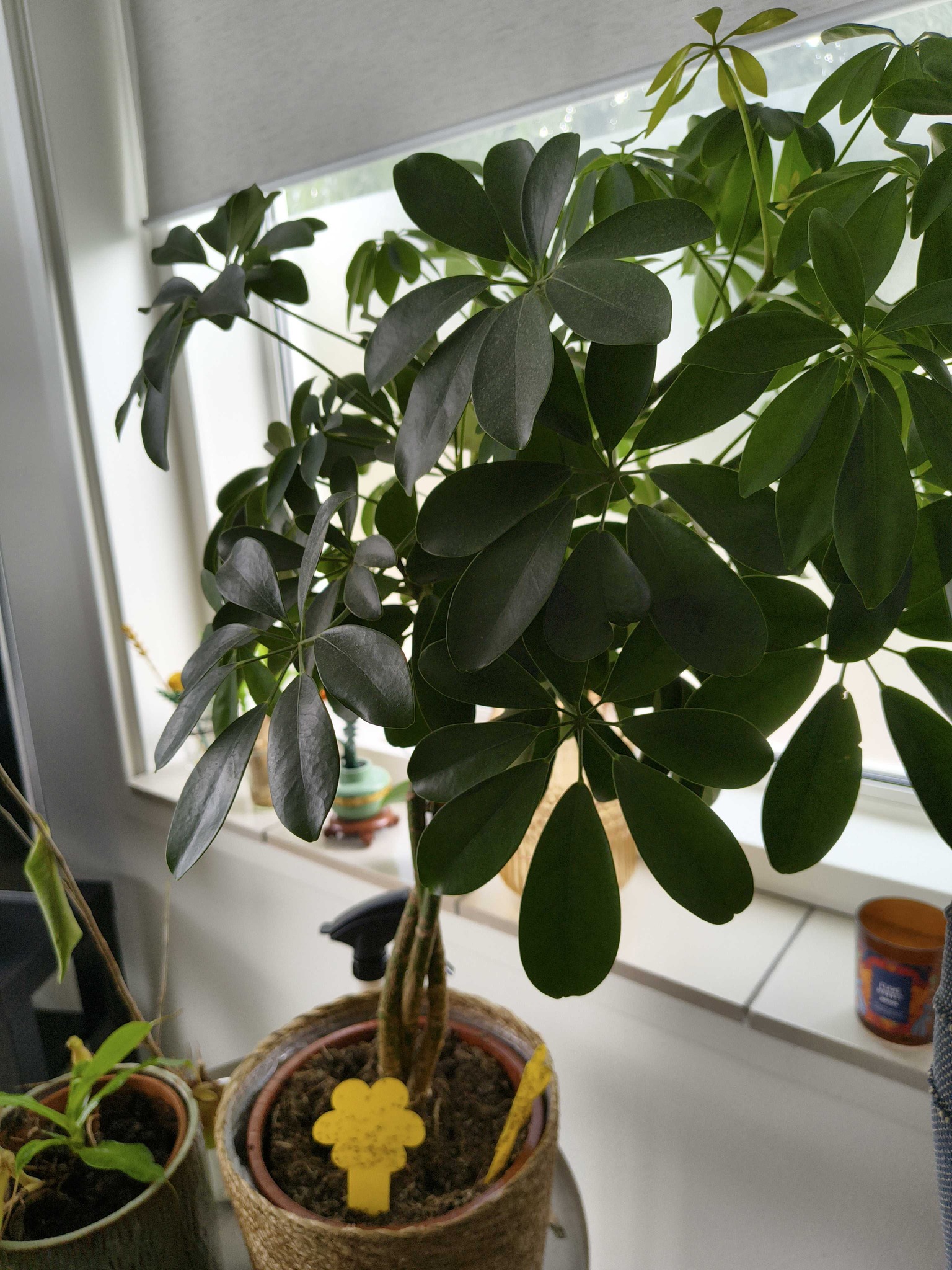
Dwarf Umbrella Tree
Heptapleurum arboricola
An evergreen shrub featuring distinctive palmately compound leaves with glossy, oval leaflets arranged radially like the ribs of an umbrella.
- Light
- Bright, indirect light for 6 to 8 hours daily, avoiding intense direct sunlight which can scorch the leaves.
- Water
- Water thoroughly when the top two inches of soil feel dry to the touch. Reduce watering frequency during the winter months.
- Growth
- Perennial evergreen shrub with an upright, woody growth habit, reaching mature indoor heights of 3 to 6 feet with a bushy canopy.
Care instructions
Provide bright, indirect sunlight, water when the top couple of inches of soil become dry, use well-draining potting mix, and feed with a balanced liquid fertilizer during the active growing season.
Growing details
Sunlight
Bright, indirect light for 6 to 8 hours daily, avoiding intense direct sunlight which can scorch the leaves.
Watering
Water thoroughly when the top two inches of soil feel dry to the touch. Reduce watering frequency during the winter months.
Soil
Well-draining, loamy potting soil with a slightly acidic to neutral pH range of 6.0 to 6.5.
Hardiness zone
USDA zones 10 to 12 when grown outdoors; grown universally indoors as a houseplant.
Growth habit
Perennial evergreen shrub with an upright, woody growth habit, reaching mature indoor heights of 3 to 6 feet with a bushy canopy.
Bloom season
Rarely blooms when grown indoors; produces small, greenish-white panicle flowers followed by small dark fruits in outdoor tropical habitats.
Propagation
Propagated via stem cuttings or air layering during the spring and summer months.
Common pests & issues
Susceptible to mealybugs, spider mites, and scale insects. Root rot can occur if overwatered or if drainage is insufficient.
Similar species
Schefflera actinophylla (Octopus Tree), which features much larger leaves with a greater number of leaflets per leaf cluster.