
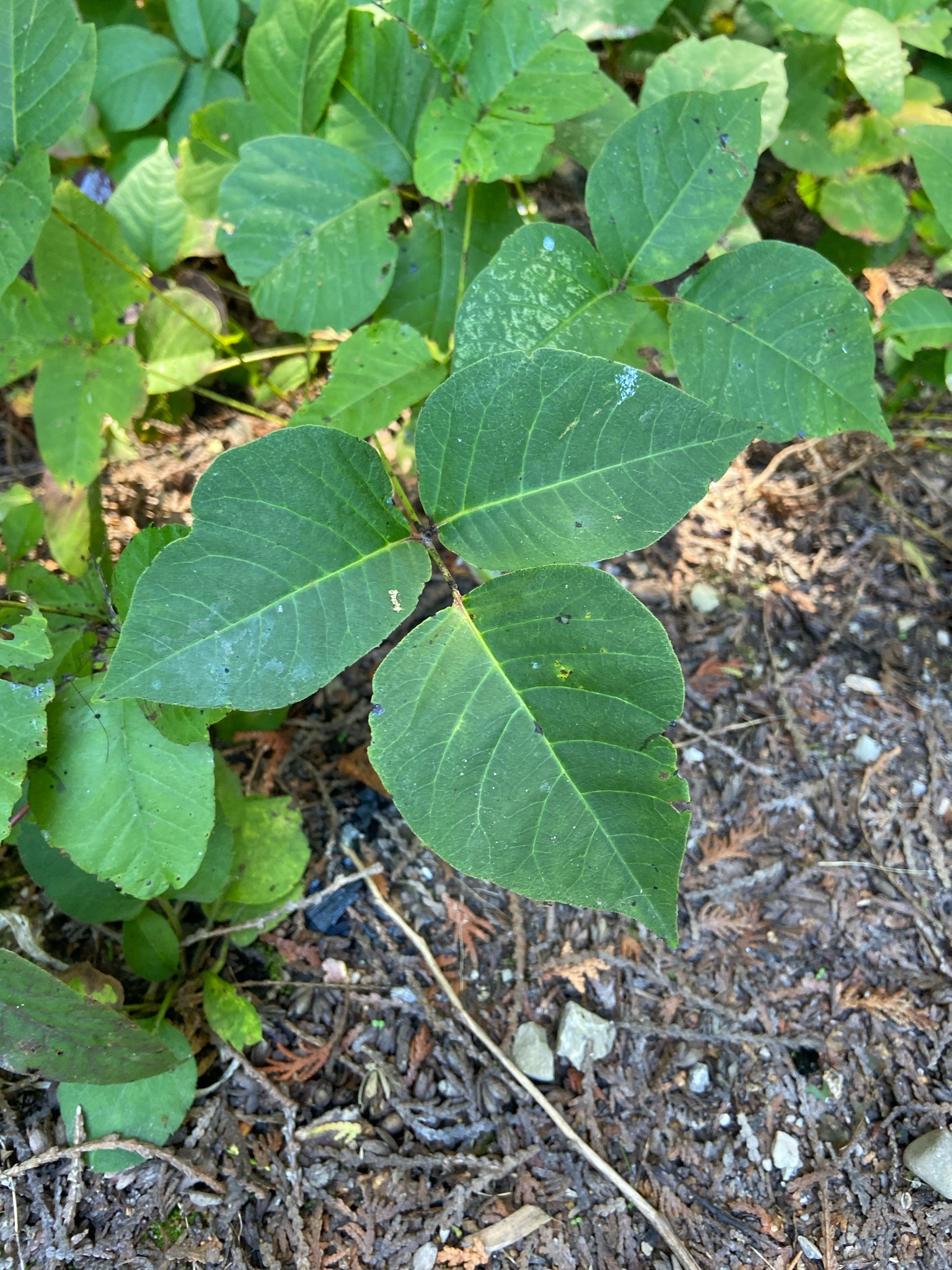
Eastern Poison Ivy
Toxicodendron radicans
A woody vine or shrub featuring compound leaves typically divided into three leaflets, known by the adage 'leaves of three, let them be'. Leaflets can have smooth, toothed, or lobed margins.
- Light
- Adapts to full sun to partial shade, generally requiring 4 to 6 hours of filtered or direct light daily.
- Water
- Prefers moderate moisture; drought-tolerant once established. Allow soil to dry out between waterings.
- Growth
- Perennial deciduous woody vine or upright shrub, growing as a ground cover, climbing via aerial roots, or standing up to 1-3 meters tall.
Care instructions
Wild-growing perennial plant requiring standard woodland conditions including partial shade to full sun and well-draining soils.
Growing details
Sunlight
Adapts to full sun to partial shade, generally requiring 4 to 6 hours of filtered or direct light daily.
Watering
Prefers moderate moisture; drought-tolerant once established. Allow soil to dry out between waterings.
Soil
Thrives in well-drained loamy, sandy, or clay soils with a neutral to slightly acidic pH range of 6.0 to 7.0.
Hardiness zone
USDA zones 3 through 9
Growth habit
Perennial deciduous woody vine or upright shrub, growing as a ground cover, climbing via aerial roots, or standing up to 1-3 meters tall.
Bloom season
Flowers in late spring to early summer, producing small, inconspicuous greenish-white clusters.
Propagation
Propagates naturally via underground rhizomes, root sprouting, and seed dispersal by wildlife.
Common pests & issues
Resilient wild species rarely affected by standard garden pests or diseases.
Similar species
Boxelder (Acer negundo) and Virginia creeper (Parthenocissus quinquefolia); Virginia creeper features five leaflets instead of three.