
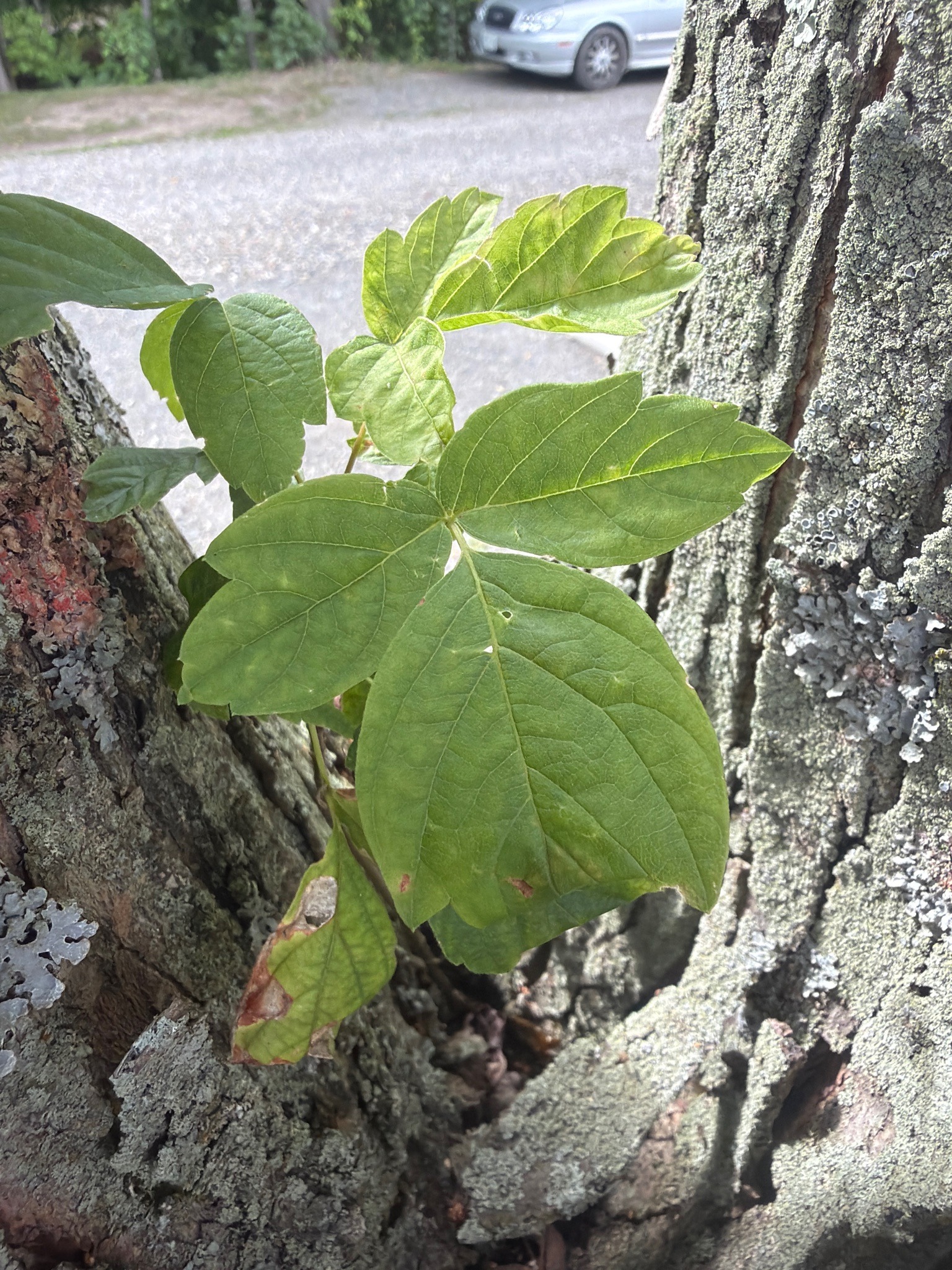
Eastern Poison Ivy
Toxicodendron radicans
A woody vine or shrub with compound leaves typically divided into three leaflets, known for climbing tree trunks via aerial rootlets.
- Light
- Thrives in full sun to partial shade, adapting well to woodland edges and shaded understories.
- Water
- Requires average moisture levels once established and possesses good drought tolerance.
- Growth
- Perennial climbing vine or low-growing shrub, reaching heights of up to 10 meters or more when supporting structures are available.
Care instructions
This species grows naturally in the wild and does not require cultivation care. It adapts to various light levels from full sun to deep shade and tolerates different soil types.
Growing details
Sunlight
Thrives in full sun to partial shade, adapting well to woodland edges and shaded understories.
Watering
Requires average moisture levels once established and possesses good drought tolerance.
Soil
Grows in a wide range of well-draining soils, including sandy, loamy, and clay substrates, across various pH levels.
Hardiness zone
USDA zones 3 through 9
Growth habit
Perennial climbing vine or low-growing shrub, reaching heights of up to 10 meters or more when supporting structures are available.
Bloom season
Blooms in late spring to early summer with small greenish-white or yellowish flowers clustered in the leaf axils.
Propagation
Propagates naturally via seeds dispersed by wildlife and through underground rhizomes or rooting stems.
Common pests & issues
Generally resilient against typical garden pests and diseases due to its robust natural defenses.
Similar species
Box elder (Acer negundo) seedlings and Virginia creeper (Parthenocissus quinquefolia), which can be distinguished by having opposite branching or five leaflets respectively, unlike the alternate, trifoliate leaves of Eastern Poison Ivy.