
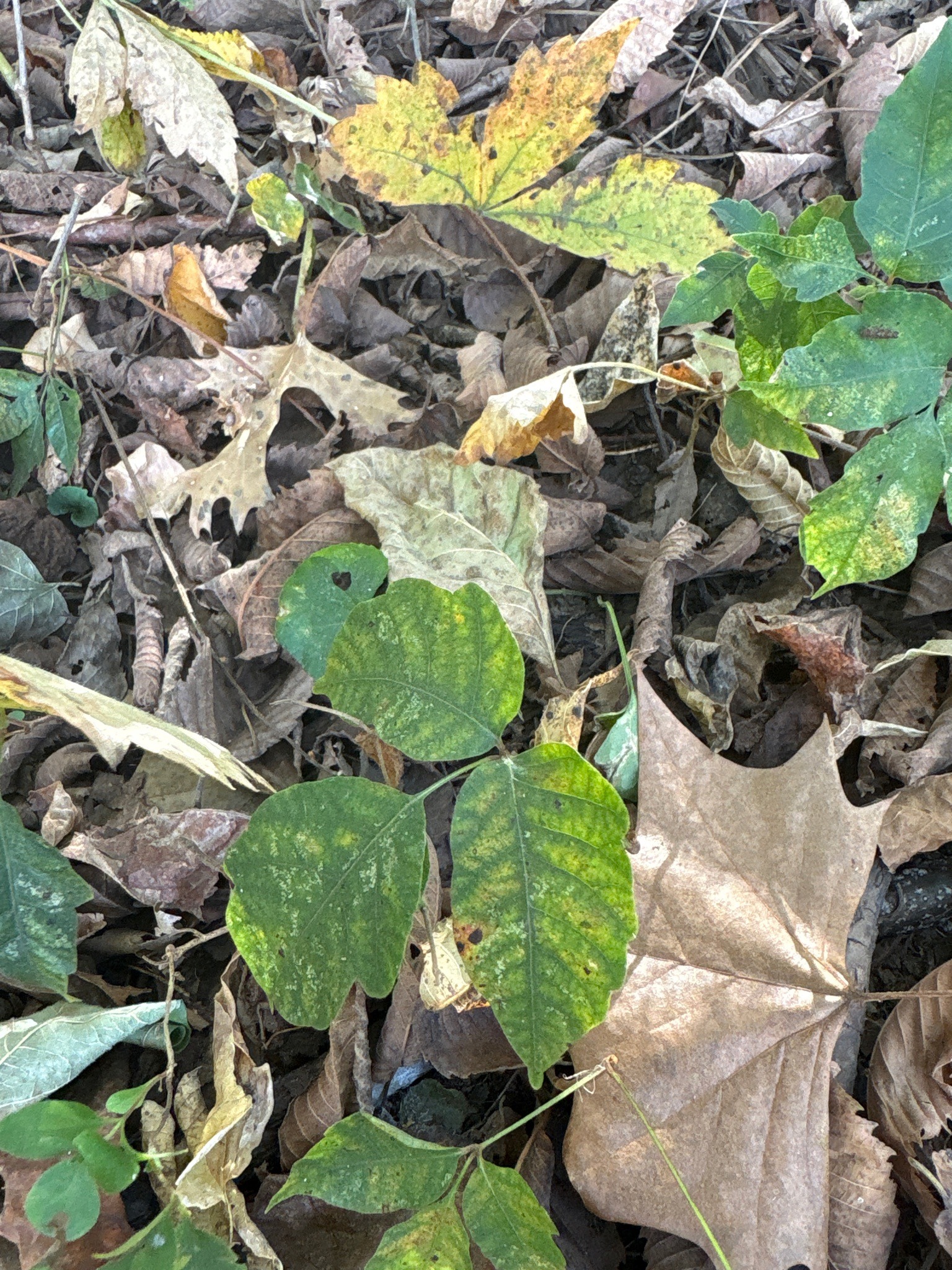
Eastern Poison Ivy
Toxicodendron radicans
A woody vine or shrub with distinctive alternate, trifoliate leaves, meaning each leaf is divided into three leaflets with variable margins that can be smooth, toothed, or lobed.
- Light
- Full sun to partial shade, adapting well to forest understories and forest edges with 4 to 6+ hours of light.
- Water
- Moderate water needs once established. Highly adaptable to various moisture levels in its natural habitat, displaying tolerance for dry soil conditions.
- Growth
- Perennial woody vine or low-growing shrub, capable of climbing high up trees via aerial rootlets or spreading along the ground as a groundcover.
Care instructions
This is a wild plant that typically grows without human intervention. When cultivated or managed, it thrives in well-drained soils with moderate moisture and exposure ranging from full sun to partial shade.
Growing details
Sunlight
Full sun to partial shade, adapting well to forest understories and forest edges with 4 to 6+ hours of light.
Watering
Moderate water needs once established. Highly adaptable to various moisture levels in its natural habitat, displaying tolerance for dry soil conditions.
Soil
Well-drained sandy, loamy, or clay soils with a neutral to slightly acidic pH range of 6.0 to 7.0.
Hardiness zone
USDA Hardiness Zones 3 through 9
Growth habit
Perennial woody vine or low-growing shrub, capable of climbing high up trees via aerial rootlets or spreading along the ground as a groundcover.
Bloom season
Late spring to early summer, producing small, inconspicuous greenish-white flowers in branching clusters.
Propagation
Propagates naturally primarily through seed dispersal by wildlife and vegetative spread via underground rhizomes and root systems.
Common pests & issues
Generally resilient against typical garden pests and diseases, functioning as a robust wild colonizer.
Similar species
Boxelder (Acer negundo) seedlings also feature compound leaves with three leaflets, but can be distinguished by their opposite leaf arrangement compared to the alternate leaf arrangement of Eastern Poison Ivy.