
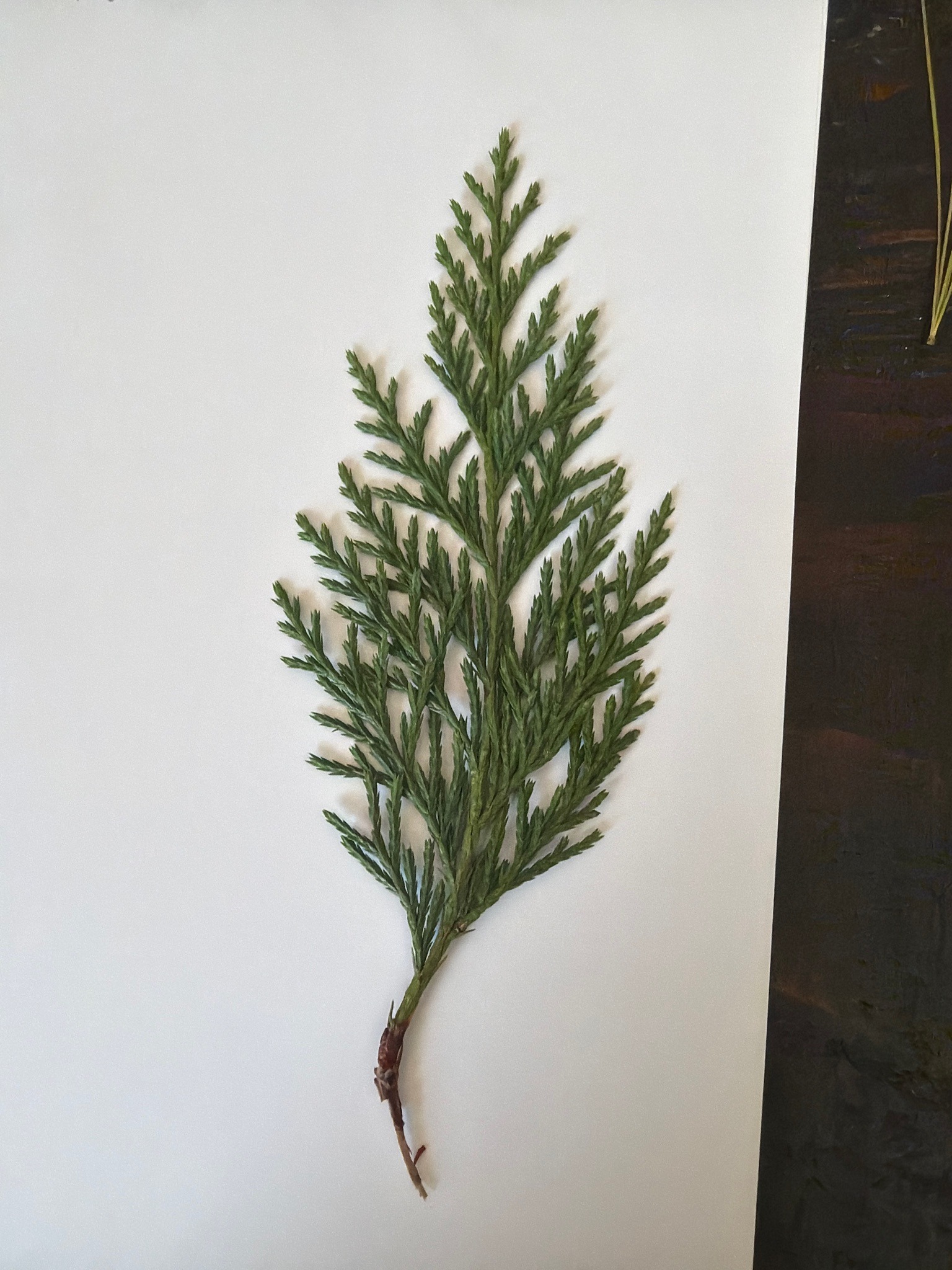
Eastern Red Cedar
Juniperus virginiana
An evergreen conifer featuring flat, branched sprays of dark green scale-like needles and reddish-brown exfoliating bark.
- Light
- Full sun, requiring at least 6 hours of direct sunlight per day.
- Water
- Low watering needs once established. Water deeply when soil is dry, allowing it to dry out completely between waterings to prevent root rot.
- Growth
- Perennial evergreen tree or large shrub with an upright, pyramidal growth form, maturing to a height of 30 to 50 feet and a spread of 8 to 20 feet with a slow to moderate growth rate.
Care instructions
Provide full sun and well-draining soil. Water deeply during the first growing season to establish roots, then reduce watering as it demonstrates high drought tolerance once established. Fertilization is rarely needed.
Growing details
Sunlight
Full sun, requiring at least 6 hours of direct sunlight per day.
Watering
Low watering needs once established. Water deeply when soil is dry, allowing it to dry out completely between waterings to prevent root rot.
Soil
Adaptable to a wide range of soils including clay, sand, and rocky substrates, provided they are well-draining. Prefers a neutral to slightly alkaline pH range between 6.0 and 8.0.
Hardiness zone
USDA zones 3 through 9, exhibiting strong cold hardiness and heat tolerance.
Growth habit
Perennial evergreen tree or large shrub with an upright, pyramidal growth form, maturing to a height of 30 to 50 feet and a spread of 8 to 20 feet with a slow to moderate growth rate.
Bloom season
Non-flowering (produces inconspicuous pollen cones in late winter to early spring, followed by small fleshy seed cones on female plants)
Propagation
Propagated primarily from seeds, which require cold stratification to break dormancy, or through softwood or hardwood cuttings taken in late summer or autumn.
Common pests & issues
Susceptible to twig blight, root rot in poorly draining soils, and bagworms. Prevent issues by ensuring proper air circulation and adequate soil drainage.
Similar species
Creeping juniper (Juniperus horizontalis) and Rocky Mountain juniper (Juniperus scopulorum); distinguished by its distinct pyramidal tree habit and scale-like foliage that often turns slightly bronze or purplish in winter.