
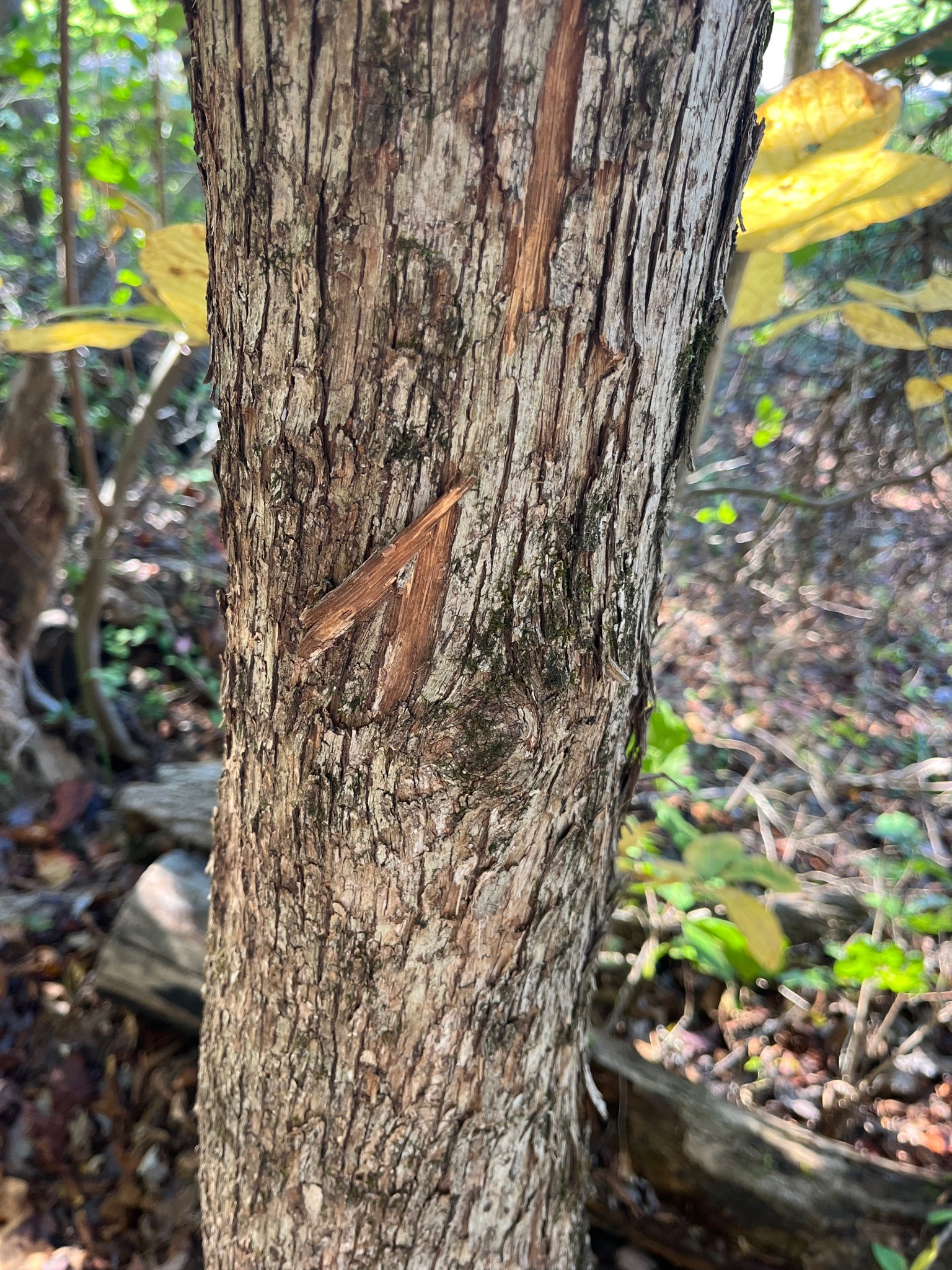
Eastern Red Cedar
Juniperus virginiana
An evergreen conifer featuring a straight trunk with reddish-brown, fibrous bark that peels away in long strips. The foliage consists of small, scale-like leaves on mature branches and needle-like leaves on young shoots.
- Light
- Full sun, requiring at least 6 hours of direct sunlight daily
- Water
- Low water requirements once established; water moderately when young, allowing the soil to dry between waterings. Highly drought-tolerant.
- Growth
- Perennial evergreen tree with a pyramidal to columnar growth form, reaching a mature height of 30 to 65 feet and a spread of 8 to 20 feet with a slow to moderate growth rate
Care instructions
Plant in full sun with well-draining soil. Water deeply during the first growing season to establish a deep root system, after which it becomes highly drought-tolerant. Fertilizer is generally not required unless soil nutrient deficiencies are present.
Growing details
Sunlight
Full sun, requiring at least 6 hours of direct sunlight daily
Watering
Low water requirements once established; water moderately when young, allowing the soil to dry between waterings. Highly drought-tolerant.
Soil
Adaptable to a wide range of well-draining soils including clay, loam, and sand, with a preferred pH range of 4.7 to 7.8
Hardiness zone
USDA Hardiness Zones 3 through 9
Growth habit
Perennial evergreen tree with a pyramidal to columnar growth form, reaching a mature height of 30 to 65 feet and a spread of 8 to 20 feet with a slow to moderate growth rate
Bloom season
Non-flowering gymnosperm; produces small, inconspicuous cones in late winter to early spring
Propagation
Propagated primarily from seeds, which require cold stratification to break dormancy, or through softwood cuttings taken in late summer
Common pests & issues
Susceptible to bagworms, cedar-apple rust fungal disease, and root rot if planted in poorly draining soils
Similar species
Northern White Cedar (Thuja occidentalis), which has flatter, fan-like branchlets and smoother bark compared to the stringy, reddish-brown bark of the Eastern Red Cedar