
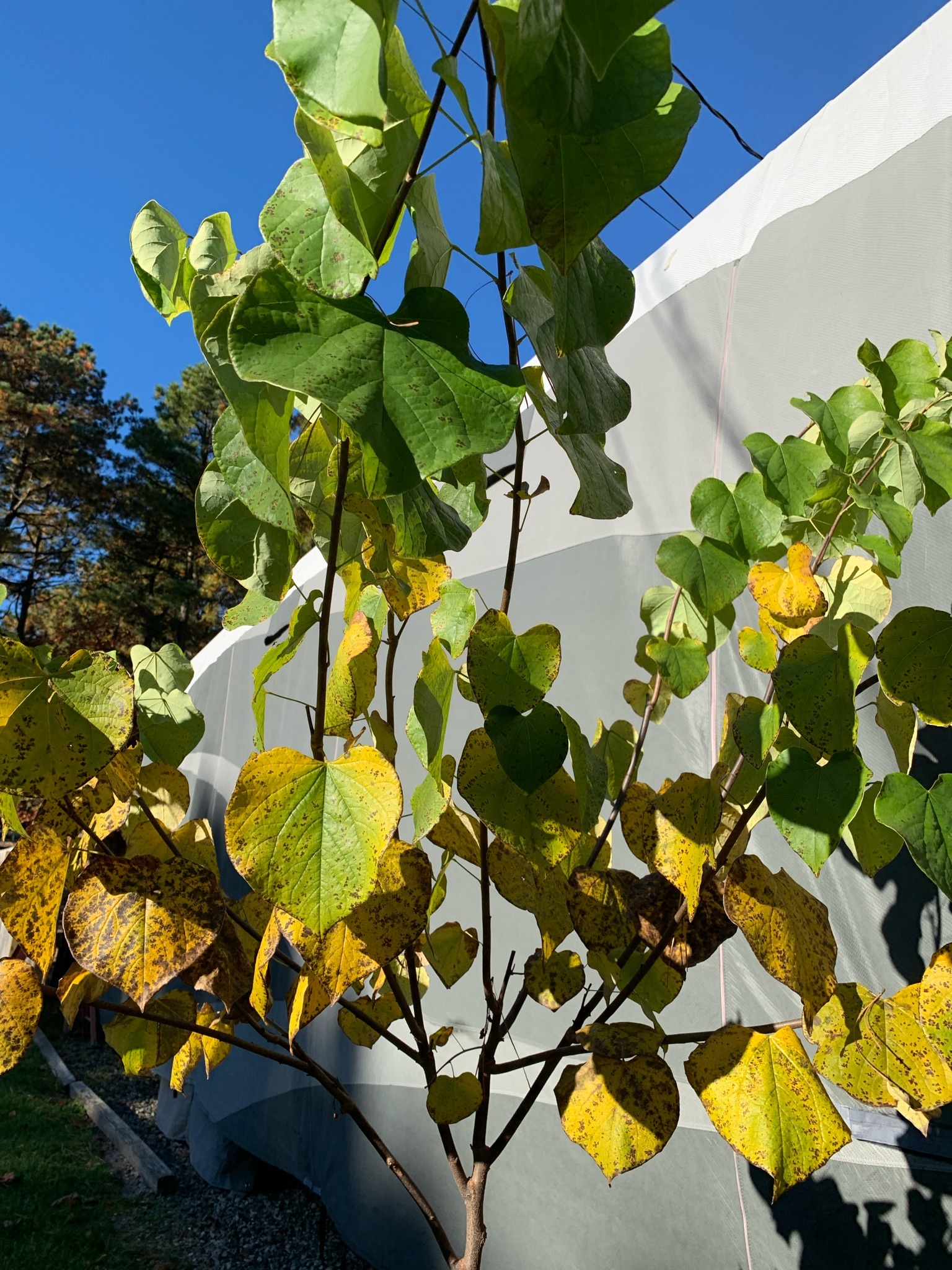
Eastern Redbud
Cercis canadensis
A small deciduous tree or large shrub known for its distinctive heart-shaped leaves and vibrant pink to purple pea-like flowers that bloom directly on the branches and trunk in early spring.
- Light
- Full sun to partial shade, requiring at least 6 hours of direct sunlight daily for optimal flower production.
- Water
- Requires moderate and consistent watering. Allow the top few inches of soil to dry out between watering sessions. Established trees have moderate drought tolerance, but prolonged dry spells can cause premature leaf drop.
- Growth
- Perennial woody deciduous tree with a rounded, spreading canopy, typically reaching heights of 20 to 30 feet and a similar spread at maturity with a moderate growth rate.
Care instructions
Plant in full sun to partial shade in moist, well-draining soil. Provide regular watering during the first growing season to establish a deep root system, then reduce frequency as it gains moderate drought tolerance. Apply a balanced, slow-release fertilizer in early spring before new growth begins.
Growing details
Sunlight
Full sun to partial shade, requiring at least 6 hours of direct sunlight daily for optimal flower production.
Watering
Requires moderate and consistent watering. Allow the top few inches of soil to dry out between watering sessions. Established trees have moderate drought tolerance, but prolonged dry spells can cause premature leaf drop.
Soil
Prefers rich, loamy, well-draining soil with a neutral to slightly alkaline pH ranging from 6.5 to 8.0, though it adapts well to clay soils.
Hardiness zone
USDA Hardiness Zones 4 through 9
Growth habit
Perennial woody deciduous tree with a rounded, spreading canopy, typically reaching heights of 20 to 30 feet and a similar spread at maturity with a moderate growth rate.
Bloom season
Blooms in early spring before the leaves emerge, producing clusters of small, bright magenta to pink, pea-like flowers.
Propagation
Propagated primarily through scarified seeds sown in autumn or by softwood cuttings taken in late spring.
Common pests & issues
Susceptible to canker diseases, verticillium wilt, leaf spot, and twig borers. Ensure proper air circulation and avoid mechanical damage to the trunk to prevent infections.
Similar species
Judas tree (Cercis siliquastrum), which has rounder leaves and a more shrubby growth habit, and the Chinese redbud (Cercis chinensis), which features darker pink flowers and a more compact shrub form.