
Eastern Redcedar
Juniperus virginiana
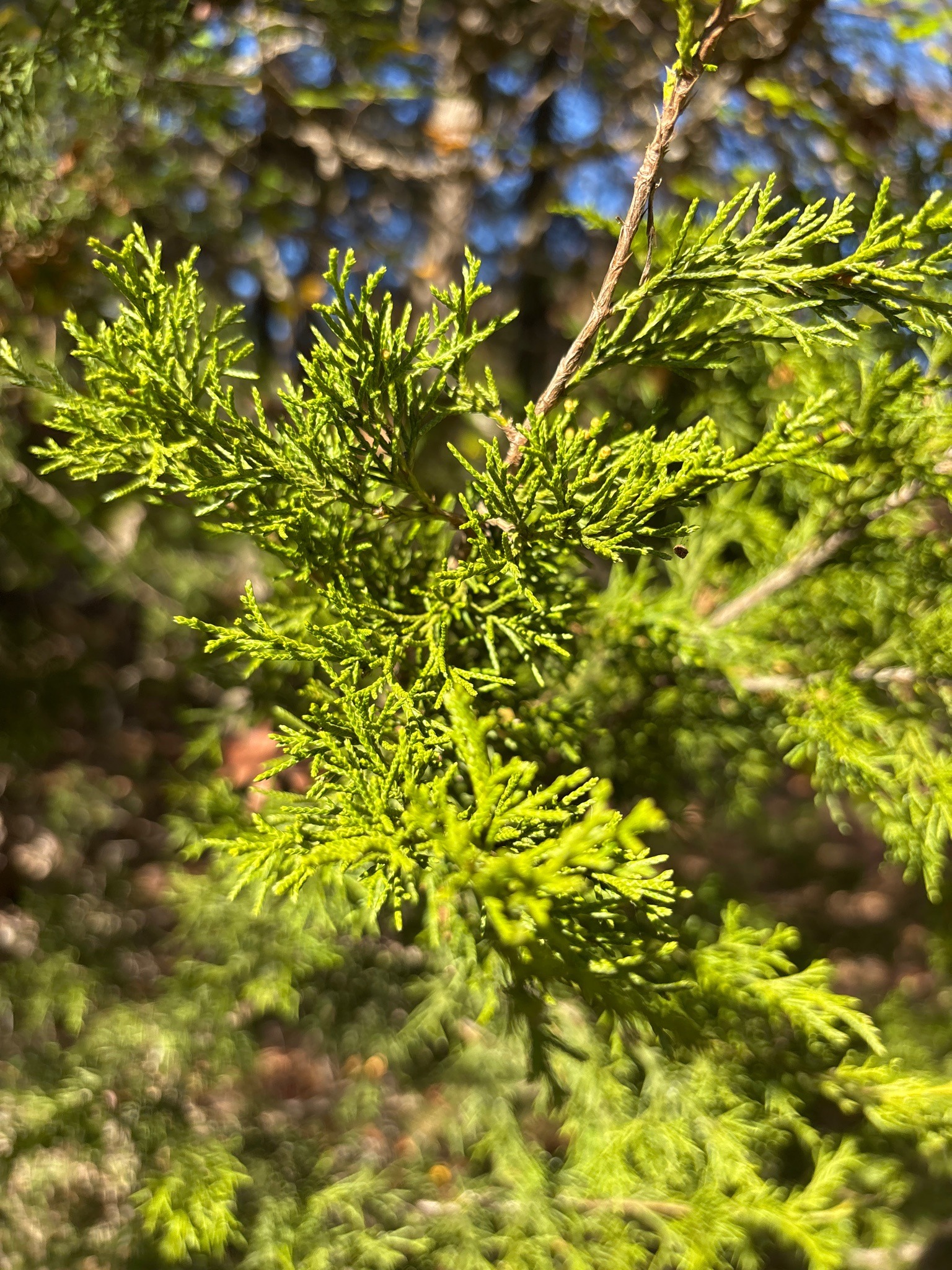
An evergreen conifer featuring dense, scale-like leaves arranged in four ranks on rounded twigs, transitioning from sharp needle-like juvenile foliage to soft, overlapping adult scales.
- Light
- Full sun, requiring at least 6 to 8 hours of direct sunlight daily
- Water
- Low water needs once established. Water deeply when soil is completely dry, tolerating prolonged drought conditions well.
- Growth
- Perennial evergreen tree with a conical to columnar growth form, reaching mature heights of 30 to 50 feet and spreads of 8 to 20 feet, with a slow to moderate growth rate.
Care instructions
Provide full sun and well-draining soil. Water deeply during the first growing season to establish a deep root system, then reduce watering as it demonstrates high drought tolerance once established. Fertilization is generally unnecessary unless growing in very poor soils.
Growing details
Sunlight
Full sun, requiring at least 6 to 8 hours of direct sunlight daily
Watering
Low water needs once established. Water deeply when soil is completely dry, tolerating prolonged drought conditions well.
Soil
Adapts to a wide range of soils including clay, sand, and rocky substrates, provided drainage is adequate. Prefers neutral to slightly alkaline pH, but tolerates acidic conditions.
Hardiness zone
USDA zones 3 through 9
Growth habit
Perennial evergreen tree with a conical to columnar growth form, reaching mature heights of 30 to 50 feet and spreads of 8 to 20 feet, with a slow to moderate growth rate.
Bloom season
Non-flowering (gymnosperm producing inconspicuous staminate and ovulate cones in early spring)
Propagation
Propagated primarily from seeds, which benefit from warm stratification followed by cold stratification, or through softwood or semi-hardwood cuttings taken in late summer or autumn.
Common pests & issues
Susceptible to bagworms, twig blight, and cedar-apple rust. Prevent issues by ensuring adequate air circulation and avoiding overhead watering.
Similar species
Rocky Mountain juniper (Juniperus scopulorum), which features more bluish-green foliage and is native to western North America.