
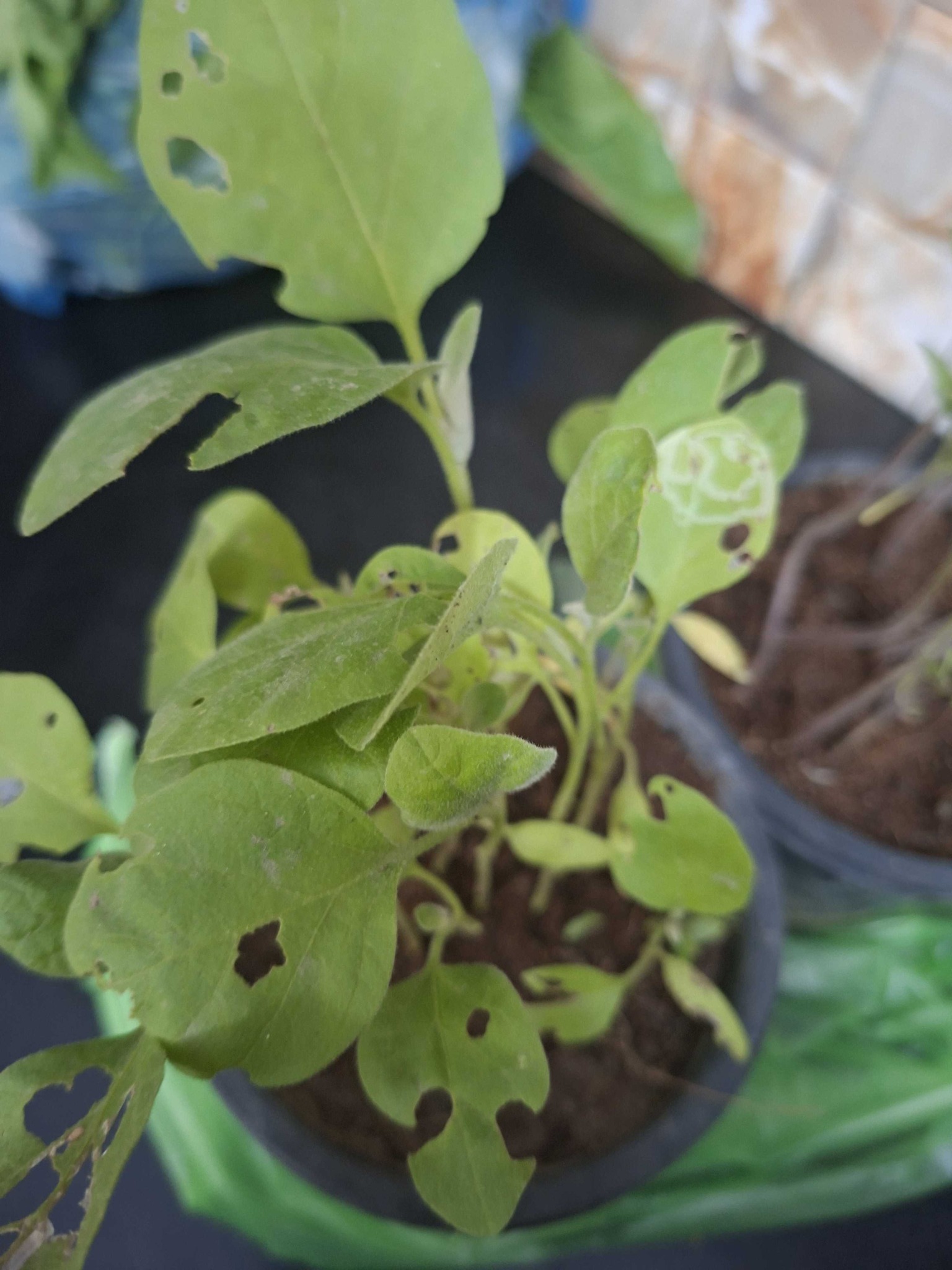
Eggplant (Seedling)
Solanum melongena
Young seedling with soft, velvety, oval to oblong green leaves, featuring slightly wavy margins and distinct veins.
- Light
- Full sun, requiring at least 6 to 8 hours of direct sunlight per day.
- Water
- Water consistently to keep the soil evenly moist. Allow the top inch of soil to dry slightly between waterings. Avoid overhead watering to prevent moisture-related foliage issues.
- Growth
- Herbaceous annual or short-lived perennial with an upright, bushy growth habit, reaching a mature height of 2 to 4 feet and a spread of 2 to 3 feet.
Care instructions
Provide full sun exposure, well-draining soil rich in organic matter, and consistent moisture without waterlogging. Feed with a balanced fertilizer during the growing season.
Growing details
Sunlight
Full sun, requiring at least 6 to 8 hours of direct sunlight per day.
Watering
Water consistently to keep the soil evenly moist. Allow the top inch of soil to dry slightly between waterings. Avoid overhead watering to prevent moisture-related foliage issues.
Soil
Rich, loamy, well-draining soil with an optimal pH range between 6.0 and 6.8.
Hardiness zone
Typically grown as an annual; perennial in USDA zones 9 through 12 where frost is absent.
Growth habit
Herbaceous annual or short-lived perennial with an upright, bushy growth habit, reaching a mature height of 2 to 4 feet and a spread of 2 to 3 feet.
Bloom season
Summer to early autumn, producing small, star-shaped, purple to white flowers.
Propagation
Propagated primarily from seeds sown indoors 6 to 8 weeks before the last spring frost, or directly sown outdoors in warm climates.
Common pests & issues
Susceptible to chewing insect pests that create holes in the leaves, as well as fungal leaf spots and root rots caused by overly damp soil conditions. Prevent by maintaining good airflow and proper spacing.
Similar species
Other Solanum species such as tomato seedlings (Solanum lycopersicum) and pepper seedlings (Capsicum annuum). Eggplant seedlings are generally distinguished by their slightly fuzzier, rounded leaves and purplish stem tinges at the base.