
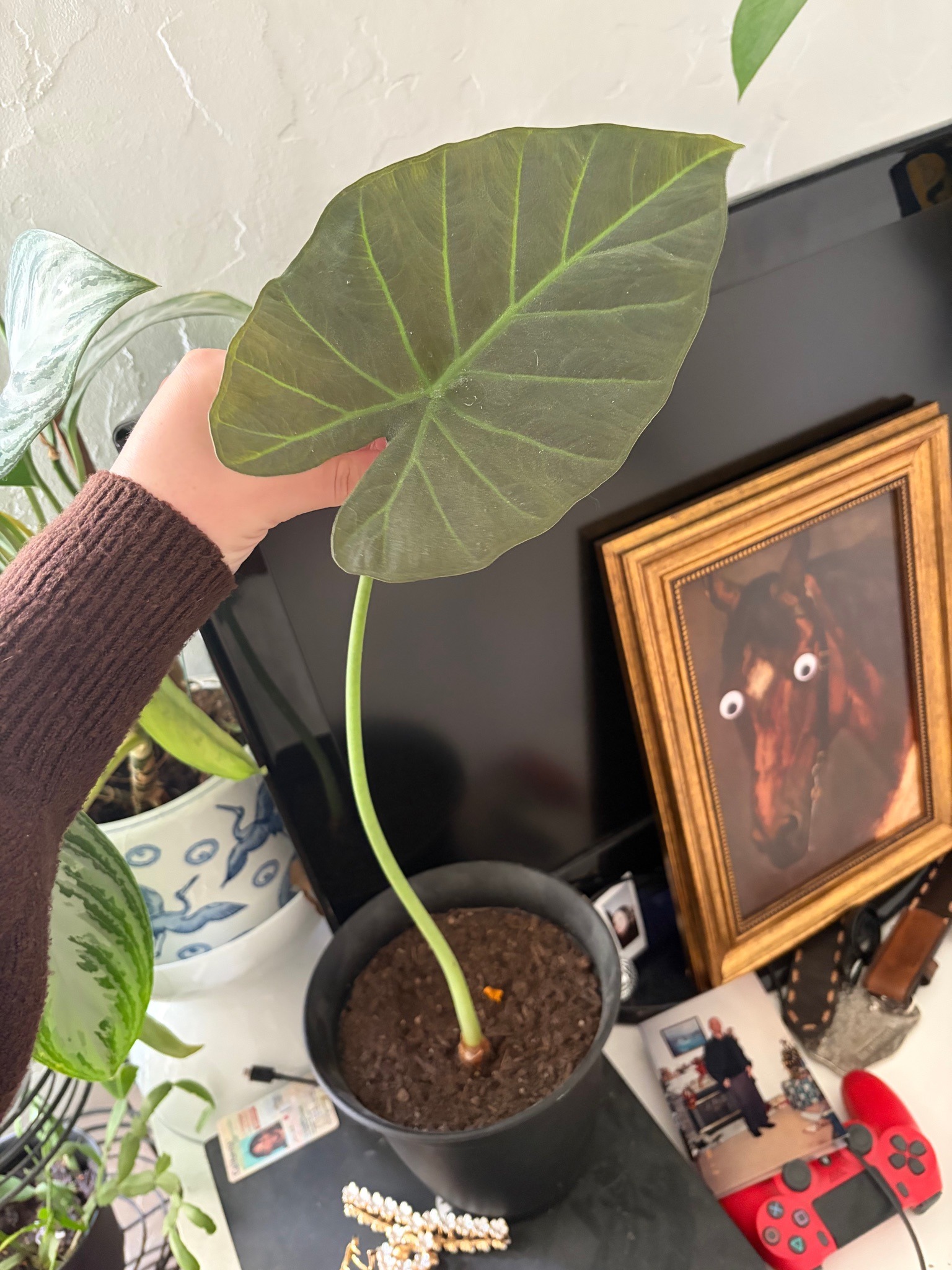
Elephant Ear
Colocasia esculenta
A prominent tropical perennial featuring massive, heart-shaped or arrowhead-shaped leaves with distinct, prominent veination held on long, slender stalks.
- Light
- Bright, indirect light for 6 to 8 hours daily, avoiding harsh, direct afternoon sun which can scorch the leaves.
- Water
- Requires frequent watering to keep the soil evenly moist. It appreciates high humidity and should not be allowed to dry out completely between watering sessions.
- Growth
- Herbaceous perennial growing from a tuberous corm, reaching mature heights of 3 to 6 feet with a similar spread depending on growing conditions.
Care instructions
Provide bright, indirect sunlight, keep the soil consistently moist without letting it dry out completely, use a rich and well-draining potting medium, and apply a balanced liquid fertilizer monthly during the active growing season.
Growing details
Sunlight
Bright, indirect light for 6 to 8 hours daily, avoiding harsh, direct afternoon sun which can scorch the leaves.
Watering
Requires frequent watering to keep the soil evenly moist. It appreciates high humidity and should not be allowed to dry out completely between watering sessions.
Soil
Rich, organic-heavy soil with excellent drainage and a slightly acidic to neutral pH range of 5.5 to 6.5.
Hardiness zone
USDA Zones 9 through 11 when grown outdoors, though frequently kept as a container or indoor houseplant in cooler regions.
Growth habit
Herbaceous perennial growing from a tuberous corm, reaching mature heights of 3 to 6 feet with a similar spread depending on growing conditions.
Bloom season
Rarely blooms when grown indoors; produces small, calla-like spadix flowers encased in a yellowish spathe when mature in tropical conditions.
Propagation
Propagated easily by division of the underground corms or by separating offsets (pups) that sprout from the base of the parent plant during the active growing season.
Common pests & issues
Susceptible to spider mites, aphids, and mealybugs, particularly in dry indoor air. Over-saturation can lead to root and stem rot if drainage is inadequate.
Similar species
Alocasia and Xanthosoma species, which can be distinguished by leaf orientation, texture, and the specific attachment point of the petiole to the leaf blade.