
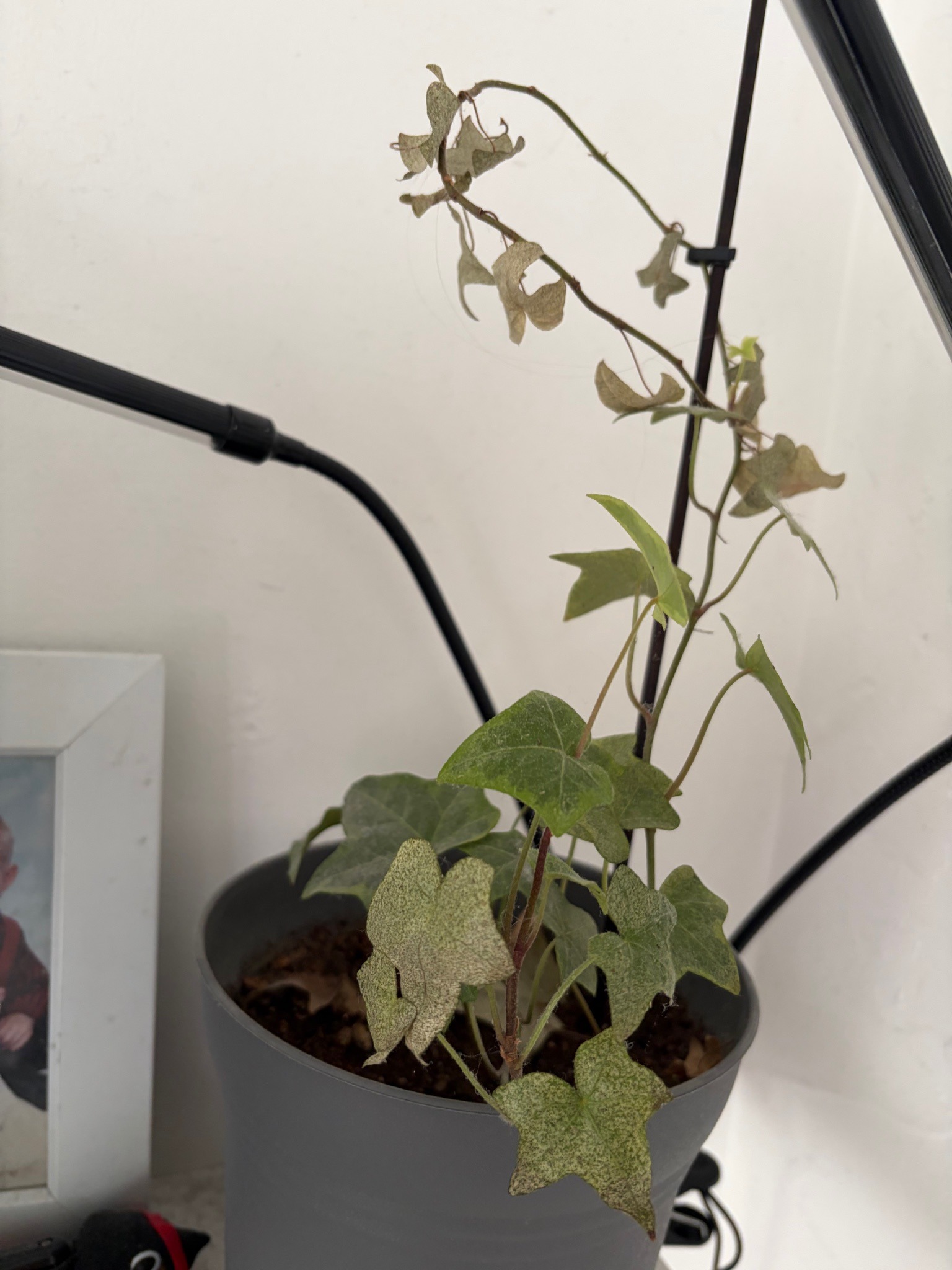
English Ivy
Hedera helix
A woody, evergreen climbing vine featuring lobed, dark green leaves with lighter veining, possessing aerial rootlets that cling to surfaces.
- Light
- Prefers bright, indirect light for 4 to 6 hours daily, but can tolerate lower light levels.
- Water
- Water thoroughly whenever the top inch of soil is dry. Avoid letting the soil dry out completely or remain waterlogged.
- Growth
- Perennial evergreen climbing or creeping vine reaching lengths of 20 to 80 feet when mature, spreading moderately fast.
Care instructions
Provide bright, indirect sunlight and maintain consistent moisture by watering when the top inch of soil feels dry. Use a well-draining potting mix and feed sparingly during the growing season with a balanced, water-soluble fertilizer.
Growing details
Sunlight
Prefers bright, indirect light for 4 to 6 hours daily, but can tolerate lower light levels.
Watering
Water thoroughly whenever the top inch of soil is dry. Avoid letting the soil dry out completely or remain waterlogged.
Soil
Prefers rich, organic, well-draining potting soil with a slightly acidic to neutral pH range of 6.0 to 7.5.
Hardiness zone
USDA zones 4 through 9
Growth habit
Perennial evergreen climbing or creeping vine reaching lengths of 20 to 80 feet when mature, spreading moderately fast.
Bloom season
Mature plants produce small greenish-yellow flowers in rounded umbels during late summer or autumn.
Propagation
Easily propagated through stem tip cuttings placed in water or directly into moist potting mix during spring or summer.
Common pests & issues
Prone to infestations of spider mites, aphids, and scale insects, particularly in dry indoor environments. Root rot can occur if soil drainage is inadequate.
Similar species
Boston Ivy (Parthenocissus tricuspidata), which has larger deciduous leaves and tendsering habits rather than evergreen persistence.