
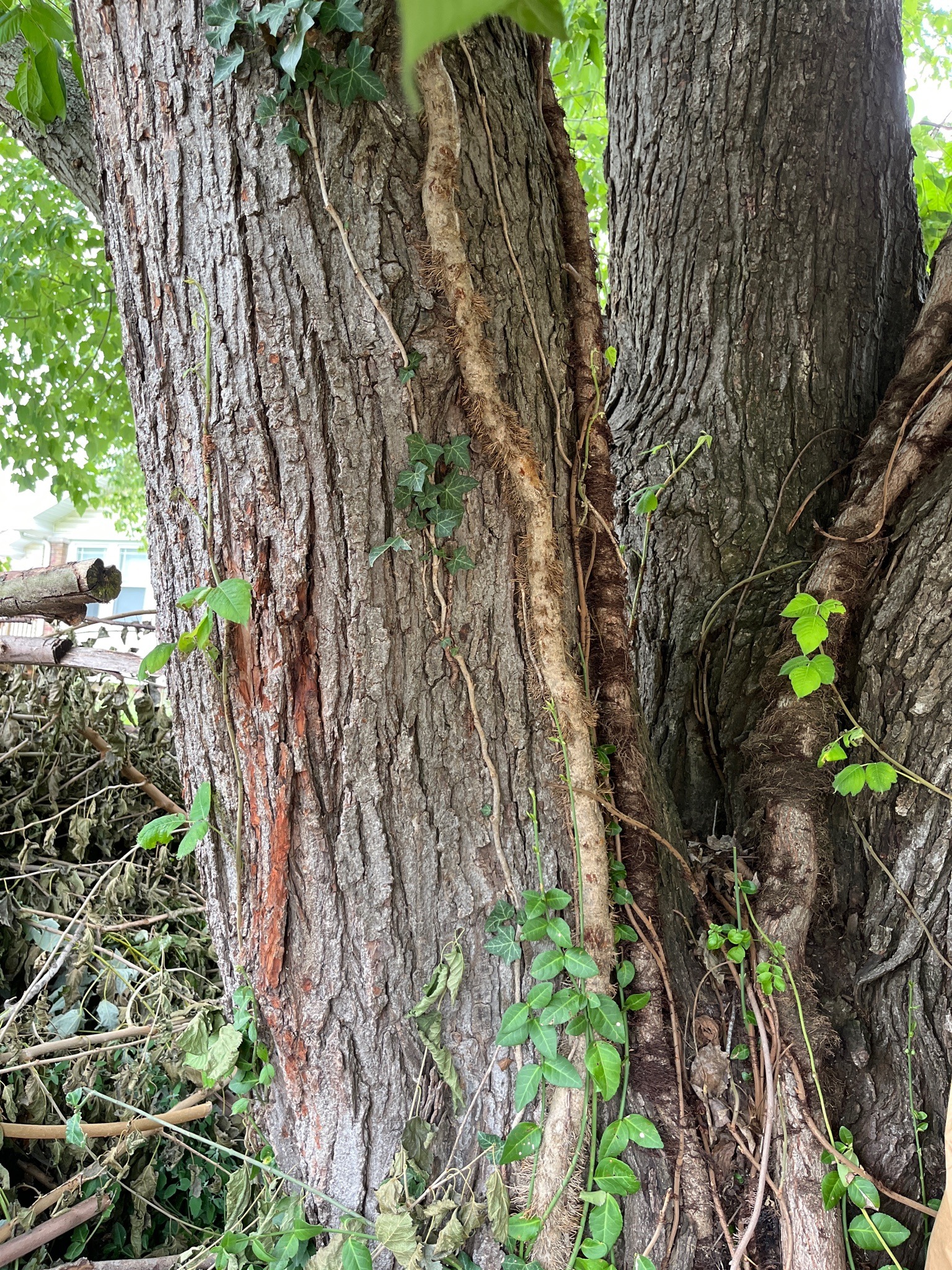
English Ivy
Hedera helix
A vigorous, evergreen woody climbing vine that clings to surfaces using aerial rootlets, featuring dark green, lobed leaves.
- Light
- Partial shade to full shade, tolerating up to 6 hours of indirect light daily.
- Water
- Allow the soil to dry partially between waterings; moderate drought tolerance once established.
- Growth
- Evergreen climbing or trailing vine; can climb up to 50 feet or more with a rapid growth rate.
Care instructions
Provide bright, indirect light or partial shade, water when the top inch of soil feels dry, and plant in well-draining soil enriched with organic matter.
Growing details
Sunlight
Partial shade to full shade, tolerating up to 6 hours of indirect light daily.
Watering
Allow the soil to dry partially between waterings; moderate drought tolerance once established.
Soil
Prefers rich, moist, well-draining soil with a neutral to slightly alkaline pH range of 6.5 to 7.5.
Hardiness zone
USDA Hardiness Zones 4 through 9.
Growth habit
Evergreen climbing or trailing vine; can climb up to 50 feet or more with a rapid growth rate.
Bloom season
Flowers in late summer to autumn, producing small, greenish-yellow umbels followed by dark berries.
Propagation
Easily propagated via stem cuttings taken in spring or summer, which root readily in water or moist potting mix.
Common pests & issues
Prusceptible to spider mites and scale insects in dry indoor conditions, as well as root rot if overwatered.
Similar species
Boston Ivy (Parthenocissus tricuspidata), which has larger, deciduous leaves that turn red in autumn.