
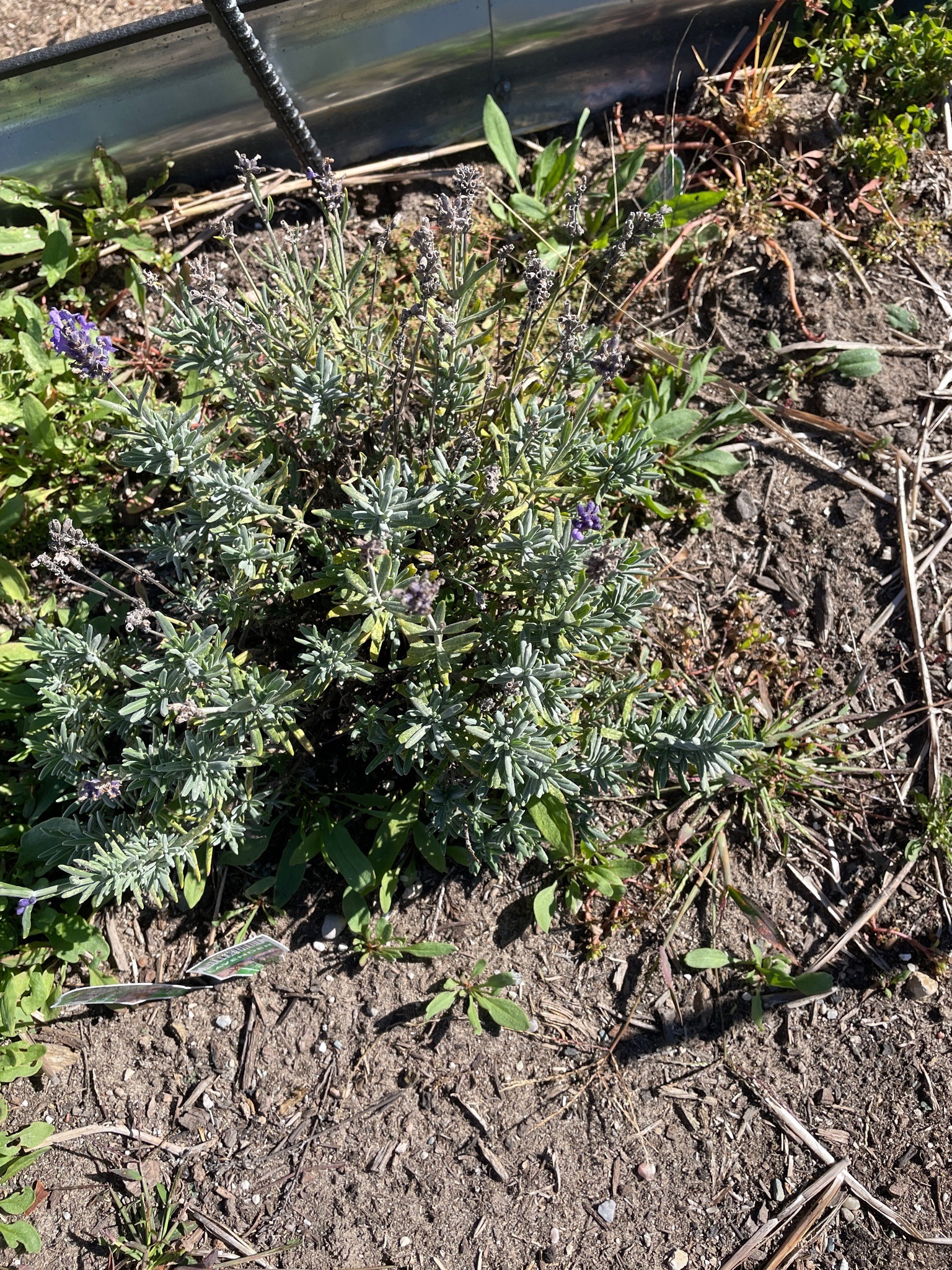
English Lavender
Lavandula angustifolia
A small, woody-based evergreen subshrub featuring narrow, grey-green aromatic leaves and slender spikes of small purple flowers.
- Light
- Full sun, requiring at least 6 to 8 hours of direct sunlight daily.
- Water
- Low water needs once established. Drought tolerant; prone to root rot if overwatered or kept in soggy soil.
- Growth
- Perennial evergreen subshrub forming a compact, rounded mound reaching 1 to 3 feet in height and width with a moderate growth rate.
Care instructions
Provide full sun and exceptionally well-draining soil. Water deeply but infrequently, allowing the soil to dry out completely between waterings. Avoid high humidity and excessive winter moisture.
Growing details
Sunlight
Full sun, requiring at least 6 to 8 hours of direct sunlight daily.
Watering
Low water needs once established. Drought tolerant; prone to root rot if overwatered or kept in soggy soil.
Soil
Poor to moderately fertile, highly porous, sandy or gravelly soil with a neutral to slightly alkaline pH between 6.5 and 8.0.
Hardiness zone
USDA zones 5 through 9.
Growth habit
Perennial evergreen subshrub forming a compact, rounded mound reaching 1 to 3 feet in height and width with a moderate growth rate.
Bloom season
Late spring to mid-summer, producing tubular purple flowers arranged in whorls on upright spikes.
Propagation
Propagated primarily through semi-hardwood stem cuttings taken in summer, or via seeds sown in spring.
Common pests & issues
Susceptible to root rot and fungal leaf spots in humid or poorly draining conditions. Pests are rare due to strong aromatic oils.
Similar species
Lavandula latifolia (Portuguese lavender), which has broader leaves and branching flower spikes, and Lavandula x intermedia (lavandin), which is a larger hybrid with longer flower spikes.