
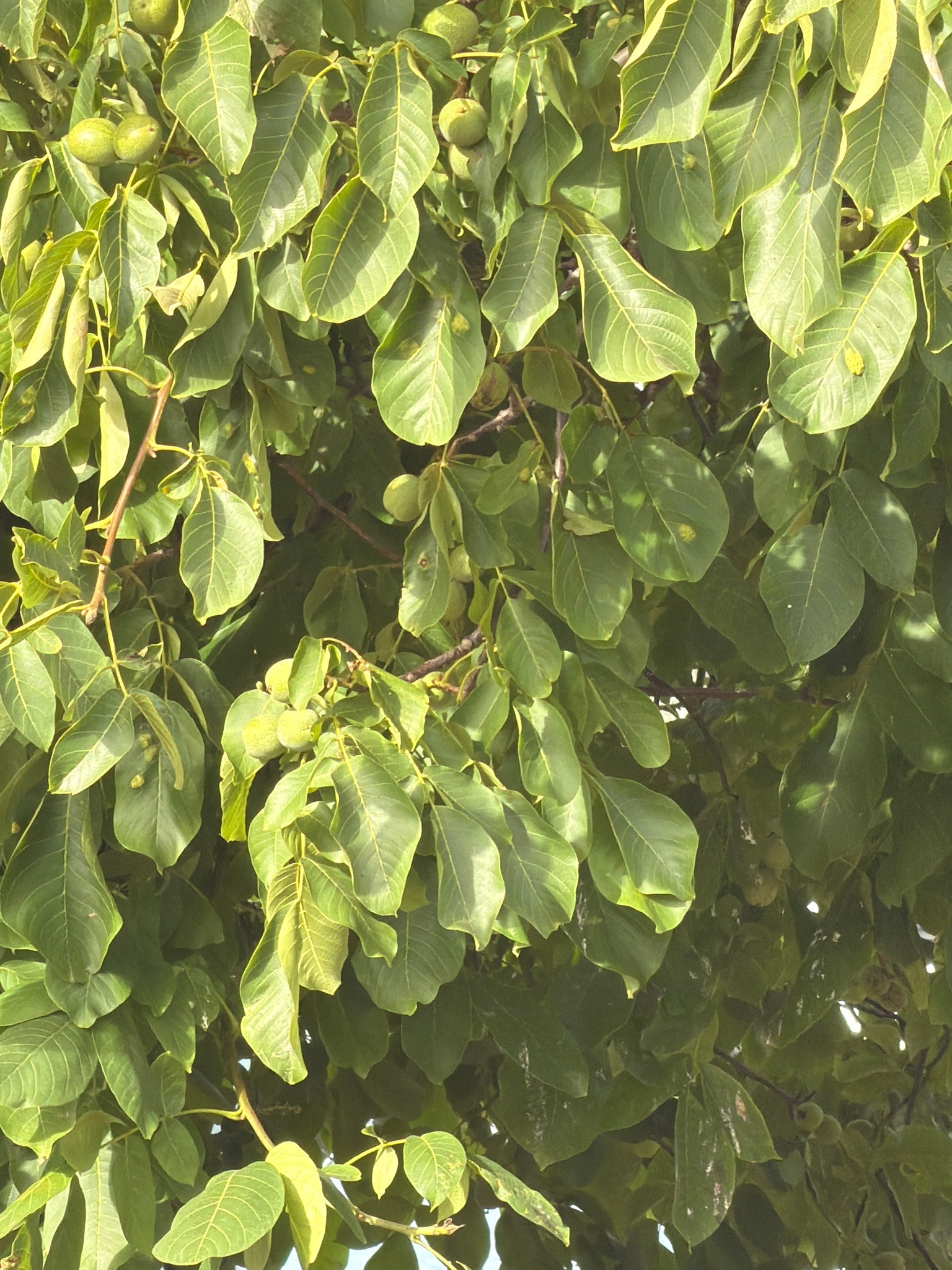
English Walnut
Juglans regia
A large, broad-canopied deciduous tree featuring alternate, pinnately compound leaves composed of several elliptic to oval leaflets, accompanied by globose green outer structures enclosing the hard inner components.
- Light
- Full sun, requiring at least six to eight hours of direct daily sunlight for optimal canopy development.
- Water
- Requires regular moisture, especially when young. Mature trees tolerate moderate dry periods but perform best with deep, occasional watering during prolonged dry spells. Avoid waterlogged conditions.
- Growth
- Large deciduous perennial tree with a rounded, spreading canopy, growing to mature heights of 40 to 60 feet or more with a comparable spread at a moderate growth rate.
Care instructions
Plant in an open location receiving abundant direct sunlight. Provide deep, consistent moisture during establishment, allowing soil to dry slightly between watering sessions. Apply balanced fertilizer in early spring if growth is slow, and maintain mulch around the base while keeping it away from the direct trunk.
Growing details
Sunlight
Full sun, requiring at least six to eight hours of direct daily sunlight for optimal canopy development.
Watering
Requires regular moisture, especially when young. Mature trees tolerate moderate dry periods but perform best with deep, occasional watering during prolonged dry spells. Avoid waterlogged conditions.
Soil
Thrives in deep, fertile, well-draining loamy soils with a neutral to slightly alkaline pH range between 6.0 and 7.5.
Hardiness zone
USDA zones 4 through 9, demonstrating good cold tolerance in winter while benefiting from protection against late spring frosts.
Growth habit
Large deciduous perennial tree with a rounded, spreading canopy, growing to mature heights of 40 to 60 feet or more with a comparable spread at a moderate growth rate.
Bloom season
Spring; produces inconspicuous yellowish-green catkins alongside small flowers before the full foliage develops.
Propagation
Typically propagated through seeds sown in autumn or by grafting selected cultivars onto seedling rootstocks in early spring.
Common pests & issues
Susceptible to fungal leaf spots, bacterial blight, and root rots in poorly drained soils. Pests include aphids and scale insects, managed through good cultural practices and targeted treatments.
Similar species
Black Walnut (Juglans nigra), which can be distinguished by darker, deeply furrowed bark, more leaflets per leaf, and darker, deeply grooved shells.