
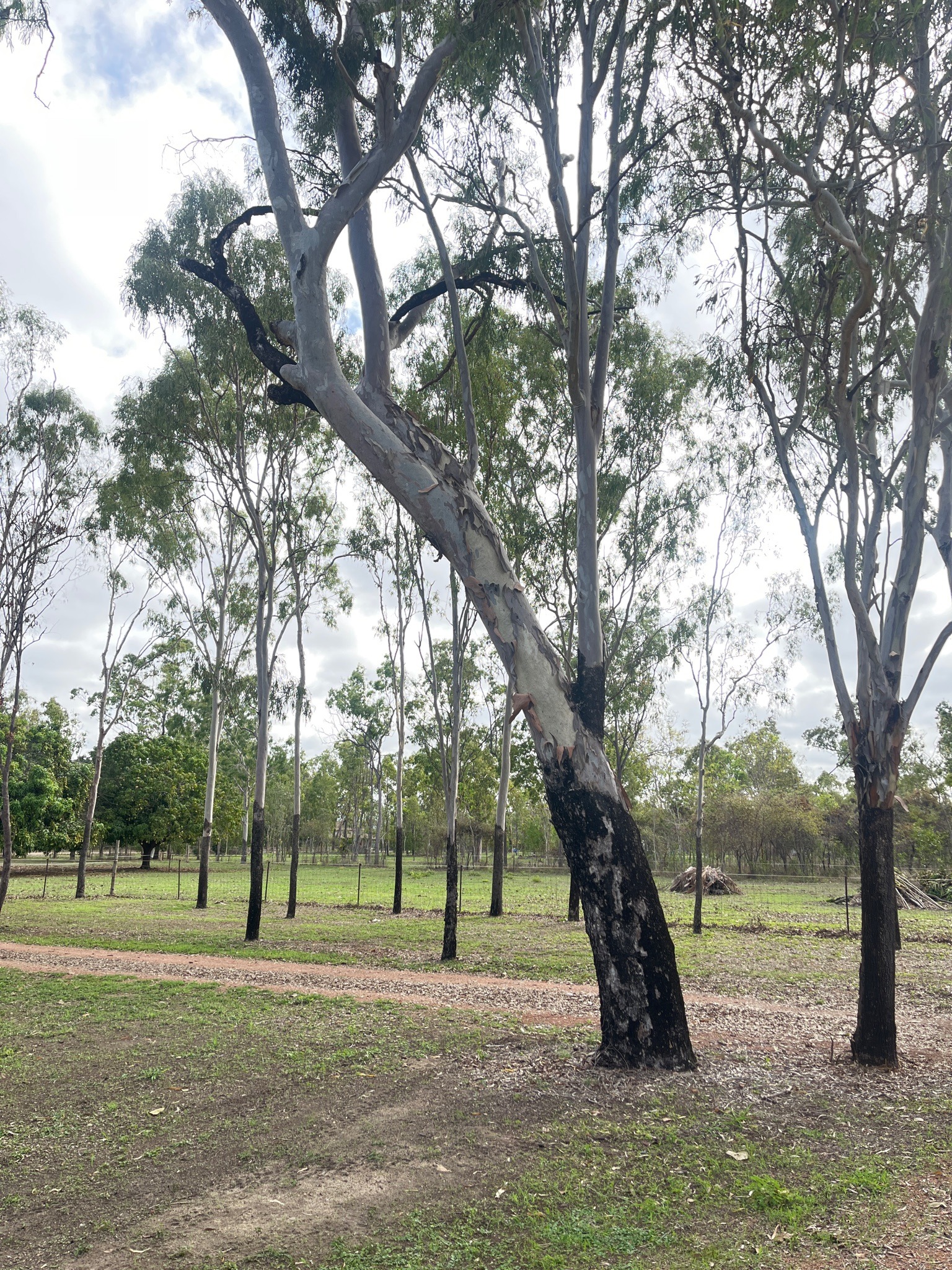
Eucalyptus
Eucalyptus spp.
Large evergreen trees or shrubs characterized by smooth, peeling bark, aromatic lance-shaped leaves, and distinctive woody capsule fruits.
- Light
- Full sun, requiring at least 6 to 8 hours of direct sunlight per day.
- Water
- High drought tolerance once established. Water regularly when young, reducing frequency for mature trees. Avoid soggy soil conditions.
- Growth
- Perennial evergreen tree featuring a fast growth rate, upright or spreading form, with mature heights varying from 30 to over 100 feet depending on the species.
Care instructions
Provide full sun exposure and well-draining soil. Water deeply during establishment, allowing soil to dry between waterings. Apply balanced, slow-release fertilizer in spring.
Growing details
Sunlight
Full sun, requiring at least 6 to 8 hours of direct sunlight per day.
Watering
High drought tolerance once established. Water regularly when young, reducing frequency for mature trees. Avoid soggy soil conditions.
Soil
Prefers well-draining sandy loam, clay loam, or slightly acidic to neutral soils with a pH between 5.5 and 7.0.
Hardiness zone
USDA Hardiness Zones 8 through 11, depending on the specific species.
Growth habit
Perennial evergreen tree featuring a fast growth rate, upright or spreading form, with mature heights varying from 30 to over 100 feet depending on the species.
Bloom season
Varies by species, typically producing clusters of white, cream, yellow, or red fuzzy stamens without true petals, often occurring in spring or summer.
Propagation
Propagated primarily from seeds sown in spring or through stem cuttings, though growing from seed is more common in forestry and large-scale cultivation.
Common pests & issues
Susceptible to root rot in poorly draining soils. Pests include borers, psyllids, and leaf beetles, which can be managed with proper cultural practices and targeted treatments.
Similar species
Angophora and Corymbia genera, which were previously classified under Eucalyptus. They can be distinguished by specific fruit structures, leaf attachment patterns, and bark characteristics.