
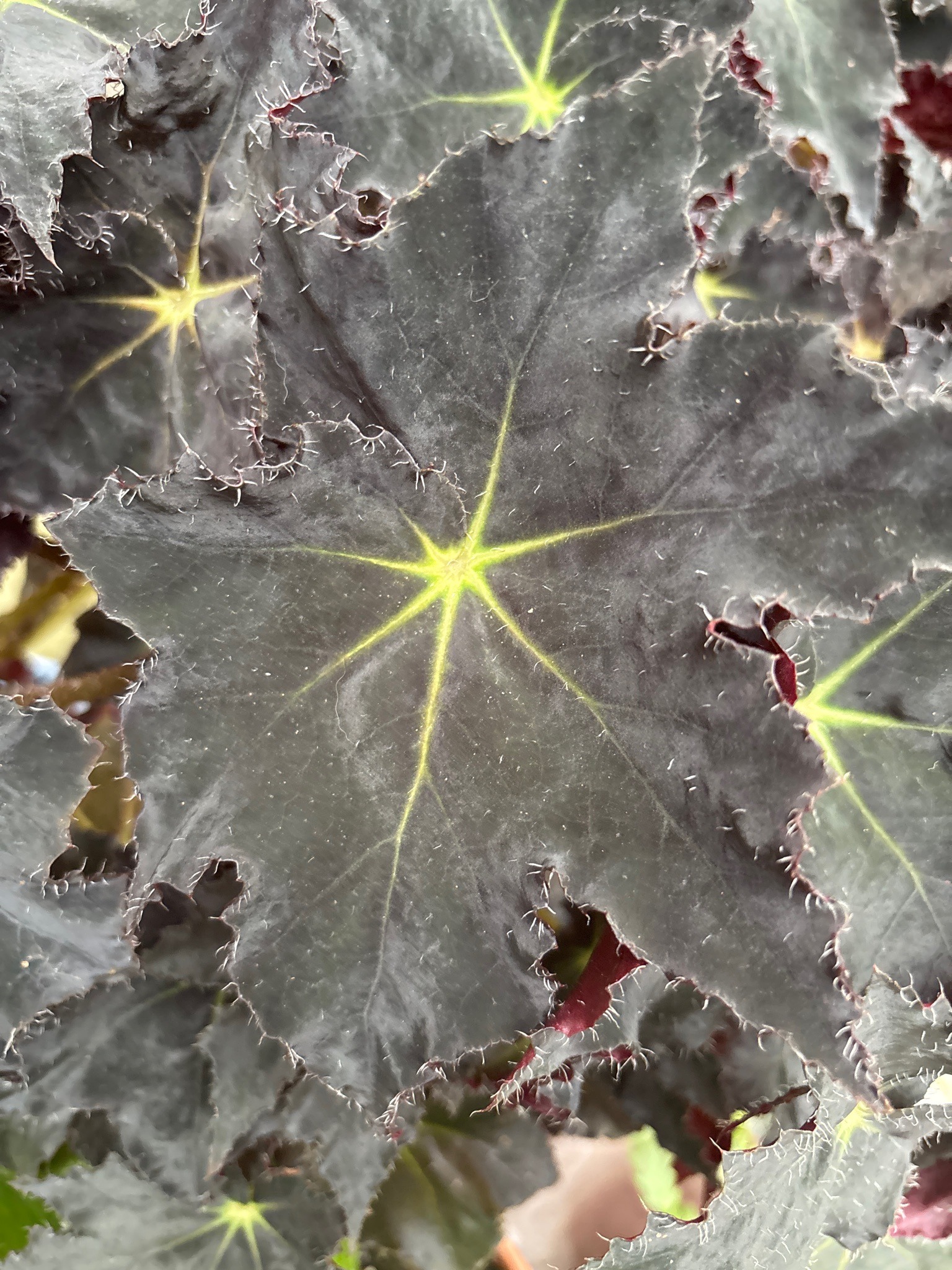
Eyelash Begonia
Begonia bowerae
A compact rhizomatous begonia featuring dark bronze-green to nearly black leaves with bright neon-green star-shaped central vein patterns and distinctive stiff, hair-like cilia along the leaf margins resembling eyelashes.
- Light
- Bright indirect light for 4 to 6 hours daily; protect from harsh direct afternoon sun which can scorch the leaves.
- Water
- Water thoroughly when the top 1 to 2 inches of soil feel dry to the touch. Reduce watering frequency slightly during the winter months.
- Growth
- Perennial, low-growing, and clump-forming with a spreading rhizomatous habit. Reaches a mature height and spread of about 8 to 12 inches.
Care instructions
Provide bright, indirect sunlight and maintain moderate humidity. Allow the top inch of soil to dry out between waterings to prevent root issues, and use a well-draining potting medium.
Growing details
Sunlight
Bright indirect light for 4 to 6 hours daily; protect from harsh direct afternoon sun which can scorch the leaves.
Watering
Water thoroughly when the top 1 to 2 inches of soil feel dry to the touch. Reduce watering frequency slightly during the winter months.
Soil
Rich, loose, organically fertile soil with excellent drainage and a slightly acidic pH range of 5.5 to 6.5.
Hardiness zone
USDA zones 10 to 11; typically cultivated as a houseplant or annual in cooler temperate regions.
Growth habit
Perennial, low-growing, and clump-forming with a spreading rhizomatous habit. Reaches a mature height and spread of about 8 to 12 inches.
Bloom season
Blooms from late winter to spring, producing small, delicate clusters of pale pink or white flowers on slender stems.
Propagation
Easily propagated through leaf cuttings or division of the creeping rhizomes during the active growing season.
Common pests & issues
Prone to powdery mildew and stem rot if kept in conditions with poor air circulation or excessive moisture. Pests such as mealybugs and spider mites may occasionally appear.
Similar species
Begonia rex cultivars, which feature similarly vibrant leaf variegation and textures, but can be distinguished by specific leaf shape variations and the distinct ciliated fringe margins characteristic of Begonia bowerae.