
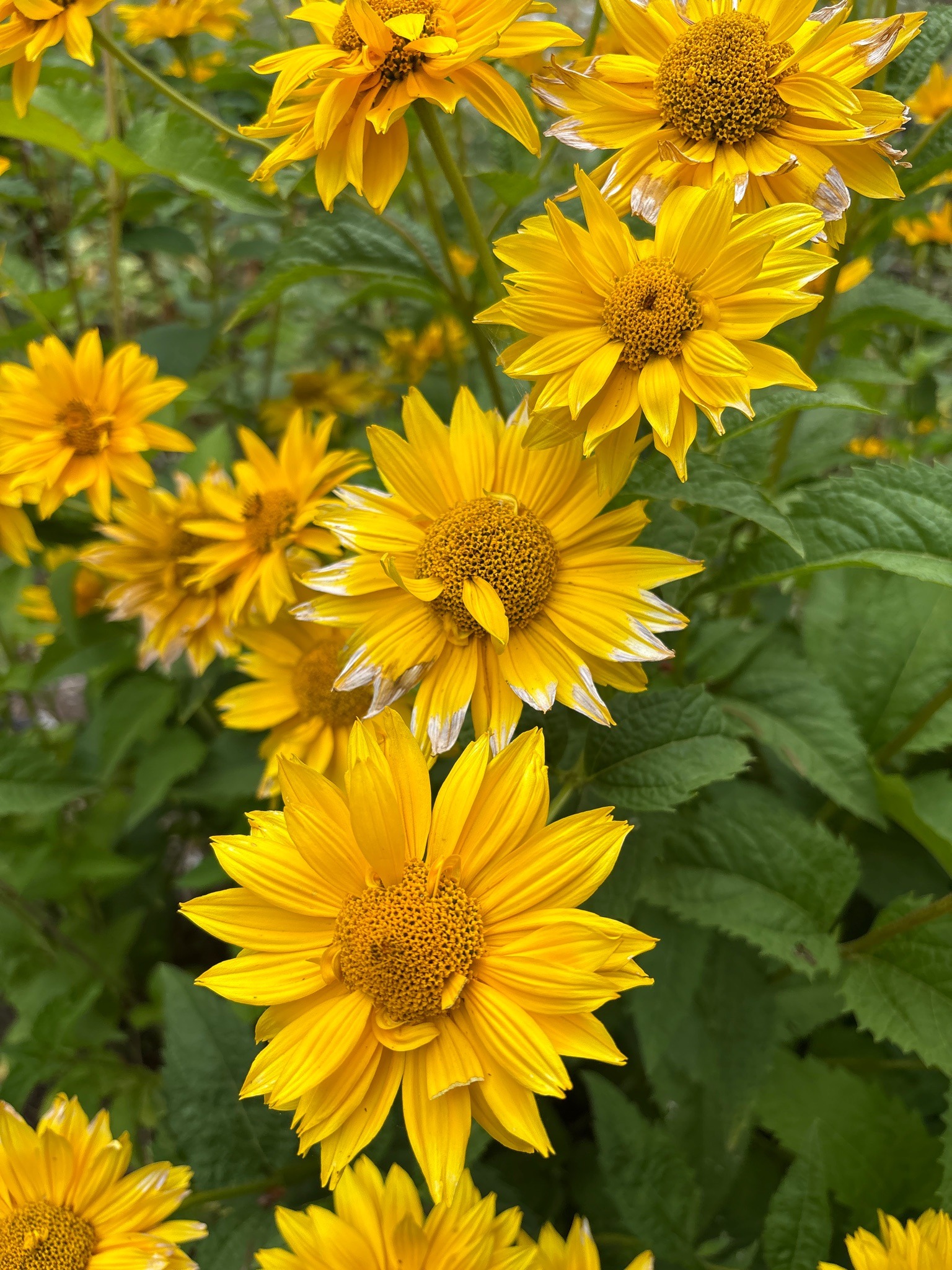
False Sunflower
Heliopsis helianthoides
An upright herbaceous perennial featuring vibrant golden-yellow daisy-like flower heads with prominent central cones and coarse, opposite, serrated leaves.
- Light
- Full sun preferred (at least 6 hours of direct light daily) for optimal flowering and sturdy stems, though it tolerates light partial shade.
- Water
- Requires low to moderate moisture. Water deeply during dry spells, allowing the top layer of soil to dry out between waterings.
- Growth
- Herbaceous perennial growing in upright clumps. Reaches a mature height of 3 to 6 feet (90-180 cm) with a spread of 2 to 4 feet (60-120 cm). Growth rate is moderate to fast.
Care instructions
Plant in a location with full sun and well-draining soil. Water regularly until established; mature plants are moderately drought tolerant. Feed sparingly with balanced fertilizer to prevent tall, weak stems.
Growing details
Sunlight
Full sun preferred (at least 6 hours of direct light daily) for optimal flowering and sturdy stems, though it tolerates light partial shade.
Watering
Requires low to moderate moisture. Water deeply during dry spells, allowing the top layer of soil to dry out between waterings.
Soil
Adaptable to many soil types including clay, loam, and sandy soils, provided they are well-draining. Neutral to slightly acidic pH is ideal.
Hardiness zone
USDA zones 3 through 9.
Growth habit
Herbaceous perennial growing in upright clumps. Reaches a mature height of 3 to 6 feet (90-180 cm) with a spread of 2 to 4 feet (60-120 cm). Growth rate is moderate to fast.
Bloom season
Mid-summer to early autumn. Produces abundant yellow ray florets surrounding a raised golden-yellow center disc.
Propagation
Propagate by seed in autumn or spring, or by dividing established clumps in early spring or fall.
Common pests & issues
Generally low-maintenance, but can occasionally suffer from powdery mildew, aphids, or red spider mites in dry, hot conditions.
Similar species
Often confused with true sunflowers (Helianthus species) and coneflowers (Rudbeckia species). Heliopsis has raised cone centers that remain yellow rather than turning brown or dark purple, and its ray flowers persist on dried flower heads.