
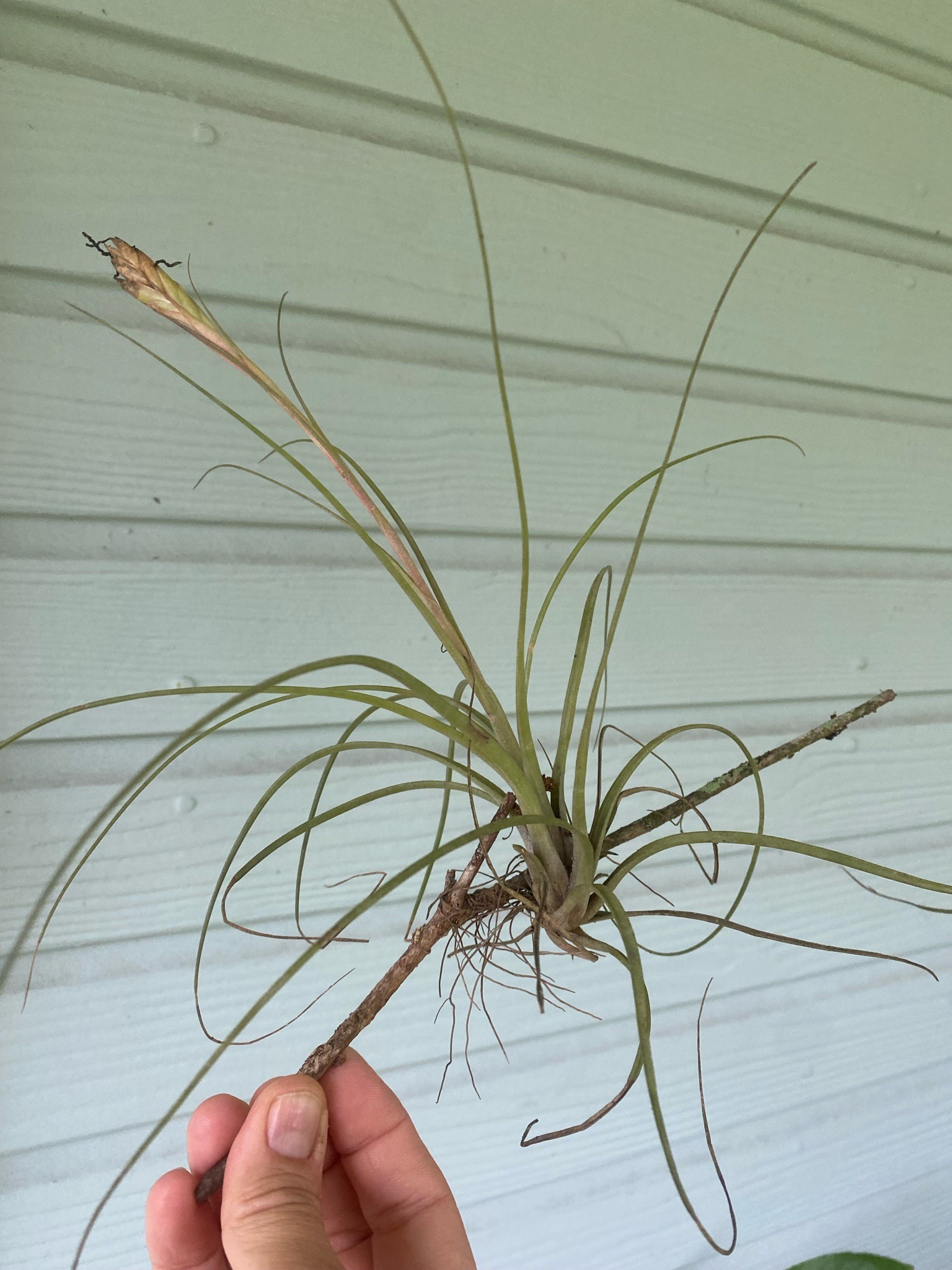
Fasciculata air plant
Tillandsia fasciculata
An epiphyte featuring a rosette of stiff, arching, narrow green leaves with fine trichomes, producing a distinct elongated central inflorescence spike.
- Light
- Bright, indirect light, approximately 6 to 8 hours daily
- Water
- Mist or soak 2-3 times weekly, adjusting frequency based on ambient humidity; ensure rapid drying to avoid moisture accumulation in the leaf base
- Growth
- Perennial epiphyte forming a single rosette, growing to approximately 6 to 12 inches tall and wide with a moderate growth rate
Care instructions
Provide bright, indirect sunlight or filtered light. Submerge in water or mist thoroughly 2-3 times per week, allowing the plant to dry completely upside down within a few hours to prevent rot. No traditional soil is needed as it is an epiphyte; mounting on wood or bark is ideal.
Growing details
Sunlight
Bright, indirect light, approximately 6 to 8 hours daily
Watering
Mist or soak 2-3 times weekly, adjusting frequency based on ambient humidity; ensure rapid drying to avoid moisture accumulation in the leaf base
Soil
Grows epiphytically without soil attached to bark, driftwood, or mounted surfaces, requiring open air circulation
Hardiness zone
USDA zones 9 through 11, intolerant of freezing temperatures
Growth habit
Perennial epiphyte forming a single rosette, growing to approximately 6 to 12 inches tall and wide with a moderate growth rate
Bloom season
Blooms primarily in spring or summer, producing a striking multi-branched pink or red bract with small purple or blue tubular flowers
Propagation
Propagated by offsets or pups that emerge at the base of the parent plant after flowering, which can be gently separated once they reach one-third the size of the mother plant
Common pests & issues
Prone to crown rot if allowed to remain wet in stagnant air; can occasionally attract mealybugs or scale, treatable with targeted horticultural oils if necessary
Similar species
Tillandsia utriculata, distinguished by its larger, more swollen bulbous base and different inflorescence branching pattern