
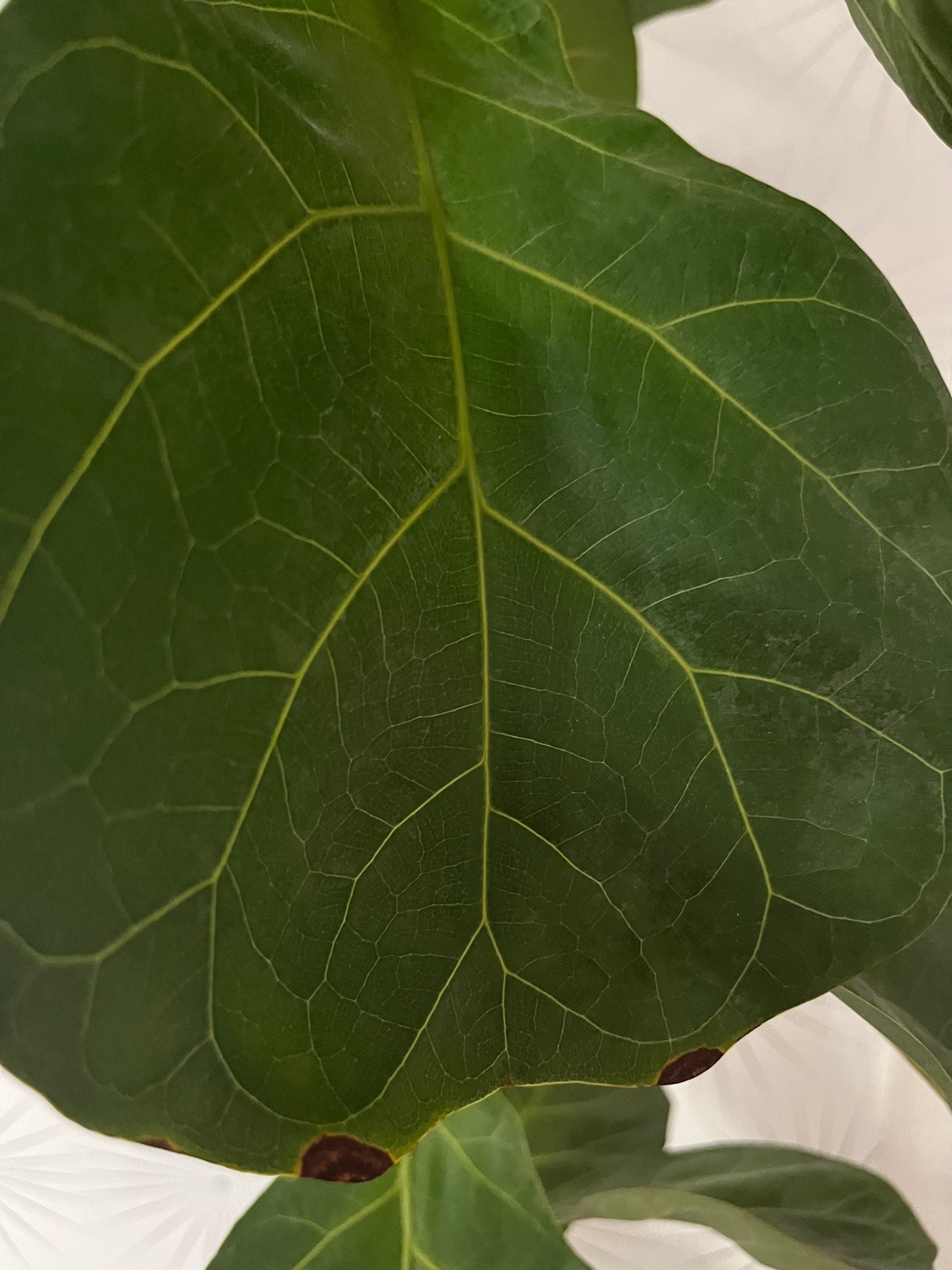
Fiddle Leaf Fig
Ficus lyrata
A prominent indoor ornamental plant featuring very large, heavily veined, violin-shaped, dark green leathery leaves with slightly ruffled edges.
- Light
- Bright indirect light, about 6 to 8 hours daily, avoiding harsh direct midday sun that can scorch the foliage.
- Water
- Water deeply when the top 2 to 3 inches of soil are dry. Allow excess water to drain completely. Avoid keeping the root system in standing water.
- Growth
- Upright evergreen tree with a single or multi-stemmed habit, capable of reaching heights of 6 to 10 feet indoors and significantly taller in its native outdoor habitat.
Care instructions
Provide bright, filtered light and water thoroughly only when the top few inches of soil become dry. Maintain high humidity and feed monthly during the active growing season with a balanced liquid fertilizer.
Growing details
Sunlight
Bright indirect light, about 6 to 8 hours daily, avoiding harsh direct midday sun that can scorch the foliage.
Watering
Water deeply when the top 2 to 3 inches of soil are dry. Allow excess water to drain completely. Avoid keeping the root system in standing water.
Soil
Rich, well-draining potting mix with organic matter and a slightly acidic to neutral pH range between 6.0 and 7.0.
Hardiness zone
USDA zones 10 to 11, typically grown indoors in cooler temperate regions.
Growth habit
Upright evergreen tree with a single or multi-stemmed habit, capable of reaching heights of 6 to 10 feet indoors and significantly taller in its native outdoor habitat.
Bloom season
Rarely blooms when cultivated indoors; flowers are insignificant and enclosed within a fleshy receptacle typical of the genus.
Propagation
Propagated successfully via stem cuttings or air layering during the spring and summer months.
Common pests & issues
Prone to leaf drop from sudden environmental changes, overwatering leading to root issues, and occasional infestations of spider mites or scale insects.
Similar species
Ficus elastica (Rubber Tree), which features oval-shaped, glossy leaves without the distinctive violin-shaped lobes of the Fiddle Leaf Fig.