
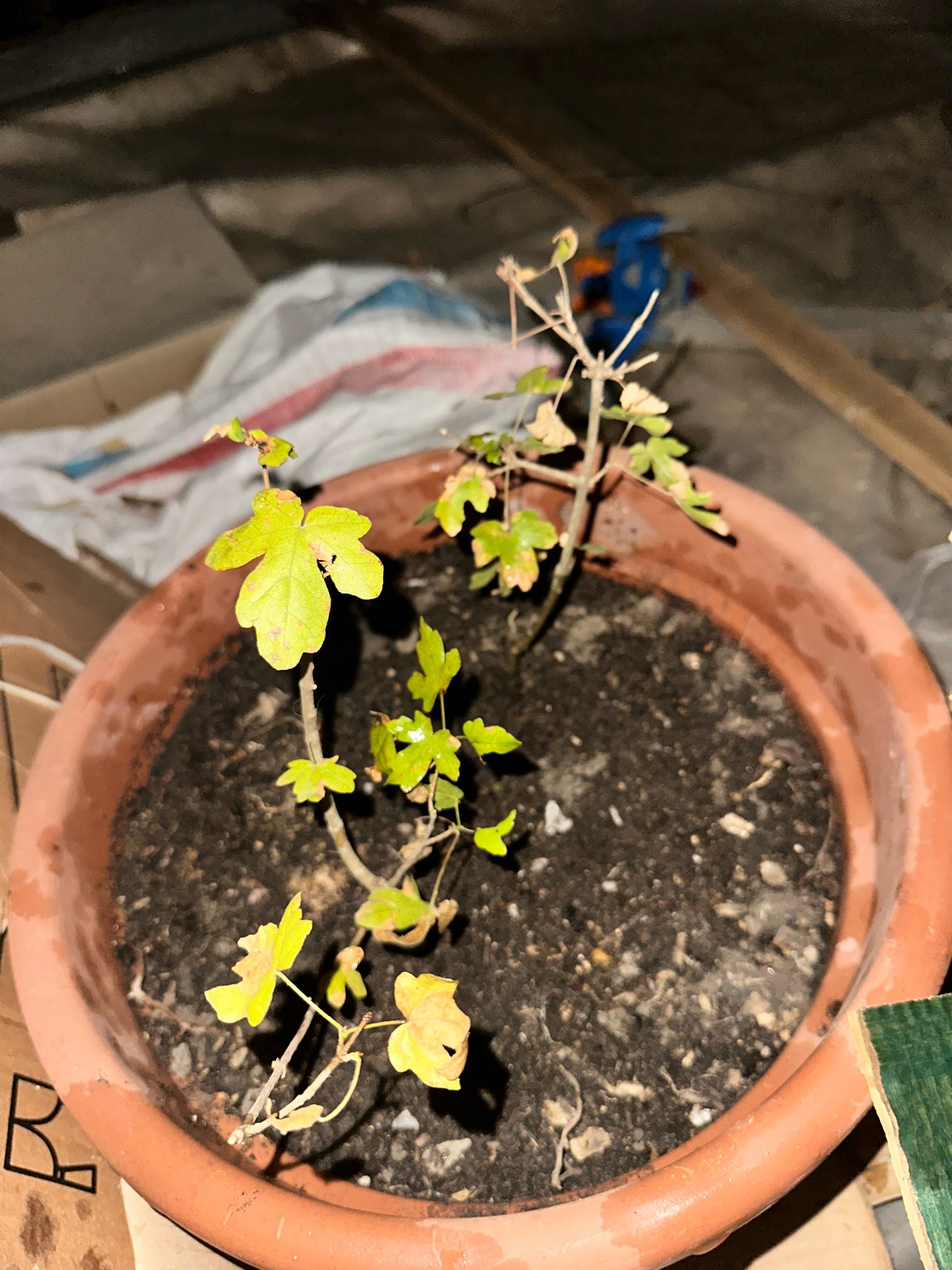
Field Maple
Acer campestre
A small deciduous tree or large shrub featuring small, palmately lobed leaves with blunt tips and corky bark on older stems, shown here as young saplings in a container.
- Light
- Full sun to partial shade, requiring at least 4 to 6 hours of direct sunlight daily.
- Water
- Water regularly when the top layer of soil becomes dry to the touch. Container-grown specimens require more frequent monitoring than those planted in the ground.
- Growth
- Perennial woody plant with a rounded, dense crown. Mature size typically ranges from 15 to 25 meters in height if planted in open ground, though container growth restricts overall dimensions.
Care instructions
Provide full sun to partial shade with well-draining soil. Keep the soil moderately moist, allowing the top inch to dry out between waterings. Feed with a balanced, slow-release fertilizer during the active growing season in spring.
Growing details
Sunlight
Full sun to partial shade, requiring at least 4 to 6 hours of direct sunlight daily.
Watering
Water regularly when the top layer of soil becomes dry to the touch. Container-grown specimens require more frequent monitoring than those planted in the ground.
Soil
Prefers loamy, sandy, or clay soils with good drainage and a neutral to slightly alkaline pH range between 6.0 and 7.5.
Hardiness zone
USDA Hardiness Zones 5 through 8, demonstrating strong tolerance to urban pollution and moderate winds.
Growth habit
Perennial woody plant with a rounded, dense crown. Mature size typically ranges from 15 to 25 meters in height if planted in open ground, though container growth restricts overall dimensions.
Bloom season
Flowers in spring with small, inconspicuous greenish-yellow flowers grouped in upright corymbs, followed by distinctive winged samaras.
Propagation
Propagated primarily through seeds sown in autumn or via softwood cuttings taken in early summer.
Common pests & issues
Susceptible to aphids, powdery mildew, and leaf spot under humid conditions or poor air circulation.
Similar species
Can be distinguished from Norway Maple (Acer platanoides) by its smaller, blunt-lobed leaves and milky sap absence.