
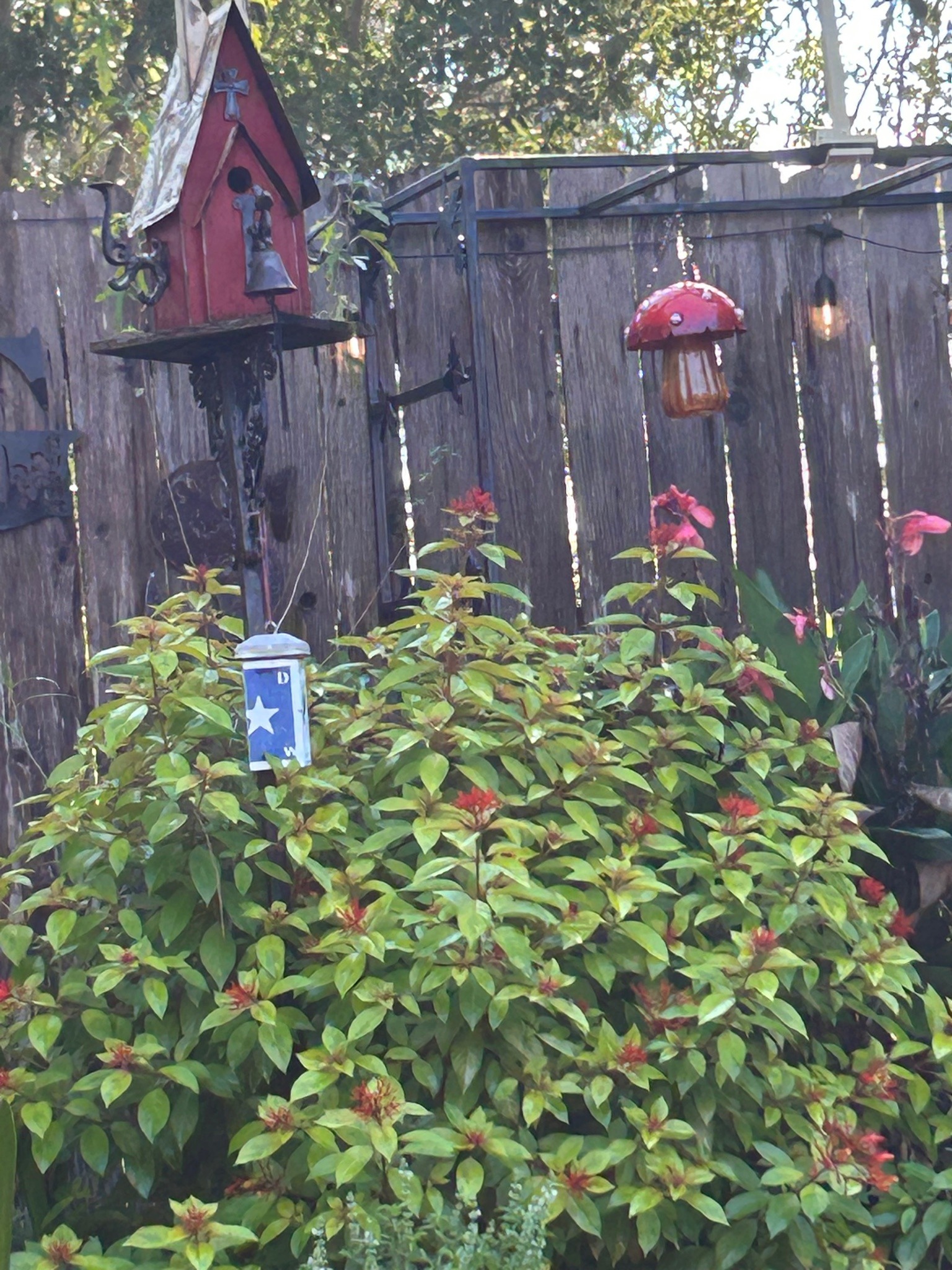
Firebush
Hamelia patens
A large, multi-stemmed evergreen shrub featuring whorled leaves with reddish veins, downy stems, and clusters of tubular, bright orange to red flowers that bloom continuously in warm weather.
- Light
- Full sun to partial shade, requiring at least six hours of direct sunlight per day for optimal flowering.
- Water
- Water deeply when the top few inches of soil feel dry. Mature plants tolerate occasional dry periods, but consistent moisture maintains lush foliage and abundant blooms.
- Growth
- A woody, upright, perennial shrub with a rounded growth habit, typically reaching mature heights and spreads of 4 to 10 feet with a moderate to fast growth rate.
Care instructions
Plant in full sun to partial shade in well-draining soil. Water regularly until established to build a strong root system, after which it exhibits moderate drought tolerance. Apply a balanced, slow-release fertilizer in early spring to encourage vigorous growth and prolific flowering.
Growing details
Sunlight
Full sun to partial shade, requiring at least six hours of direct sunlight per day for optimal flowering.
Watering
Water deeply when the top few inches of soil feel dry. Mature plants tolerate occasional dry periods, but consistent moisture maintains lush foliage and abundant blooms.
Soil
Prefers loose, well-draining loam or sandy soils with a slightly acidic to neutral pH range of 6.0 to 7.0.
Hardiness zone
USDA Hardiness Zones 9 through 11, behaving as a perennial in frost-free regions and dying back to the ground in cooler temperate zones.
Growth habit
A woody, upright, perennial shrub with a rounded growth habit, typically reaching mature heights and spreads of 4 to 10 feet with a moderate to fast growth rate.
Bloom season
Blooms continuously from late spring through the first autumn frost, producing vibrant tubular red-orange flowers arranged in terminal cymes.
Propagation
Propagated easily from softwood stem cuttings taken in spring or summer, or by sowing seeds in a warm, moist germination medium.
Common pests & issues
Generally resilient against major pests and diseases, though occasional infestations of spider mites or scale insects may occur in overly dry indoor or sheltered outdoor environments. Prevent issues by ensuring adequate air circulation.
Similar species
Can be compared to other members of the Rubiaceae family, but is easily distinguished by its distinctive whorled leaves, velvety stems, and fiery tubular blossoms.