
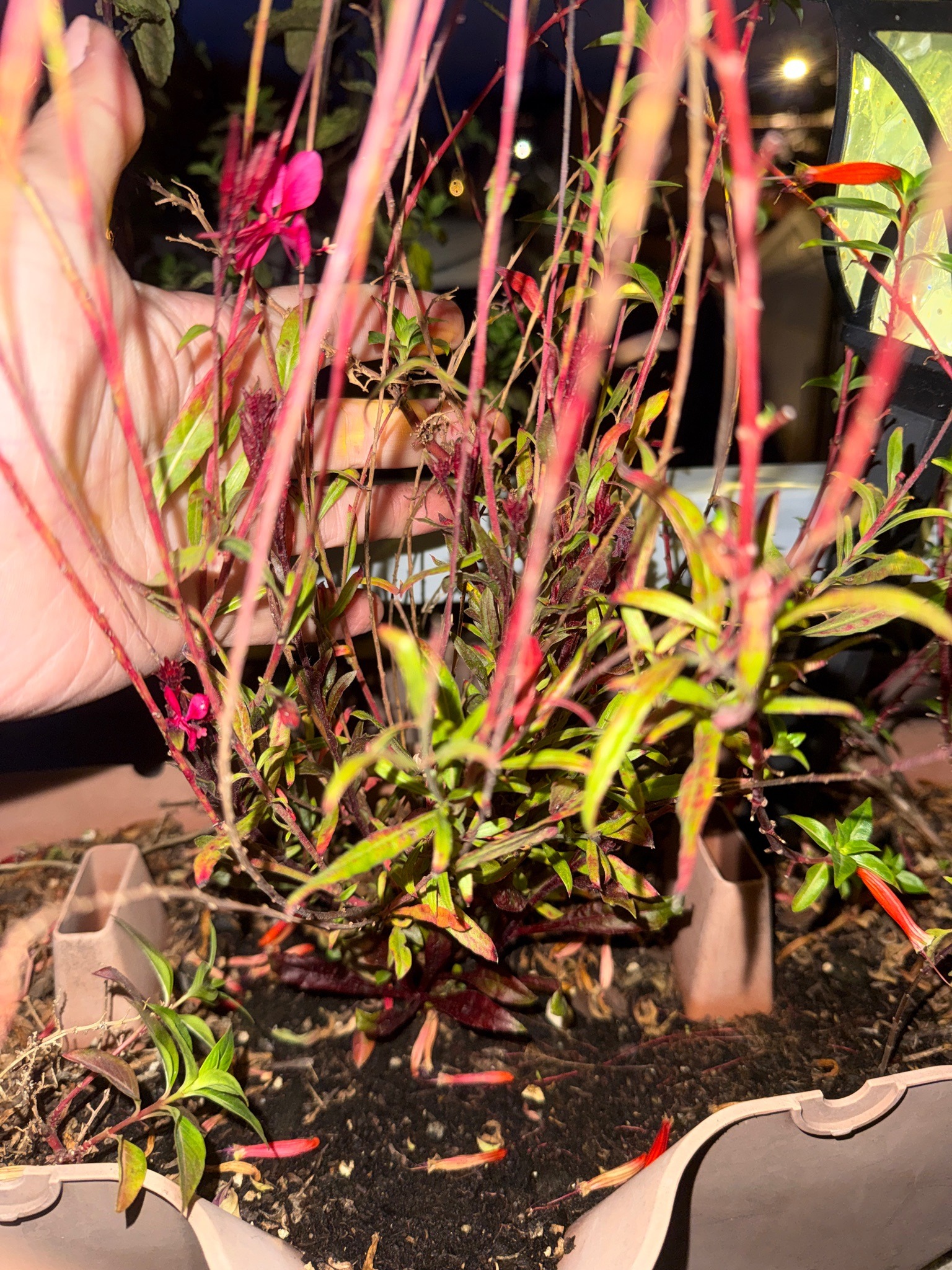
Firecracker Plant
Cuphea ignea
A small, shrubby perennial featuring slender, tubular, bright red or orange flowers with white and dark rims, accompanied by glossy green lance-shaped leaves and reddish stems.
- Light
- Full sun to partial shade, approximately 6 hours or more of direct sunlight daily.
- Water
- Water regularly to keep the soil evenly moist. It appreciates moderate moisture and can tolerate brief dry spells once established, but avoid prolonged drought.
- Growth
- A compact, mounding subshrub or herbaceous perennial, growing typically 1 to 2 feet in height with a similar spread, exhibiting a moderate growth rate.
Care instructions
Provide full sun to partial shade, keep the soil consistently moist but well-draining, and apply a balanced, water-soluble fertilizer monthly during the growing season.
Growing details
Sunlight
Full sun to partial shade, approximately 6 hours or more of direct sunlight daily.
Watering
Water regularly to keep the soil evenly moist. It appreciates moderate moisture and can tolerate brief dry spells once established, but avoid prolonged drought.
Soil
Rich, well-draining potting mix or garden loam with a slightly acidic to neutral pH range of 6.0 to 7.0.
Hardiness zone
USDA zones 9 through 11; grown as an annual in cooler climates.
Growth habit
A compact, mounding subshrub or herbaceous perennial, growing typically 1 to 2 feet in height with a similar spread, exhibiting a moderate growth rate.
Bloom season
Blooms continuously from late spring through the first autumn frosts, producing small, tubular, cigar-shaped orange-red flowers.
Propagation
Easily propagated via herbaceous stem cuttings taken in spring or summer, or by starting from seeds.
Common pests & issues
Generally resilient, but susceptible to aphids, whiteflies, and spider mites in dry indoor or greenhouse conditions. Root rot may occur if soil drainage is poor.
Similar species
Cuphea hyssopifolia (False Heather), which features smaller purple, pink, or white flowers and narrower leaves.