
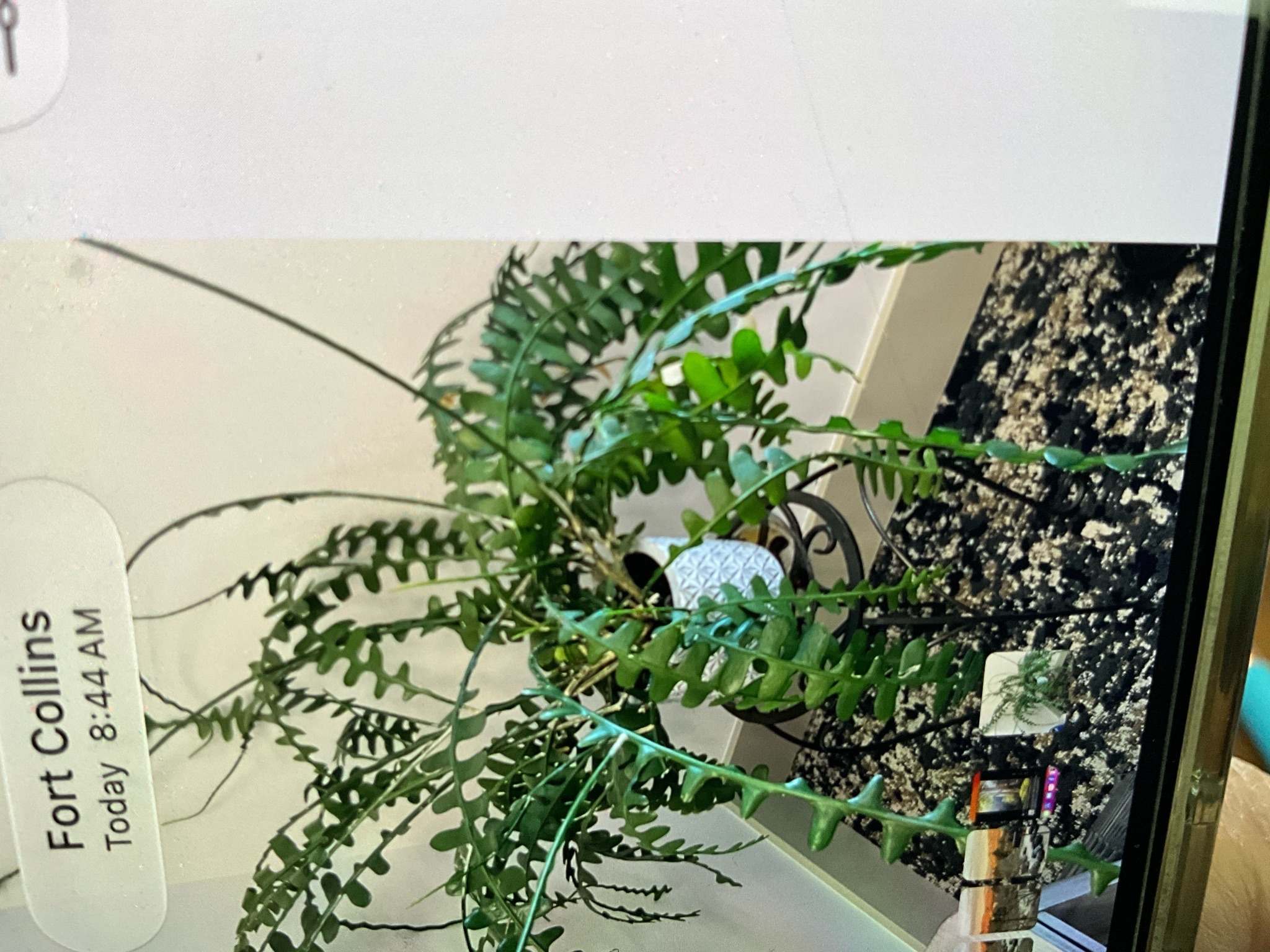
Fishbone Cactus
Disocactus anguliger
An epiphytic cactus featuring distinctive flat, deeply scalloped stems that resemble the skeleton of a fish or a zigzag pattern, growing in a cascading form.
- Light
- Bright indirect light to partial shade, around 6 to 8 hours daily; avoid harsh direct afternoon sun which can scorch the stems.
- Water
- Allow the soil to dry out completely between waterings. Water less frequently during the cooler winter months.
- Growth
- Perennial epiphytic epiphyte with cascading stems, reaching lengths of 2 to 3 feet with a moderate growth rate.
Care instructions
Provide bright indirect light, water thoroughly only when the top few inches of soil are completely dry, and plant in a well-draining epiphytic potting mix.
Growing details
Sunlight
Bright indirect light to partial shade, around 6 to 8 hours daily; avoid harsh direct afternoon sun which can scorch the stems.
Watering
Allow the soil to dry out completely between waterings. Water less frequently during the cooler winter months.
Soil
Loose, exceptionally well-draining soil mix containing orchid bark, perlite, and peat moss with a slightly acidic to neutral pH of 6.0 to 7.0.
Hardiness zone
USDA zones 10 to 11; grown as a houseplant in cooler temperate regions.
Growth habit
Perennial epiphytic epiphyte with cascading stems, reaching lengths of 2 to 3 feet with a moderate growth rate.
Bloom season
Late autumn to early winter, producing large, fragrant, nocturnal white or yellowish flowers with outer reddish petals.
Propagation
Propagated easily through stem cuttings allowed to callus for a few days before planting in a moist, sandy medium.
Common pests & issues
Susceptible to root rot if overwatered or planted in heavy soil. Pests include mealybugs and scale insects, which can be treated with insecticidal soap.
Similar species
Epiphyllum oxypetalum (Queen of the Night) and Selenicereus anthonyanus (Ric Rac Cactus), distinguished by their specific stem lobe shapes and flower characteristics.