
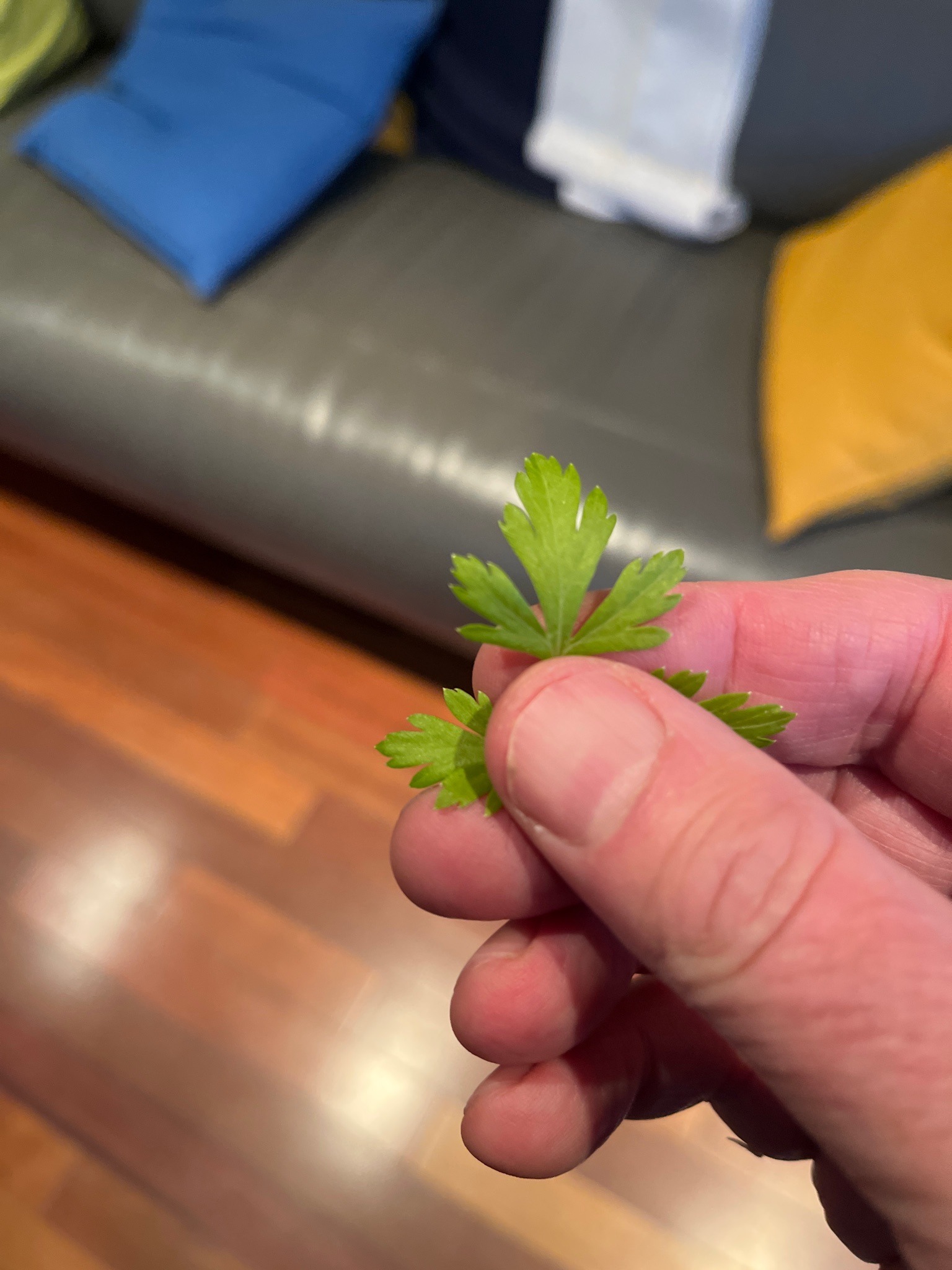
Flat-leaf parsley
Petroselinum crispum
A biennial herbaceous plant featuring bright green, deeply divided, flat compound leaves with lobed leaflets and prominent veining.
- Light
- Full sun to partial shade, approximately 6 hours of direct sunlight per day
- Water
- Requires regular watering to keep the soil evenly moist. Moderate drought tolerance once established, but dry soil leads to stunted growth. Avoid waterlogged conditions.
- Growth
- Herbaceous biennial forming a low-growing rosette of leaves in the first year, reaching a mature height and spread of 30 to 45 centimeters.
Care instructions
Provide full sun to partial shade, keep the soil consistently moist with regular watering, and use well-draining loamy soil rich in organic matter. Apply a balanced liquid fertilizer periodically during the active growing season.
Growing details
Sunlight
Full sun to partial shade, approximately 6 hours of direct sunlight per day
Watering
Requires regular watering to keep the soil evenly moist. Moderate drought tolerance once established, but dry soil leads to stunted growth. Avoid waterlogged conditions.
Soil
Prefers fertile, humus-rich, well-draining loam with a neutral pH range between 6.0 and 7.0.
Hardiness zone
USDA zones 5 through 9, functioning as a biennial in temperate climates.
Growth habit
Herbaceous biennial forming a low-growing rosette of leaves in the first year, reaching a mature height and spread of 30 to 45 centimeters.
Bloom season
Blooms in summer of the second year, producing small, greenish-yellow flowers arranged in compound umbels.
Propagation
Propagated primarily from seeds sown directly into the soil in spring. Germination can be slow and is enhanced by soaking seeds in warm water prior to planting.
Common pests & issues
Susceptible to root rot in poorly draining soils, as well as fungal leaf spot diseases and attacks by aphids or carrot rust flies. Prevent by ensuring good air circulation and proper soil drainage.
Similar species
Look-alikes include Chervil (Anthriscus cerefolium), which has softer, more finely divided leaves, and various other members of the carrot family. Distinguished by the specific flat, triangular leaf segments and distinct leaflet margins.