
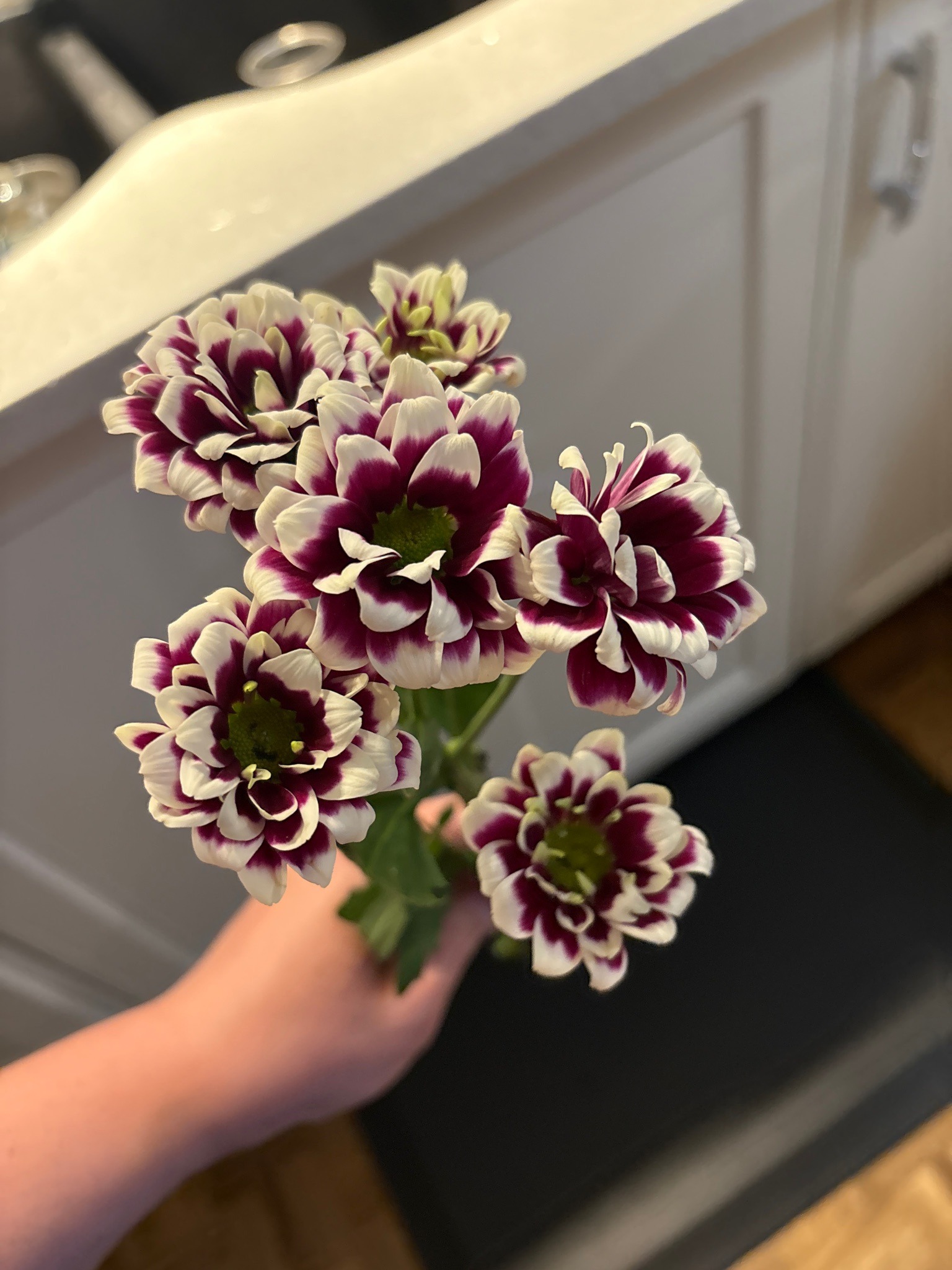
Florist's Daisy
Chrysanthemum × morifolium
A bushy perennial known for its vibrant flower heads in a wide range of forms and colors. The variety pictured exhibits striking bicolored ray florets with deep magenta-purple centers and crisp white margins surrounding a greenish center disc.
- Light
- Full sun, requiring 6 or more hours of direct sunlight per day for optimal bloom production and sturdy stems.
- Water
- Requires regular watering to maintain light, consistent soil moisture. Avoid overwatering to prevent root rot, and water at the base of the plant to keep foliage dry.
- Growth
- Herbaceous perennial forming dense clumps, typically reaching 1 to 3 feet (30 to 90 cm) in height and spread. Moderate to fast growth rate.
Care instructions
Provide full sun outdoors or bright direct light indoors. Keep soil consistently moist but well-drained, avoiding waterlogging. Use rich, loamy soil with a slightly acidic to neutral pH. Feed with a balanced fertilizer every few weeks during the active growing season.
Growing details
Sunlight
Full sun, requiring 6 or more hours of direct sunlight per day for optimal bloom production and sturdy stems.
Watering
Requires regular watering to maintain light, consistent soil moisture. Avoid overwatering to prevent root rot, and water at the base of the plant to keep foliage dry.
Soil
Prefers fertile, well-draining loamy or sandy-clay soil enriched with organic matter. Preferred pH ranges from 6.0 to 7.0.
Hardiness zone
USDA Hardiness Zones 5 to 9
Growth habit
Herbaceous perennial forming dense clumps, typically reaching 1 to 3 feet (30 to 90 cm) in height and spread. Moderate to fast growth rate.
Bloom season
Late summer through autumn. Flower heads consist of overlapping ray florets surrounding a central disc floret, available in single, double, pompon, or spider forms.
Propagation
Propagated via softwood stem cuttings taken in spring or early summer, root division in early spring, or by seed.
Common pests & issues
Susceptible to aphids, spider mites, thrips, leaf miners, powdery mildew, rust, and botrytis blight. Maintain good air circulation and avoid overhead watering.
Similar species
Dahlia species, which have similar composite flower structures but grow from tubers and often have distinct foliage; and Osteospermum (African Daisy), which typically feature single row petals around a dark central disc.