
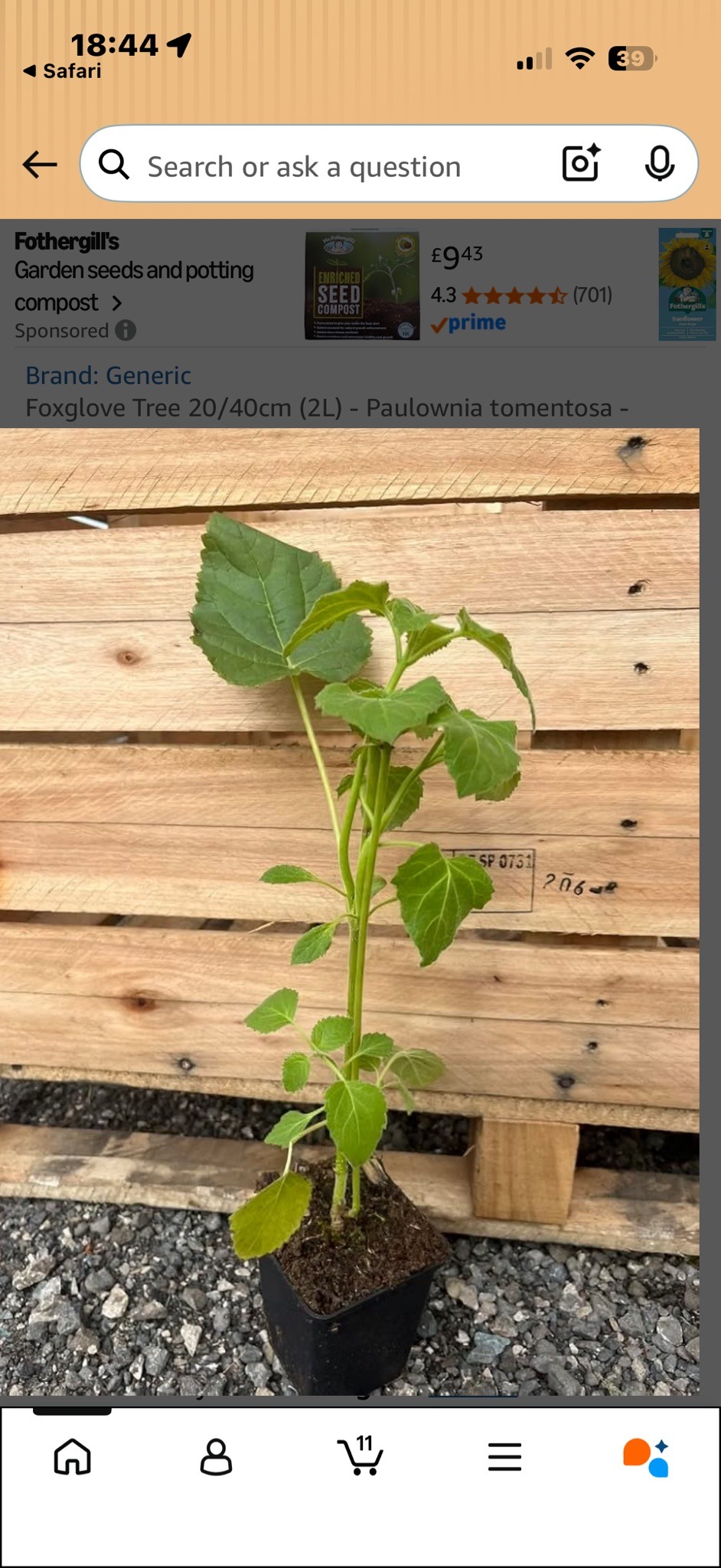
Foxglove Tree
Paulownia tomentosa
A fast-growing deciduous tree known for its very large, heart-shaped leaves and upright, branching habit. It produces showy clusters of pale violet to blue flowers before the leaves fully emerge in spring.
- Light
- Full sun, requiring at least 6 to 8 hours of direct sunlight daily
- Water
- High water requirements when young; becomes moderately drought-tolerant once established. Water deeply when the top two inches of soil feel dry.
- Growth
- Deciduous tree with a rapid growth rate, reaching mature heights of 30 to 50 feet with a broad, spreading crown
Care instructions
Provide full sun and well-draining soil. Water regularly during the establishment phase, reducing frequency once mature. Apply a balanced, slow-release fertilizer in early spring to support rapid vegetative growth.
Growing details
Sunlight
Full sun, requiring at least 6 to 8 hours of direct sunlight daily
Watering
High water requirements when young; becomes moderately drought-tolerant once established. Water deeply when the top two inches of soil feel dry.
Soil
Adaptable to a wide range of well-draining soils including loam, sand, and clay, preferring a neutral pH range between 6.0 and 7.5
Hardiness zone
USDA Hardiness Zones 5 through 9
Growth habit
Deciduous tree with a rapid growth rate, reaching mature heights of 30 to 50 feet with a broad, spreading crown
Bloom season
Spring, producing fragrant, tubular, pale violet to purple flowers arranged in upright panicles
Propagation
Propagated via seed sown in spring, root cuttings, or hardwood cuttings taken during the dormant season
Common pests & issues
Generally resilient against major pests, though susceptible to leaf spot, powdery mildew, and root rot if planted in poorly draining soils
Similar species
Catalpa (Catalpa bignonioides), which also features large heart-shaped leaves but can be distinguished by its long bean-like seed pods and white, orchid-like flowers