
Foxglove
Digitalis purpurea
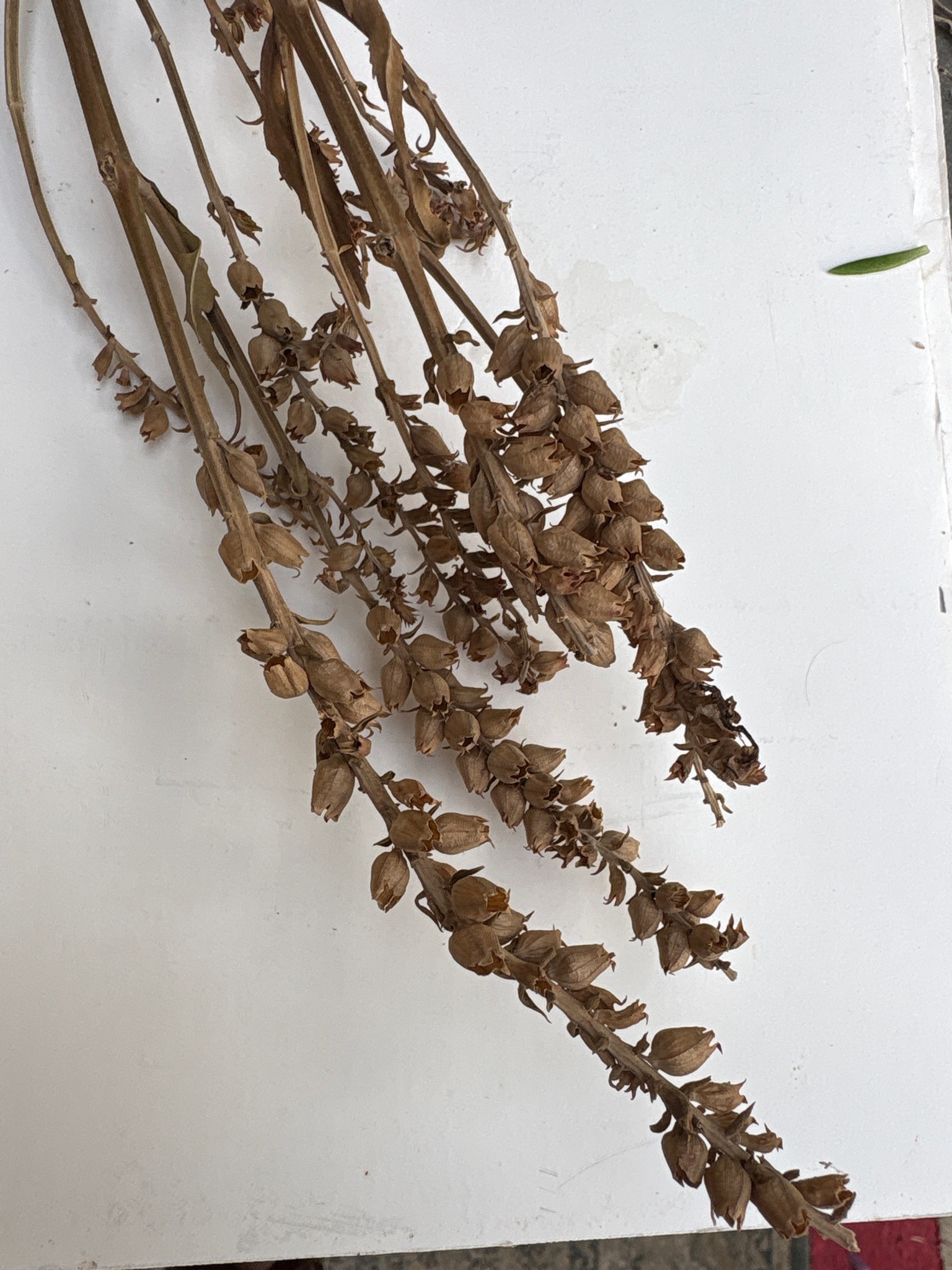
A tall biennial or short-lived perennial plant featuring long upright flowering spikes. Shown here are dried, mature seed capsules arranged along tall dried stems, which persist after the tubular flowers fade.
- Light
- Partial shade to full sun; prefers afternoon shade in hot climates.
- Water
- Requires regular watering to maintain consistently moist soil, especially during warm growth periods.
- Growth
- Biennial or short-lived herbaceous perennial; forms a basal rosette of fuzzy green leaves in its first year, sending up a tall central flower stalk reaching 2 to 5 feet high in its second year.
Care instructions
Grow in partial shade to full sun in moist, well-draining soil rich in organic matter. Water regularly to keep soil consistently damp but not waterlogged. Apply a balanced organic fertilizer in spring to support stem growth.
Growing details
Sunlight
Partial shade to full sun; prefers afternoon shade in hot climates.
Watering
Requires regular watering to maintain consistently moist soil, especially during warm growth periods.
Soil
Prefers rich, humus-dense, moist, well-drained soil with a neutral to slightly acidic pH (approx. 6.0-7.0).
Hardiness zone
USDA Zones 4 through 8.
Growth habit
Biennial or short-lived herbaceous perennial; forms a basal rosette of fuzzy green leaves in its first year, sending up a tall central flower stalk reaching 2 to 5 feet high in its second year.
Bloom season
Late spring through early summer. Features tubular, bell-shaped blossoms on elongated vertical spikes that develop into pointed dry seed capsules.
Propagation
Propagates easily from seeds, which often self-sow freely once established in the garden.
Common pests & issues
Susceptible to powdery mildew, leaf spot, and aphid infestations if air circulation is poor or humidity is excessive.
Similar species
Penstemon species (Beardtongue) have similar tubular flower spikes but produce smaller seed pods and different foliage arrangements.