
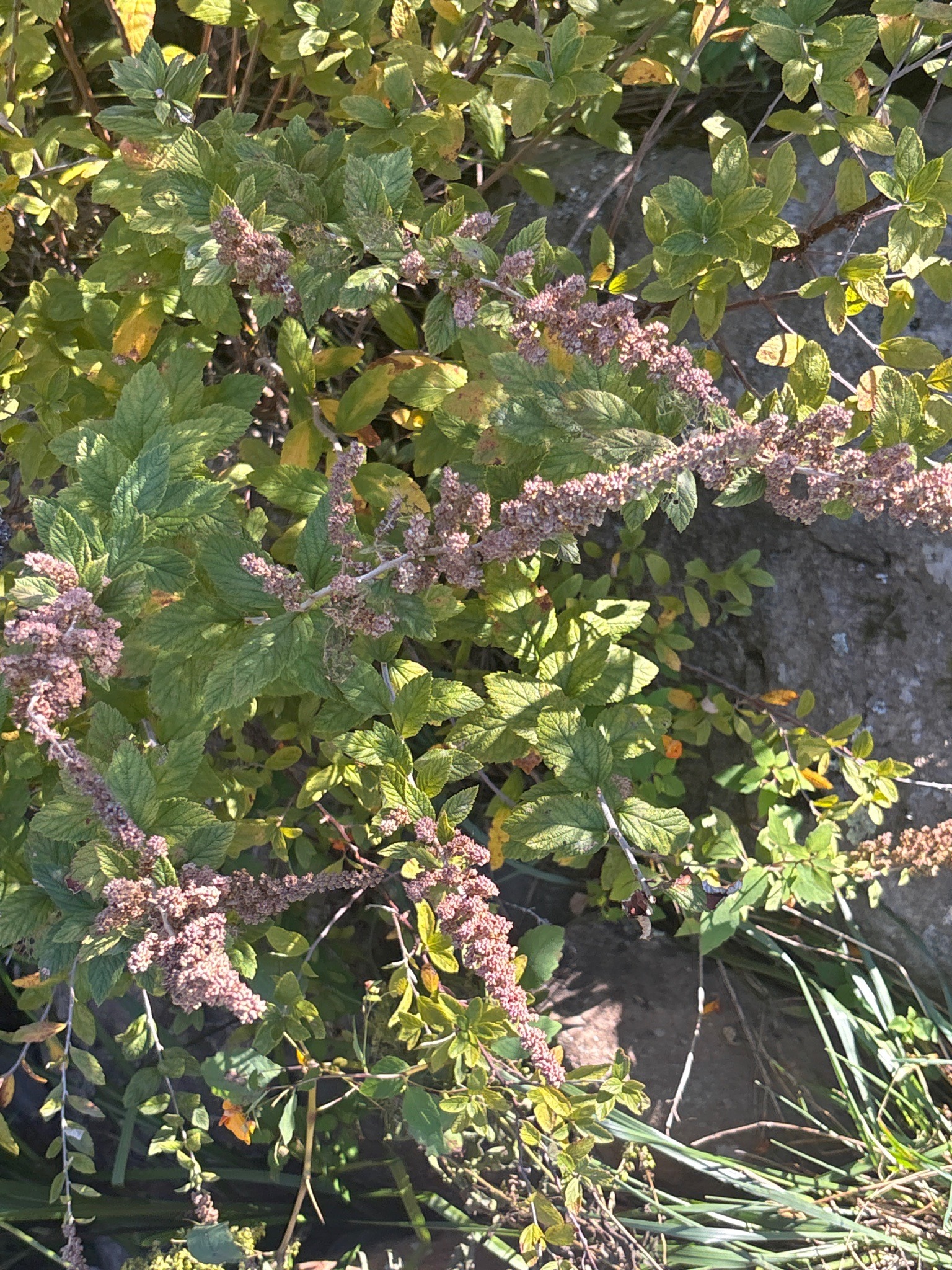
Fragrant Sumac
Rhus aromatica
Fragrant sumac is a low-growing, multi-stemmed deciduous shrub featuring trifoliate leaves with scalloped edges, fuzzy stems, and clusters of small yellowish flowers that develop into dense clusters of fuzzy red fruits.
- Light
- Full sun to partial shade, requiring at least 6 hours of direct sunlight daily for optimal growth and foliage coloration.
- Water
- Low water requirements once established. Water deeply when the soil is dry to the touch during dry spells, allowing soil to dry out between waterings to prevent root rot.
- Growth
- Perennial deciduous shrub with a sprawling, dense, and spreading growth habit. Typically reaches a mature height of 2 to 6 feet and a spread of 6 to 10 feet, with a moderate growth rate.
Care instructions
Provide full sun to partial shade in well-draining soil. Water deeply during the first growing season to establish a deep root system, after which it becomes highly drought tolerant. Pruning is rarely needed except to control spread or remove dead wood.
Growing details
Sunlight
Full sun to partial shade, requiring at least 6 hours of direct sunlight daily for optimal growth and foliage coloration.
Watering
Low water requirements once established. Water deeply when the soil is dry to the touch during dry spells, allowing soil to dry out between waterings to prevent root rot.
Soil
Adaptable to a wide range of soil types including sandy, clay, or loamy soils as long as they are well-draining. Prefers a pH range between 6.0 and 7.5.
Hardiness zone
USDA Hardiness Zones 3 through 9, exhibiting strong tolerance for both cold winters and summer heat.
Growth habit
Perennial deciduous shrub with a sprawling, dense, and spreading growth habit. Typically reaches a mature height of 2 to 6 feet and a spread of 6 to 10 feet, with a moderate growth rate.
Bloom season
Blooms in early spring before the leaves emerge, producing small, inconspicuous yellow flower clusters that lack strong fragrance.
Propagation
Propagated easily through softwood or hardwood cuttings taken in summer or dormant season, division of root suckers, or from seeds that have undergone scarification and cold stratification.
Common pests & issues
Generally trouble-free and resistant to most serious pests and diseases, though occasional issues with leaf spot or powdery mildew can occur in overly humid conditions.
Similar species
Staghorn sumac (Rhus typhina), which can be distinguished by its much larger stature, pinnate leaves with many leaflets, and distinct velvety branches.