
Frangipani
Plumeria rubra
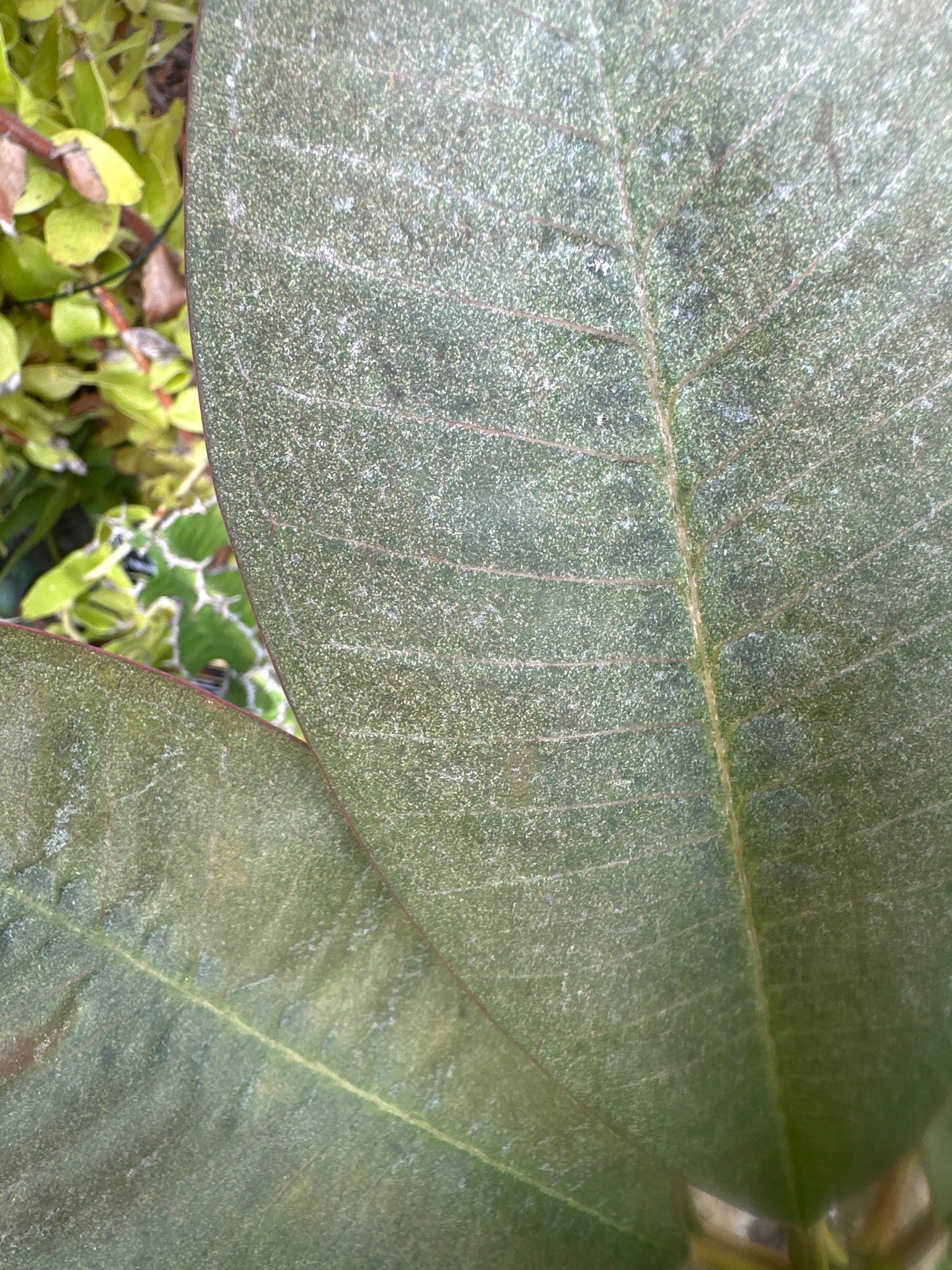
Deciduous shrub or small tree featuring thick, succulent-like branches and large, spirally arranged, leathery leaves with prominent parallel lateral veins. The underside of the leaves in the image shows significant stippling and damage characteristic of spider mite infestation.
- Light
- Full sun, requiring at least six hours of direct sunlight daily for optimal growth and flowering.
- Water
- Moderate watering needs. Allow the soil to dry out completely between waterings. Drought tolerant once established, but susceptible to root rot if overwatered or kept in poorly draining soil.
- Growth
- Upright, branching woody shrub or small tree growing up to 15 to 25 feet tall with a similar spread, exhibiting a moderate growth rate.
Care instructions
Provide full sun and well-draining soil. Water deeply when the top few inches of soil are dry, and reduce watering significantly during the winter dormancy period. Feed with a balanced, slow-release fertilizer during the active growing season in spring and summer.
Growing details
Sunlight
Full sun, requiring at least six hours of direct sunlight daily for optimal growth and flowering.
Watering
Moderate watering needs. Allow the soil to dry out completely between waterings. Drought tolerant once established, but susceptible to root rot if overwatered or kept in poorly draining soil.
Soil
Well-draining sandy, loamy, or potting soil mixes with a slightly acidic to neutral pH range of 6.0 to 7.0.
Hardiness zone
USDA Hardiness Zones 10 through 12, sensitive to frost and freezing temperatures.
Growth habit
Upright, branching woody shrub or small tree growing up to 15 to 25 feet tall with a similar spread, exhibiting a moderate growth rate.
Bloom season
Blooms from late spring through autumn, producing large, highly fragrant flowers in shades of pink, red, white, or yellow with distinctive overlapping petals.
Propagation
Propagated primarily through stem cuttings taken in spring or early summer, allowing the cut end to callous over before planting in well-draining medium.
Common pests & issues
Prone to infestations of spider mites, mealybugs, and whiteflies, especially in dry, warm indoor or greenhouse environments. Overwatering can lead to stem and root rot.
Similar species
Plumeria obtusa, which can be distinguished by its blunt, rounded leaf tips and predominantly white flowers.