
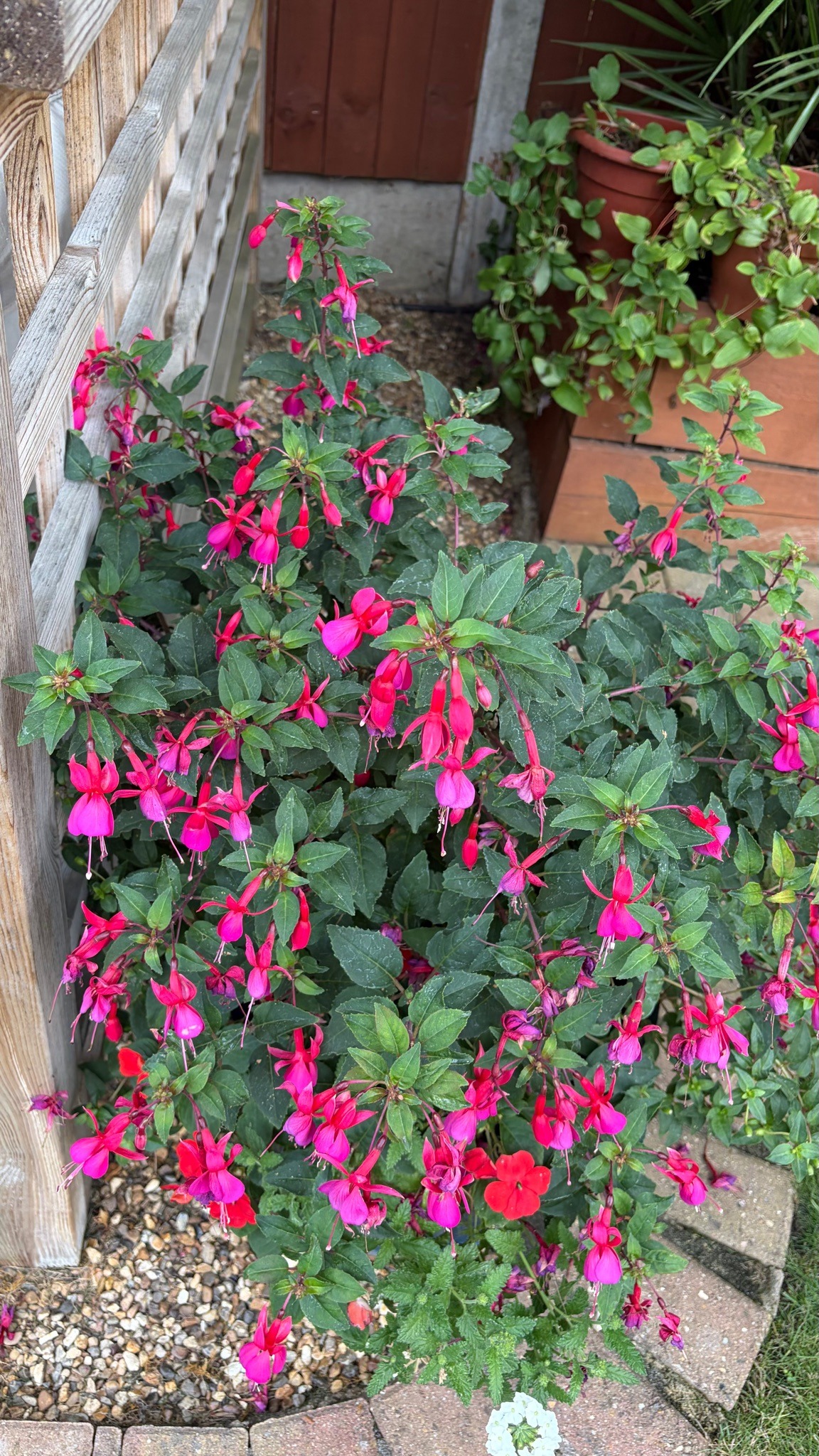
Fuchsia
Fuchsia magellanica
A bushy perennial shrub featuring distinct, pendulous tubular flowers with bright pink to red sepals and contrasting petals, accompanied by opposite dark green leaves.
- Light
- Partial shade to dappled sunlight, ideally 3 to 6 hours of morning sun with protection from intense afternoon heat.
- Water
- Keep soil evenly moist. Water thoroughly when the top inch of soil feels slightly dry. Avoid waterlogging and drought stress, which can cause bud drop.
- Growth
- Deciduous or evergreen shrubby perennial growing to a height and spread of 2 to 4 feet with a moderately fast growth rate.
Care instructions
Provide bright indirect light or partial shade, keeping the soil consistently moist but well-drained. Fertilize lightly every two weeks during the growing season with a balanced water-soluble fertilizer.
Growing details
Sunlight
Partial shade to dappled sunlight, ideally 3 to 6 hours of morning sun with protection from intense afternoon heat.
Watering
Keep soil evenly moist. Water thoroughly when the top inch of soil feels slightly dry. Avoid waterlogging and drought stress, which can cause bud drop.
Soil
Rich, loamy, well-draining soil with a slightly acidic to neutral pH range of 6.0 to 7.0.
Hardiness zone
USDA zones 10 to 11 as tender perennials, though some species like Fuchsia magellanica can survive in zones 6 to 9 with heavy winter mulching.
Growth habit
Deciduous or evergreen shrubby perennial growing to a height and spread of 2 to 4 feet with a moderately fast growth rate.
Bloom season
Blooms continuously from late spring through the autumn frosts, producing pendulous flowers in shades of pink, red, purple, and white.
Propagation
Easily propagated via stem cuttings taken in spring or early summer, rooting readily in moist potting mix or water.
Common pests & issues
Susceptible to aphids, whiteflies, and spider mites, particularly in dry indoor environments. Root rot can occur if soil remains waterlogged.
Similar species
Abutilon (flowering maple), which shares a similar bell-shaped flower structure but features maple-like leaves and belongs to the Malvaceae family.