
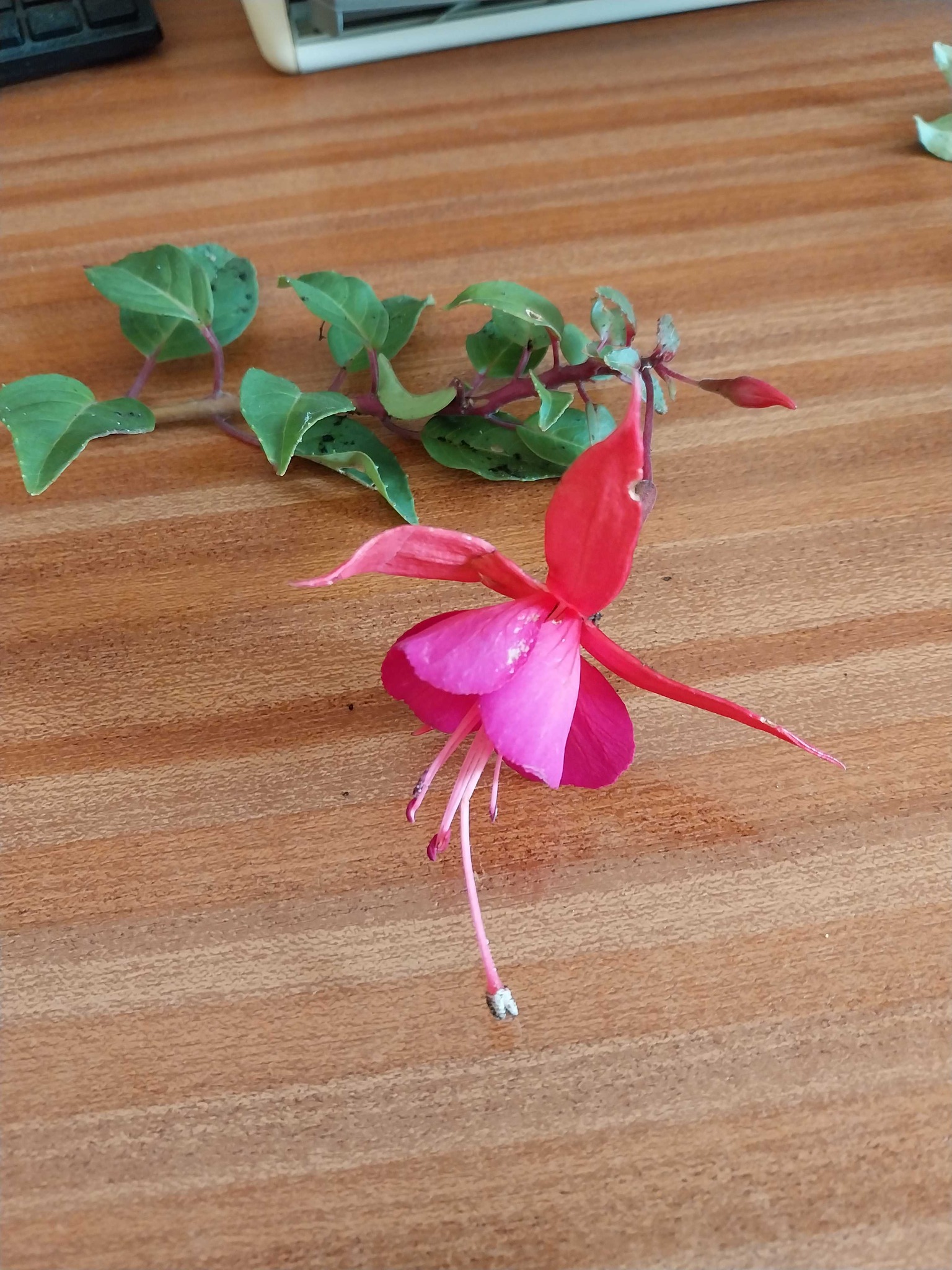
Fuchsia
Fuchsia magellanica
Fuchsias are popular ornamental plants known for their striking, pendulous flowers featuring contrasting brightly colored sepals and petals, alongside opposite or whorled oval leaves.
- Light
- Partial shade to full shade, requiring about 3 to 6 hours of indirect or filtered sunlight per day, avoiding harsh afternoon sun.
- Water
- Water thoroughly whenever the top inch of soil feels slightly dry. Maintain even moisture without letting the plant sit in standing water, and increase watering frequency during hot summer days.
- Growth
- Perennial shrub or trailing vine depending on the variety, growing anywhere from 1 to 5 feet in height and spread, with a moderate growth rate.
Care instructions
Provide bright indirect light or partial shade, keeping the soil consistently moist but well-drained. Apply a balanced liquid fertilizer every two weeks during the active growing season.
Growing details
Sunlight
Partial shade to full shade, requiring about 3 to 6 hours of indirect or filtered sunlight per day, avoiding harsh afternoon sun.
Watering
Water thoroughly whenever the top inch of soil feels slightly dry. Maintain even moisture without letting the plant sit in standing water, and increase watering frequency during hot summer days.
Soil
Rich, loamy, organic-rich soil with excellent drainage, maintaining a slightly acidic to neutral pH range of 6.0 to 7.0.
Hardiness zone
USDA zones 10 to 11 for tender species, while some varieties like Fuchsia magellanica can survive in zones 6 to 9 with proper winter mulching.
Growth habit
Perennial shrub or trailing vine depending on the variety, growing anywhere from 1 to 5 feet in height and spread, with a moderate growth rate.
Bloom season
Blooms from late spring through autumn, producing distinctive pendant flowers with long stamens in shades of pink, red, purple, and white.
Propagation
Easily propagated via stem tip cuttings taken in spring or summer, rooted in a moist propagation medium.
Common pests & issues
Vulnerable to aphids, whiteflies, and spider mites, as well as root rot if overwatered. Prevent by ensuring good air circulation and monitoring moisture levels.
Similar species
Lantana and Abutilon share similar colorful bell-like or tubular floral displays, but can be distinguished by their alternate leaf arrangements and distinct growth structures.