
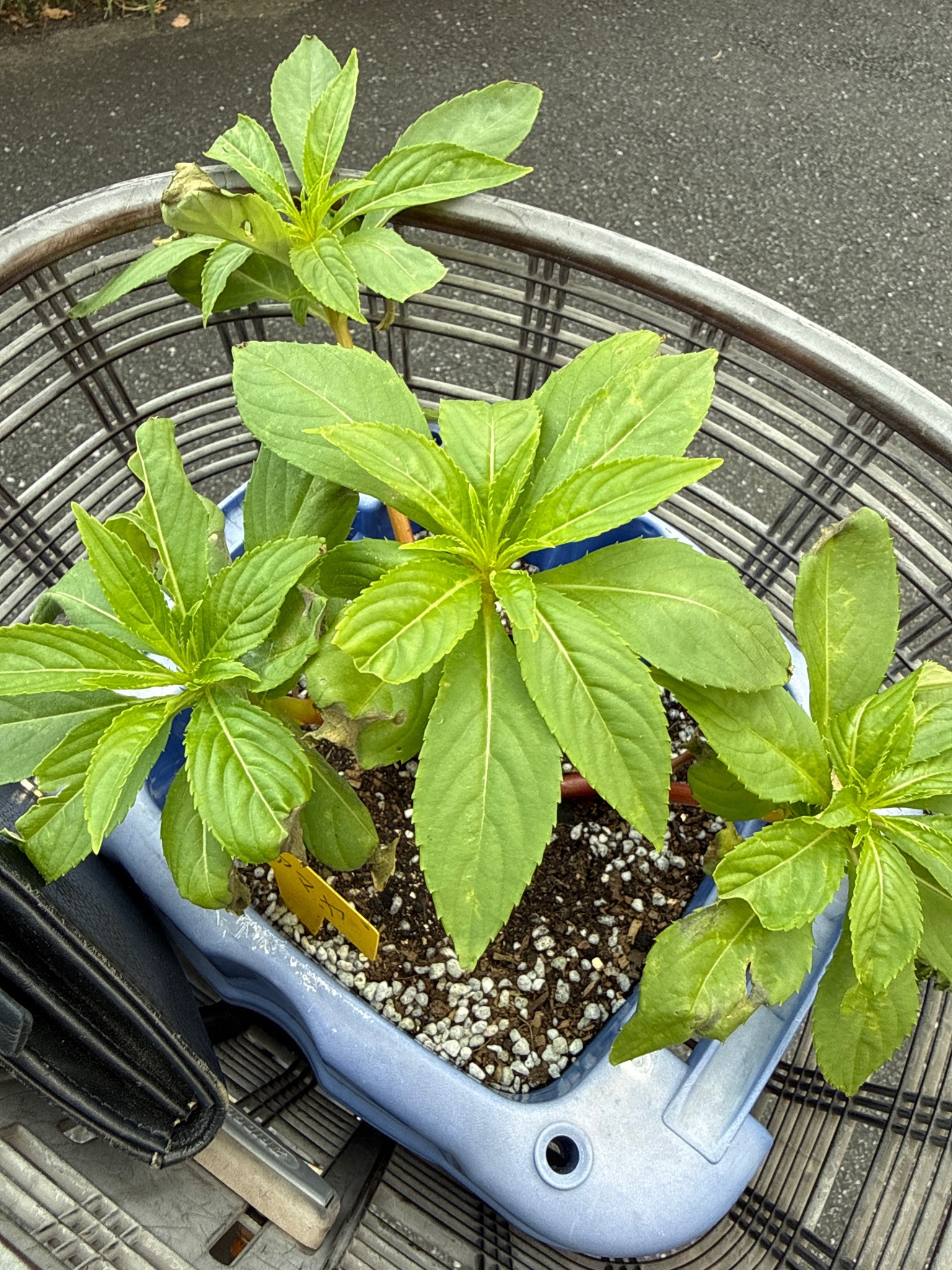
Garden Balsam
Impatiens balsamina
An upright annual herb with thick, succulent-like stems and light green lance-shaped leaves with serrated margins. Produces cup- or camellia-shaped flowers in shades of pink, red, purple, salmon, or white, followed by swollen seed pods that pop open when ripe.
- Light
- Partial shade to light shade; prefers 3 to 6 hours of indirect sunlight or filtered light per day.
- Water
- Requires regular watering to keep the soil evenly moist. High water demand during hot periods; avoid drying out completely, which causes leaves to wilt.
- Growth
- Herbaceous annual with an upright, bushy growth habit. Reaches a mature height of 1 to 2.5 feet (30 to 75 cm) and a spread of 1 to 1.5 feet.
Care instructions
Grow in bright, indirect light or partial shade with protection from intense afternoon sun. Keep the soil consistently moist but never waterlogged. Provide rich, well-draining soil and feed with a balanced liquid fertilizer monthly during the active growing season.
Growing details
Sunlight
Partial shade to light shade; prefers 3 to 6 hours of indirect sunlight or filtered light per day.
Watering
Requires regular watering to keep the soil evenly moist. High water demand during hot periods; avoid drying out completely, which causes leaves to wilt.
Soil
Rich, organic-matter-heavy soil that retains moisture while draining freely. Prefers slightly acidic to neutral pH (6.0 to 7.0).
Hardiness zone
USDA Zones 2-11 as a warm-season annual; extremely sensitive to frost.
Growth habit
Herbaceous annual with an upright, bushy growth habit. Reaches a mature height of 1 to 2.5 feet (30 to 75 cm) and a spread of 1 to 1.5 feet.
Bloom season
Blooms from late spring through summer until the first freeze. Flowers are colorful, single or double blossoms nestled along the upper stem leaf axils.
Propagation
Easily propagated by seed sown indoors 6-8 weeks before the last frost date, or directly outdoors after soil warms up. Also roots readily from stem cuttings in water or moist potting mix.
Common pests & issues
Susceptible to powdery mildew, leaf spot, and stem rot if overwatered or kept in poorly ventilated conditions. Aphids, spider mites, and whiteflies can occasionally infest foliage.
Similar species
Impatiens walleriana (Busy Lizzie) has rounded leaves and flat blossoms, whereas Impatiens balsamina has longer, deeply serrated leaves and flowers clustered along the central stem.