
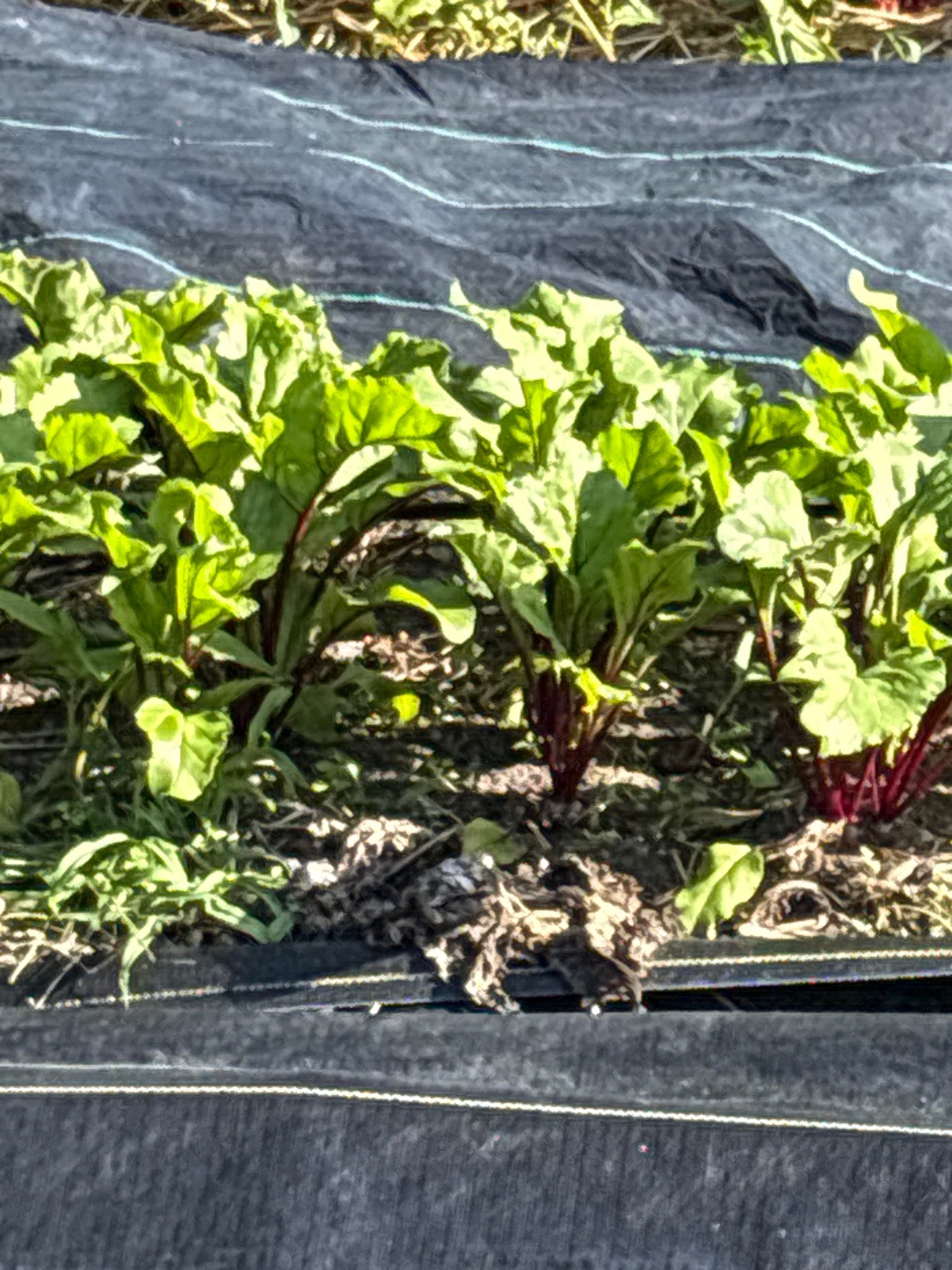
Garden Beet
Beta vulgaris
A biennial herbaceous plant featuring a rosette of glossy, ovate green leaves with prominent reddish-pink veins and stems, rising from a swollen subterranean taproot.
- Light
- Full sun, requiring at least 6 hours of direct sunlight per day.
- Water
- Water deeply and regularly to maintain evenly moist soil, providing about 1 inch of water per week. Drought stress can cause root malformation, while over-watering leads to fungal issues.
- Growth
- Herbaceous biennial grown primarily as an annual, forming a low-growing rosette of leaves with a mature height of 12 to 18 inches and a spread of 6 to 12 inches, with a moderate growth rate.
Care instructions
Provide full sun exposure and consistent moisture in well-draining, fertile soil. Apply balanced fertilizer sparingly to support robust foliage and root development.
Growing details
Sunlight
Full sun, requiring at least 6 hours of direct sunlight per day.
Watering
Water deeply and regularly to maintain evenly moist soil, providing about 1 inch of water per week. Drought stress can cause root malformation, while over-watering leads to fungal issues.
Soil
Loamy, well-draining soil rich in organic matter with a preferred pH range between 6.0 and 7.0.
Hardiness zone
USDA zones 2 through 11, typically grown as a cool-season annual crop.
Growth habit
Herbaceous biennial grown primarily as an annual, forming a low-growing rosette of leaves with a mature height of 12 to 18 inches and a spread of 6 to 12 inches, with a moderate growth rate.
Bloom season
Non-flowering during its primary vegetative growth phase; flowers rarely appear unless the plant overwinters and bolts in its second year, producing small, greenish flowers on tall spikes.
Propagation
Propagated strictly by seeds sown directly into the garden bed in early spring or late summer, spaced approximately 2 to 4 inches apart.
Common pests & issues
Susceptible to flea beetles, leaf miners, and root rot caused by poor drainage. Prevent issues by maintaining proper plant spacing, crop rotation, and utilizing floating row covers.
Similar species
Swiss chard (Beta vulgaris subsp. cicla), which belongs to the same species and genus but is cultivated primarily for exceptionally large leaves rather than a swollen root.