
Garden Beet
Beta vulgaris
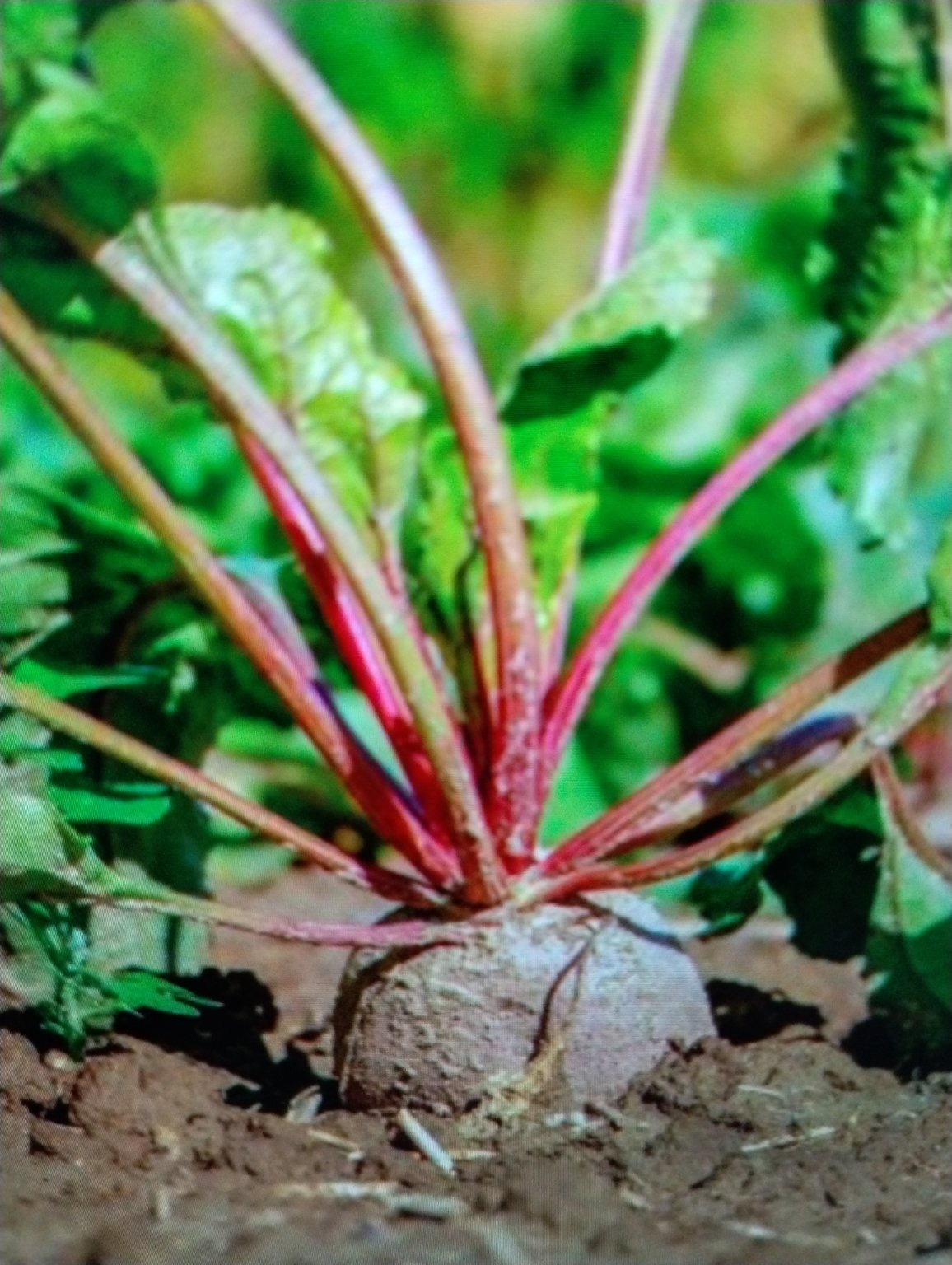
A biennial herbaceous plant featuring a swollen, fleshy taproot at the base and a rosette of glossy, ovate to cordate leaves with prominent colored veins and petioles emerging from the crown.
- Light
- Full sun, requiring 6 to 8 hours of direct sunlight daily
- Water
- Requires consistent moisture, about 1 inch of water per week through rain or irrigation. Avoid extreme drought stress or waterlogged conditions.
- Growth
- Herbaceous biennial grown primarily as an annual, forming a basal rosette of leaves and a large swollen taproot, reaching heights of 12 to 18 inches with a spread of 10 to 12 inches.
Care instructions
Provide full sun exposure for at least 6 hours per day. Keep soil consistently moist with regular watering, and use loose, well-draining soil with a neutral pH. Apply balanced fertilizer sparingly to prevent excessive foliage growth over root development.
Growing details
Sunlight
Full sun, requiring 6 to 8 hours of direct sunlight daily
Watering
Requires consistent moisture, about 1 inch of water per week through rain or irrigation. Avoid extreme drought stress or waterlogged conditions.
Soil
Well-draining, loose, loamy to sandy soil with a pH range between 6.0 and 7.0.
Hardiness zone
USDA zones 2 through 11, typically grown as an annual or biennial crop
Growth habit
Herbaceous biennial grown primarily as an annual, forming a basal rosette of leaves and a large swollen taproot, reaching heights of 12 to 18 inches with a spread of 10 to 12 inches.
Bloom season
Typically non-flowering in its first year; produces small greenish flowers arranged in tall spikes during the second year of growth.
Propagation
Propagated exclusively from seeds sown directly into the soil in early spring or late summer.
Common pests & issues
Susceptible to flea beetles, leaf miners, and fungal leaf spot diseases. Prevent issues by rotating crops, ensuring adequate spacing for airflow, and maintaining proper soil moisture.
Similar species
Swiss chard (Beta vulgaris subsp. cicla), which is the same species but bred primarily for prominent leaf production rather than a large enlarged taproot.