
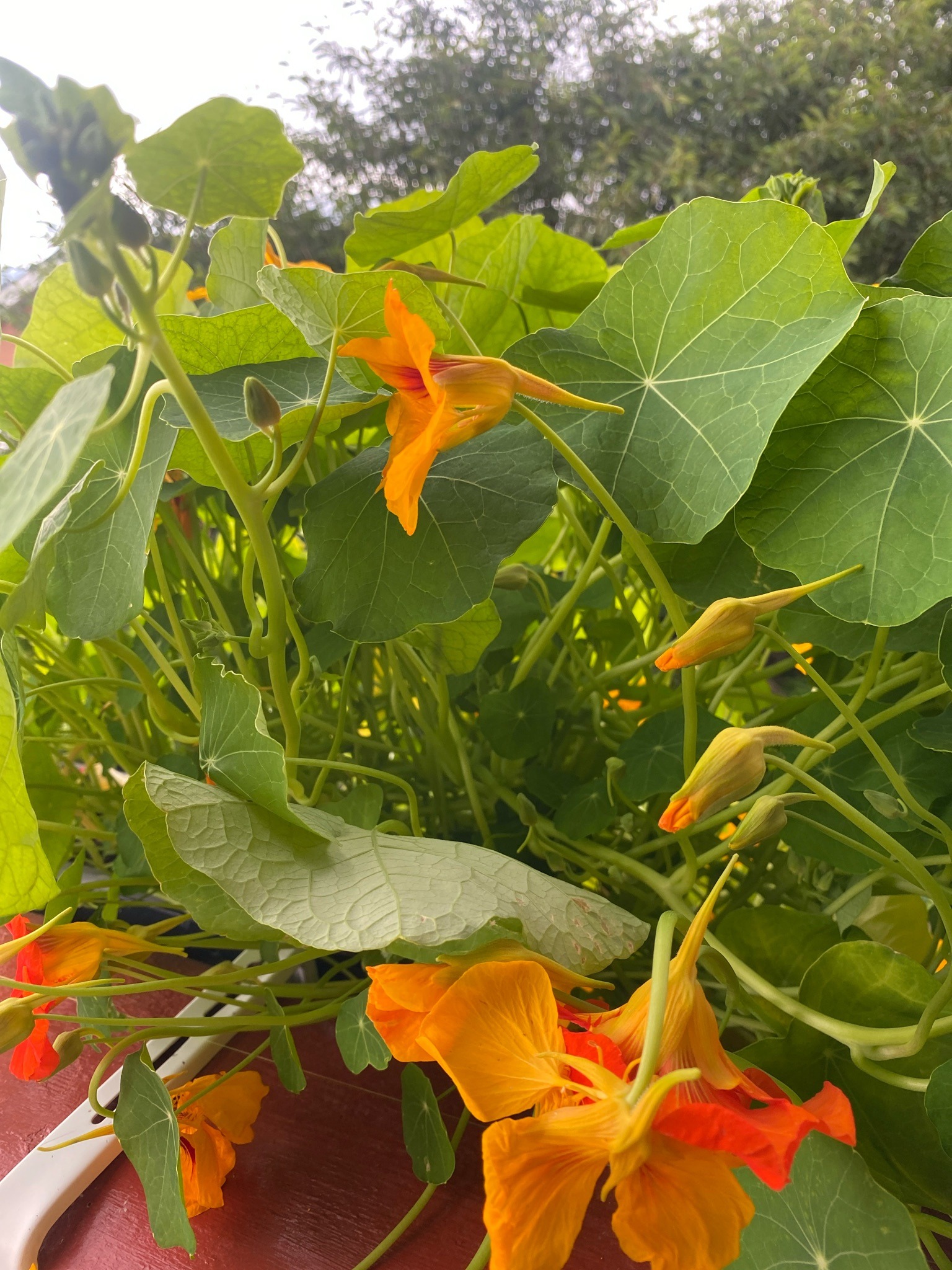
Garden nasturtium
Tropaeolum majus
A sprawling herbaceous annual plant featuring distinct peltate (shield-shaped) leaves and brightly colored flowers in shades of orange, yellow, and red, often accompanied by a long nectar spur.
- Light
- Full sun, requiring at least 6 to 8 hours of direct sunlight per day.
- Water
- Low to moderate watering frequency. Water when the top inch of soil feels dry. Highly drought-tolerant once established; avoid overwatering.
- Growth
- Trailing or climbing annual growth habit with stems reaching 1 to 3 meters (3 to 10 feet) in length and a spread of 1 to 2 feet, displaying a fast growth rate.
Care instructions
Plant in full sun to encourage abundant flowering. Water moderately, allowing the soil to dry out between waterings, as excessive moisture leads to lush foliage at the expense of blooms. Grow in poor to average, well-draining soil and avoid heavy fertilization.
Growing details
Sunlight
Full sun, requiring at least 6 to 8 hours of direct sunlight per day.
Watering
Low to moderate watering frequency. Water when the top inch of soil feels dry. Highly drought-tolerant once established; avoid overwatering.
Soil
Prefers poor to moderately fertile, well-draining soil with a neutral pH range between 6.0 and 7.5. Excessively rich soil reduces flower production.
Hardiness zone
USDA Hardiness Zones 9 through 11 as a perennial, commonly grown as an annual in cooler climates.
Growth habit
Trailing or climbing annual growth habit with stems reaching 1 to 3 meters (3 to 10 feet) in length and a spread of 1 to 2 feet, displaying a fast growth rate.
Bloom season
Blooms from early summer through the first autumn frosts, producing spurred flowers in vibrant orange, yellow, and red hues.
Propagation
Easily propagated from seeds sown directly in the garden after the final spring frost. Seeds benefit from a brief soaking in water prior to planting.
Common pests & issues
Generally resilient, but can occasionally be affected by aphids, caterpillars, and flea beetles. Root rot may occur in waterlogged soil conditions.
Similar species
Can be distinguished from other trailing ornamentals by its unique round, umbrella-like leaves with centrally attached stems and characteristic floral spurs.