
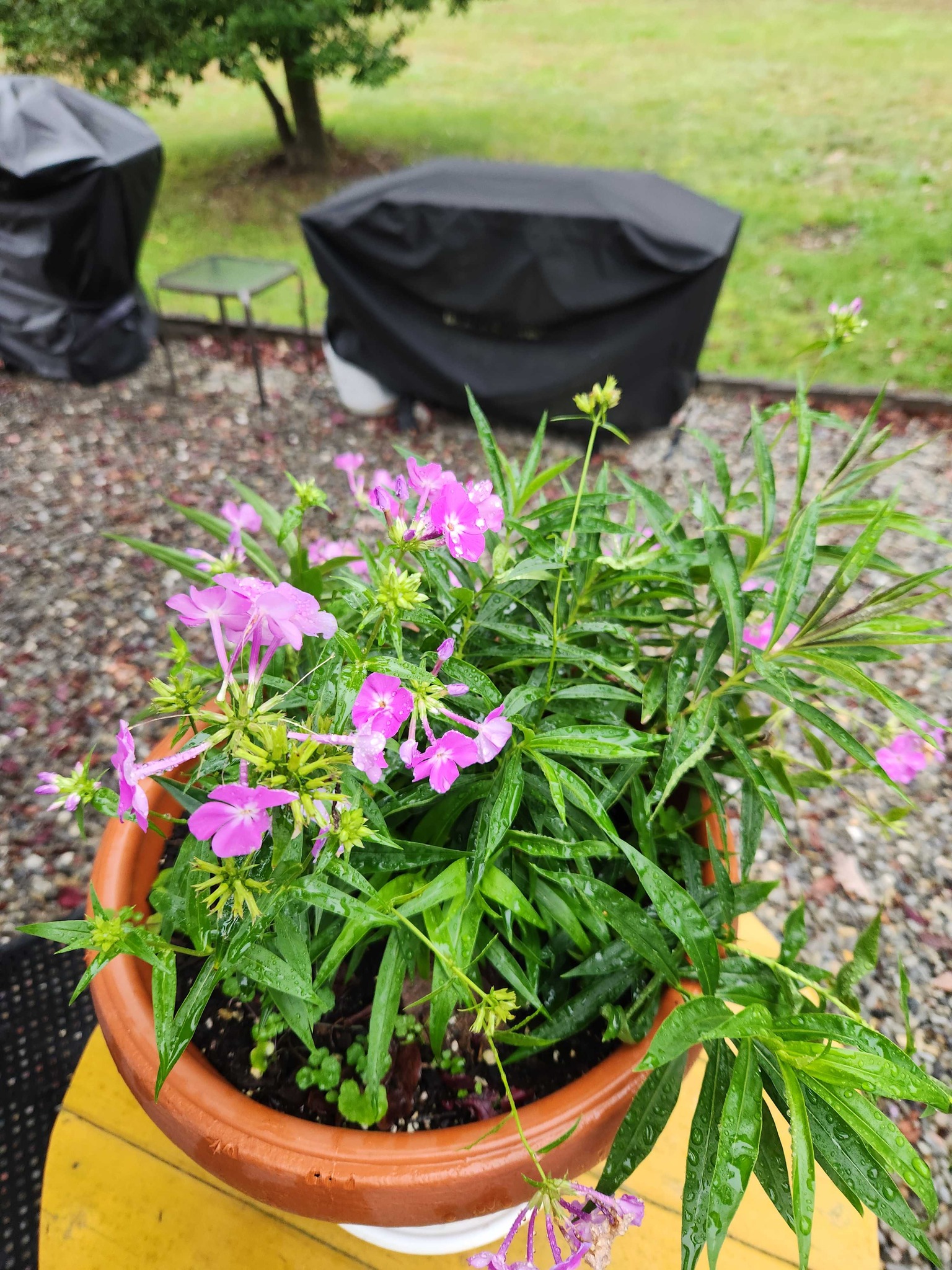
Garden Phlox
Phlox paniculata
An upright, clump-forming perennial featuring lance-shaped dark green leaves and dense terminal clusters of vibrant pink, purple, or white flowers.
- Light
- Full sun to partial shade, ideally requiring 6 or more hours of direct sunlight daily
- Water
- Water deeply once a week, increasing frequency during extended dry spells; allow soil to dry slightly on the surface between waterings
- Growth
- Herbaceous perennial forming upright clumps, reaching mature heights of 2 to 4 feet and spreads of 2 to 3 feet with a moderate growth rate
Care instructions
Provide full sun to partial shade in fertile, moisture-retentive soil. Water consistently at the base to keep the soil damp but not waterlogged, and fertilize in early spring with a balanced slow-release formula.
Growing details
Sunlight
Full sun to partial shade, ideally requiring 6 or more hours of direct sunlight daily
Watering
Water deeply once a week, increasing frequency during extended dry spells; allow soil to dry slightly on the surface between waterings
Soil
Rich, organic-rich, well-draining loam with a slightly acidic to neutral pH range of 6.0 to 7.0
Hardiness zone
USDA hardiness zones 4 through 8
Growth habit
Herbaceous perennial forming upright clumps, reaching mature heights of 2 to 4 feet and spreads of 2 to 3 feet with a moderate growth rate
Bloom season
Mid-summer to early autumn, producing fragrant, five-petaled tubular flowers grouped in large panicles
Propagation
Propagated through stem cuttings taken in spring or early summer, division of established clumps in spring, or by root cuttings
Common pests & issues
Prone to powdery mildew in humid or stagnant conditions; prevent by ensuring good air circulation and watering at the base
Similar species
Wild Sweet William (Phlox maculata), which has smoother, glossy stems and cylindrical flower heads compared to the pyramidal clusters of garden phlox