
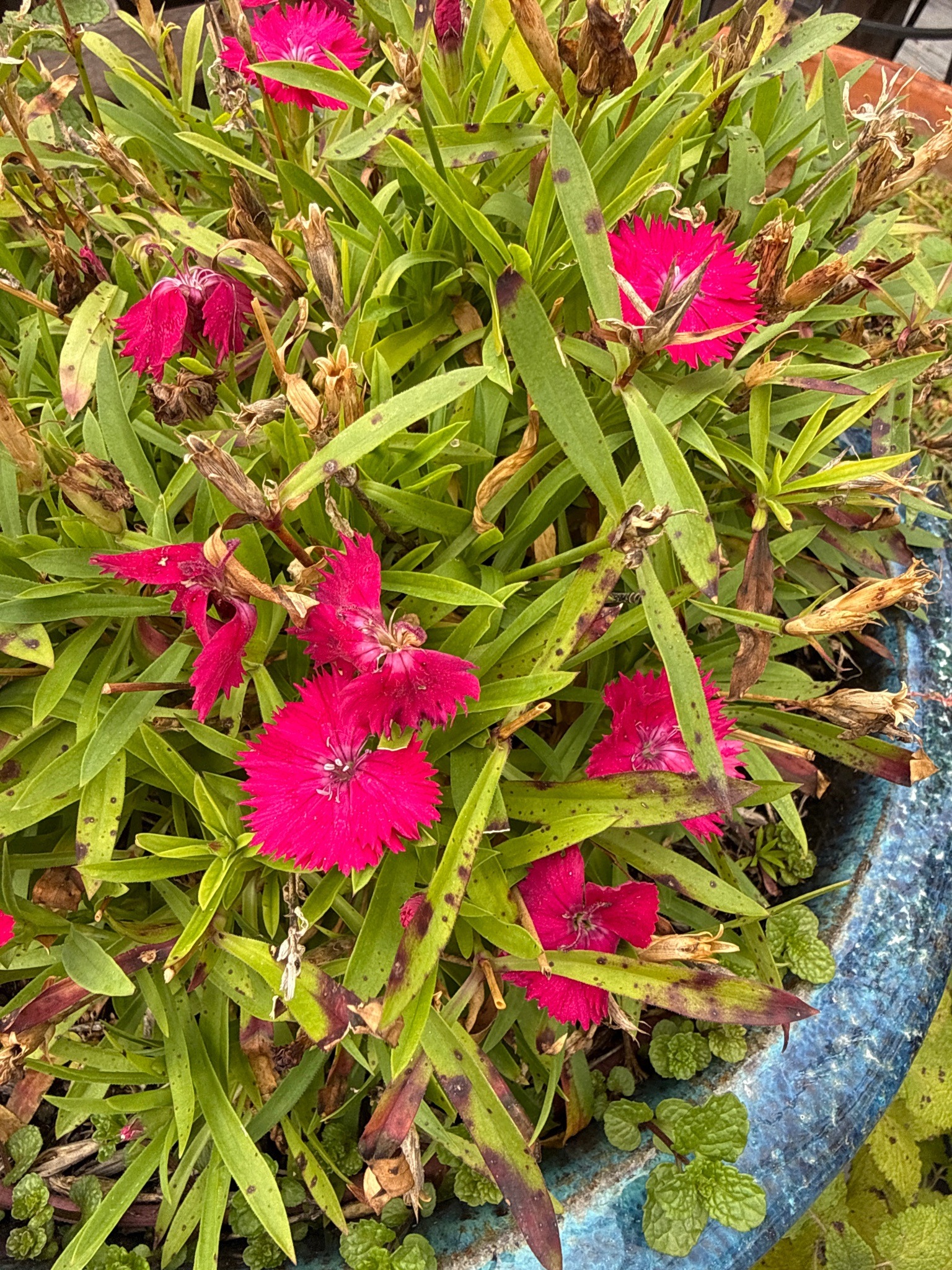
Garden Pink
Dianthus chinensis
A low-growing herbaceous perennial with narrow, glaucous green, linear leaves and vibrant fringed or notched single or double flowers in shades of bright pink, red, and white.
- Light
- Full sun, requiring 6 to 8 hours of direct sunlight per day.
- Water
- Moderate watering needs. Allow the soil to dry out partially between waterings. Drought tolerant once established, but sensitive to waterlogged soil.
- Growth
- Herbaceous perennial forming dense, low-growing mounds or clumps. Reaches a mature height of 6 to 18 inches and a spread of 9 to 12 inches with a moderate growth rate.
Care instructions
Provide full sun with at least six hours of direct light daily. Water moderately when the top inch of soil feels dry, ensuring excellent drainage to prevent moisture buildup. Plant in neutral to slightly alkaline, well-draining soil and apply a balanced, slow-release fertilizer in early spring.
Growing details
Sunlight
Full sun, requiring 6 to 8 hours of direct sunlight per day.
Watering
Moderate watering needs. Allow the soil to dry out partially between waterings. Drought tolerant once established, but sensitive to waterlogged soil.
Soil
Prefers rich, loamy, or sandy soil with exceptional drainage. Ideal pH ranges from 6.0 to 7.5.
Hardiness zone
USDA Hardiness Zones 5 through 9.
Growth habit
Herbaceous perennial forming dense, low-growing mounds or clumps. Reaches a mature height of 6 to 18 inches and a spread of 9 to 12 inches with a moderate growth rate.
Bloom season
Blooms from late spring through late summer. Flowers feature distinctly fringed or toothed petals, often displaying contrasting center rings.
Propagation
Propagated easily from stem cuttings taken in summer, by seed sown in spring, or by the division of mature clumps in early spring or autumn.
Common pests & issues
Susceptible to crown rot, rust, and leaf spot in overly humid or poorly draining conditions. Aphids and spider mites may occasionally appear.
Similar species
Dianthus plumarius (Garden Pink) and Dianthus caryophyllus (Carnation). Dianthus chinensis generally features broader leaves and lacks the strong clove-like fragrance typical of Dianthus plumarius.