
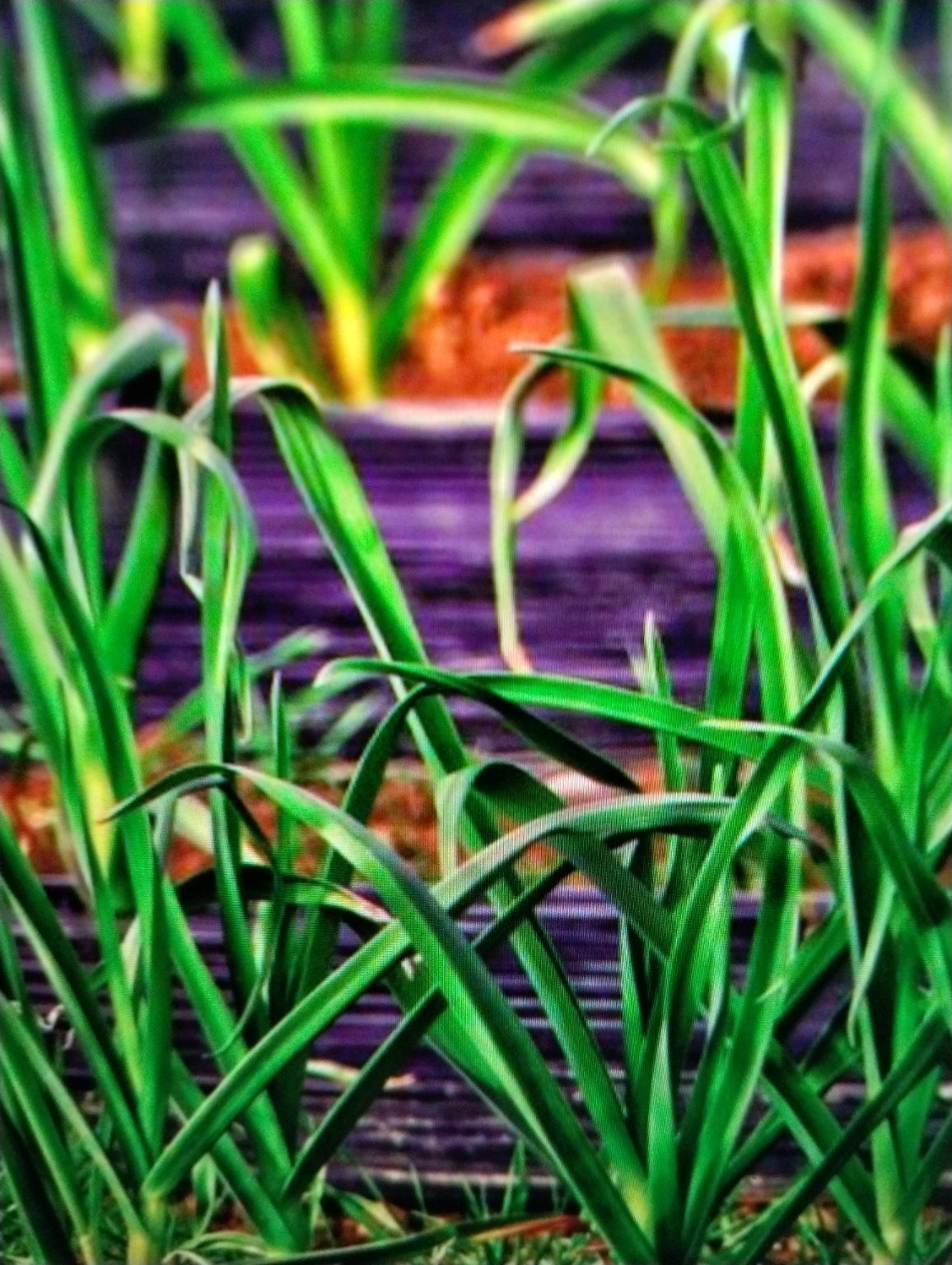
Garlic
Allium sativum
Garlic is a bulbous perennial herb characterized by long, flat, strap-like green leaves that emerge from an underground composite bulb made of multiple smaller cloves wrapped in papery sheaths.
- Light
- Full sun, requiring at least 6 to 8 hours of direct sunlight per day.
- Water
- Moderate and consistent watering needs. Keep the soil evenly moist during the active growing phase, but allow the top layer to dry out between waterings. Reduce watering significantly as harvest time approaches to prevent bulb rot.
- Growth
- Perennial grown typically as an annual crop, featuring an upright, linear growth habit with mature heights reaching 12 to 24 inches and a spread of 6 to 12 inches.
Care instructions
Provide full sunlight for at least 6 hours daily. Water consistently when the top inch of soil feels dry, reducing watering as the foliage begins to yellow and mature. Grow in fertile, well-draining soil and apply a balanced fertilizer during early spring vegetative growth.
Growing details
Sunlight
Full sun, requiring at least 6 to 8 hours of direct sunlight per day.
Watering
Moderate and consistent watering needs. Keep the soil evenly moist during the active growing phase, but allow the top layer to dry out between waterings. Reduce watering significantly as harvest time approaches to prevent bulb rot.
Soil
Rich, loamy, or sandy soils with excellent drainage and a neutral pH range between 6.0 and 7.0.
Hardiness zone
USDA Hardiness Zones 4 through 9
Growth habit
Perennial grown typically as an annual crop, featuring an upright, linear growth habit with mature heights reaching 12 to 24 inches and a spread of 6 to 12 inches.
Bloom season
Late spring to mid-summer, producing tall scapes topped with clusters of small, pale pink or white flowers and tiny bulbils.
Propagation
Propagated primarily vegetatively by planting individual cloves in the autumn or early spring, oriented root-side down.
Common pests & issues
Susceptible to fungal pathogens such as white rot and rust, as well as pests like bulb mites and thrips. Prevent these by ensuring proper soil drainage, practicing crop rotation, and avoiding excessive nitrogen fertilization.
Similar species
Elephant Garlic (Allium ampeloprasum), which has much broader leaves and a milder flavor profile, and Wild Garlic (Allium vineale), which features hollow, cylindrical leaves rather than flat ones.