
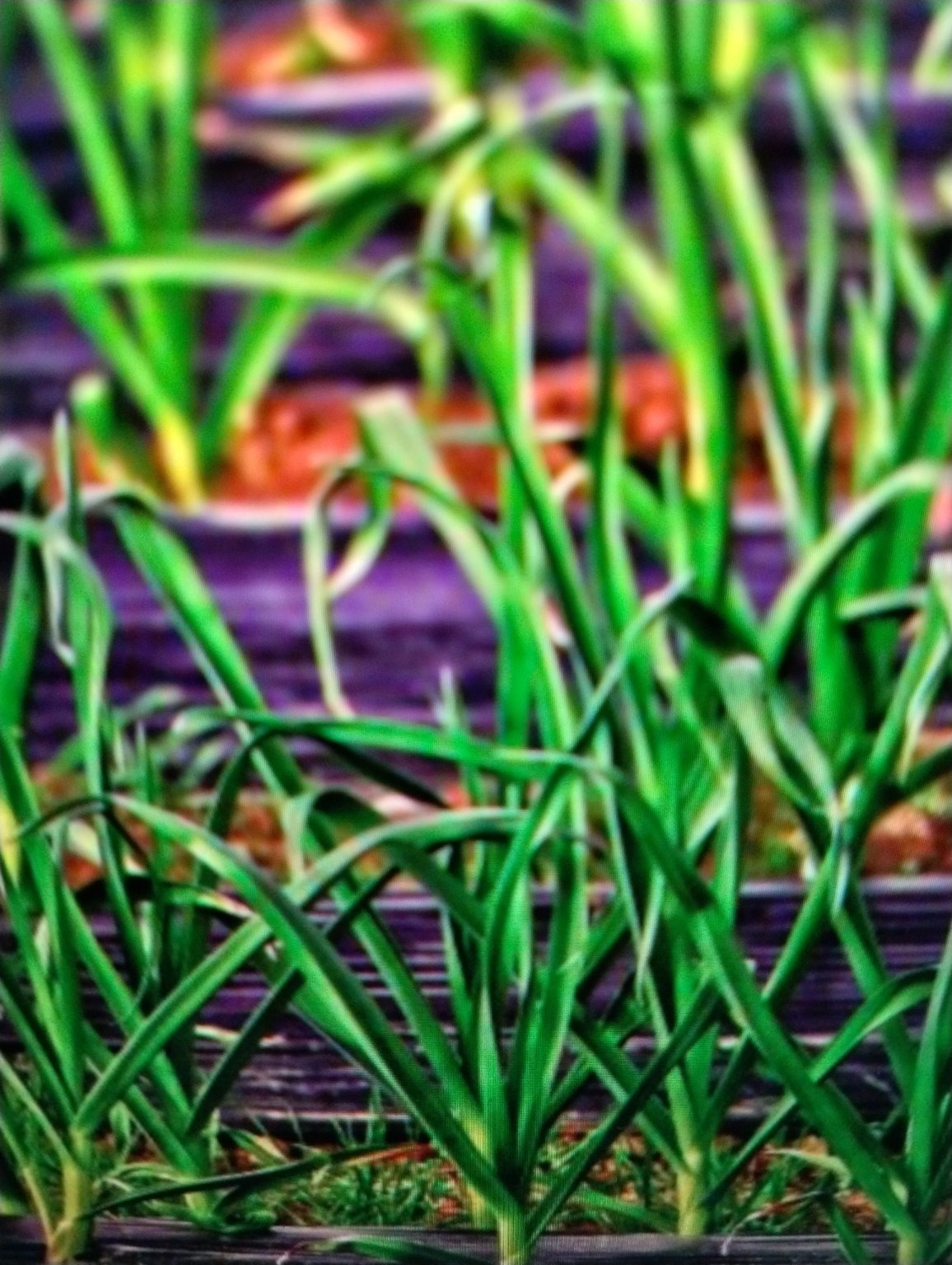
Garlic
Allium sativum
Garlic is a bulbous, herbaceous perennial plant characterized by flat, linear, green leaves that emerge from an underground bulb composed of multiple fleshy segments called cloves.
- Light
- Full sun, requiring at least 6 to 8 hours of direct sunlight per day.
- Water
- Water deeply when the top inch of soil feels dry. Keep soil evenly moist during early growth stages, but allow soil to dry out somewhat near harvest time to prevent bulb rot.
- Growth
- Herbaceous perennial grown typically as an annual, featuring an upright, linear growth habit reaching heights of 1 to 2 feet with a spread of around 6 inches.
Care instructions
Grow in full sun with consistently moist, well-draining soil rich in organic matter. Water regularly during the active growing season, reducing water as the foliage begins to yellow and mature.
Growing details
Sunlight
Full sun, requiring at least 6 to 8 hours of direct sunlight per day.
Watering
Water deeply when the top inch of soil feels dry. Keep soil evenly moist during early growth stages, but allow soil to dry out somewhat near harvest time to prevent bulb rot.
Soil
Prefers loose, well-draining loamy or sandy soils rich in organic matter with a neutral pH range between 6.0 and 7.0.
Hardiness zone
USDA Hardiness Zones 4 through 9
Growth habit
Herbaceous perennial grown typically as an annual, featuring an upright, linear growth habit reaching heights of 1 to 2 feet with a spread of around 6 inches.
Bloom season
Produces small white or pinkish flowers enclosed in a spathe on a tall central stalk (scape) during late spring or early summer, though scapes are frequently removed to encourage larger underground bulb development.
Propagation
Propagated primarily by planting individual cloves separated from the main bulb in autumn or early spring, oriented pointed-end up.
Common pests & issues
Susceptible to fungal issues such as white rot and rust, as well as pests like onion thrips and bulb mites, which can be managed through crop rotation, proper spacing, and good drainage.
Similar species
Often confused with other Allium species such as onions (Allium cepa) and leeks (Allium porrum), but distinguished by its distinct compound bulb consisting of separate cloves and flattened, solid leaves rather than hollow tubular leaves.