
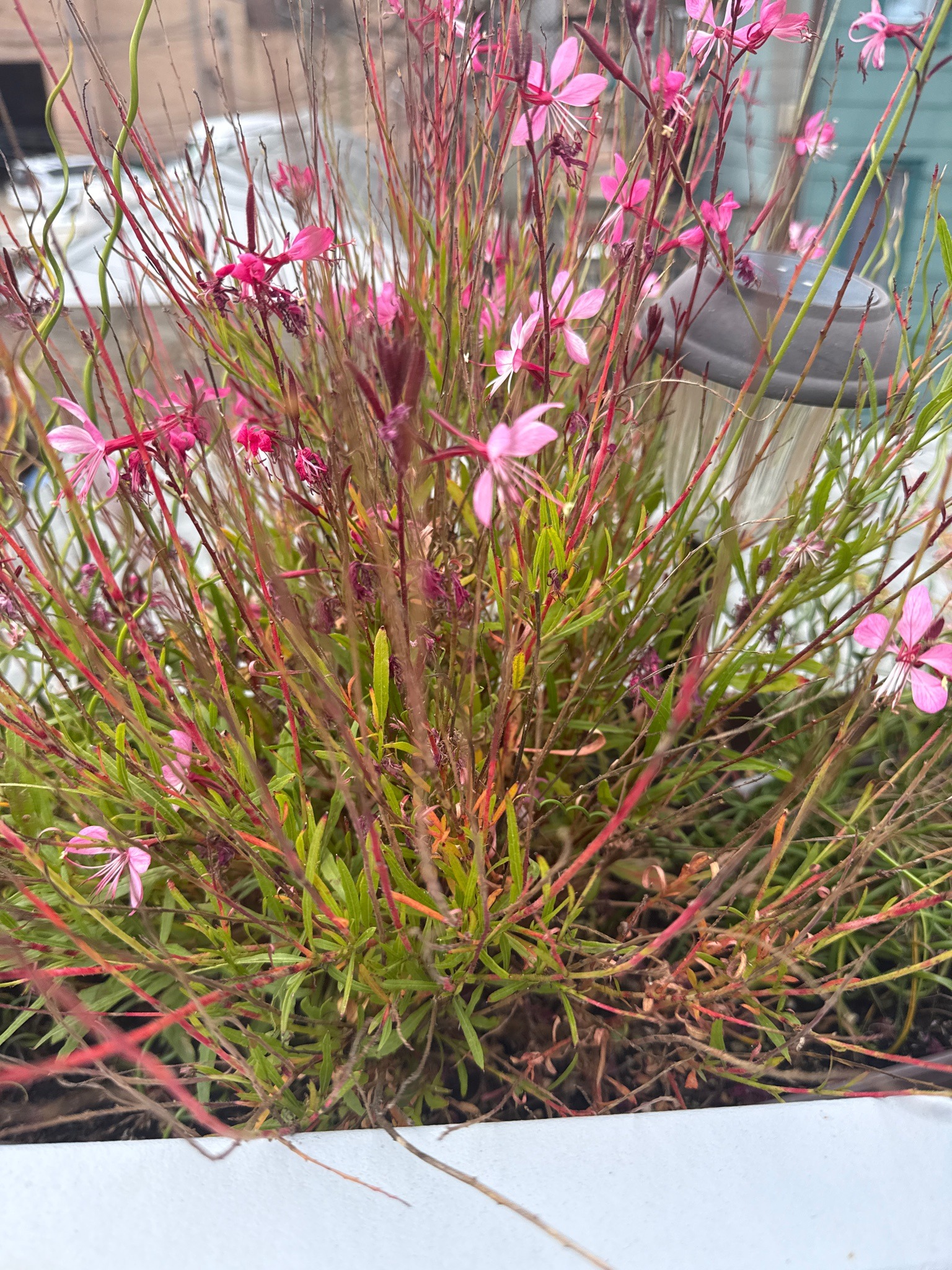
Gaura
Gaura lindheimeri
Gaura is a perennial plant featuring slender, wiry stems, narrow lance-shaped leaves, and loose spikes of delicate, four-petaled flowers that flutter in the breeze resembling small butterflies.
- Light
- Full sun, requiring at least 6 to 8 hours of direct sunlight per day.
- Water
- Low to moderate watering needs. Allow the soil to dry out completely between waterings once established. Highly drought-tolerant.
- Growth
- Herbaceous perennial forming an upright, clump-forming shape with a mature height of 2 to 4 feet and a spread of 2 to 3 feet, growing at a moderate to fast rate.
Care instructions
Provide full sun and well-draining soil. Water deeply during establishment, then reduce as the plant exhibits good drought tolerance. Apply a balanced, low-nitrogen fertilizer sparingly in spring to promote blooming without excessive foliage.
Growing details
Sunlight
Full sun, requiring at least 6 to 8 hours of direct sunlight per day.
Watering
Low to moderate watering needs. Allow the soil to dry out completely between waterings once established. Highly drought-tolerant.
Soil
Prefers sandy, loamy, or well-draining soils with a neutral to slightly acidic pH range of 6.0 to 7.0.
Hardiness zone
USDA Hardiness Zones 5 through 9, demonstrating strong adaptability to both cold winters and hot summers.
Growth habit
Herbaceous perennial forming an upright, clump-forming shape with a mature height of 2 to 4 feet and a spread of 2 to 3 feet, growing at a moderate to fast rate.
Bloom season
Blooms from late spring through the first autumn frosts, producing pink or white flowers on long, arching stems.
Propagation
Propagated primarily through stem cuttings taken in spring or early summer, or by sowing seeds. Division is also possible, though the plant possesses a deep taproot making established specimens difficult to transplant.
Common pests & issues
Generally trouble-free, but susceptible to root rot in poorly draining soils. Powdery mildew and rust may occur in humid conditions with inadequate air circulation.
Similar species
Can be confused with other Onagraceae family members like Oenothera (evening primrose), but distinguished by its distinctly airy, wispy branching habit and fluttering butterfly-like flower presentation.