
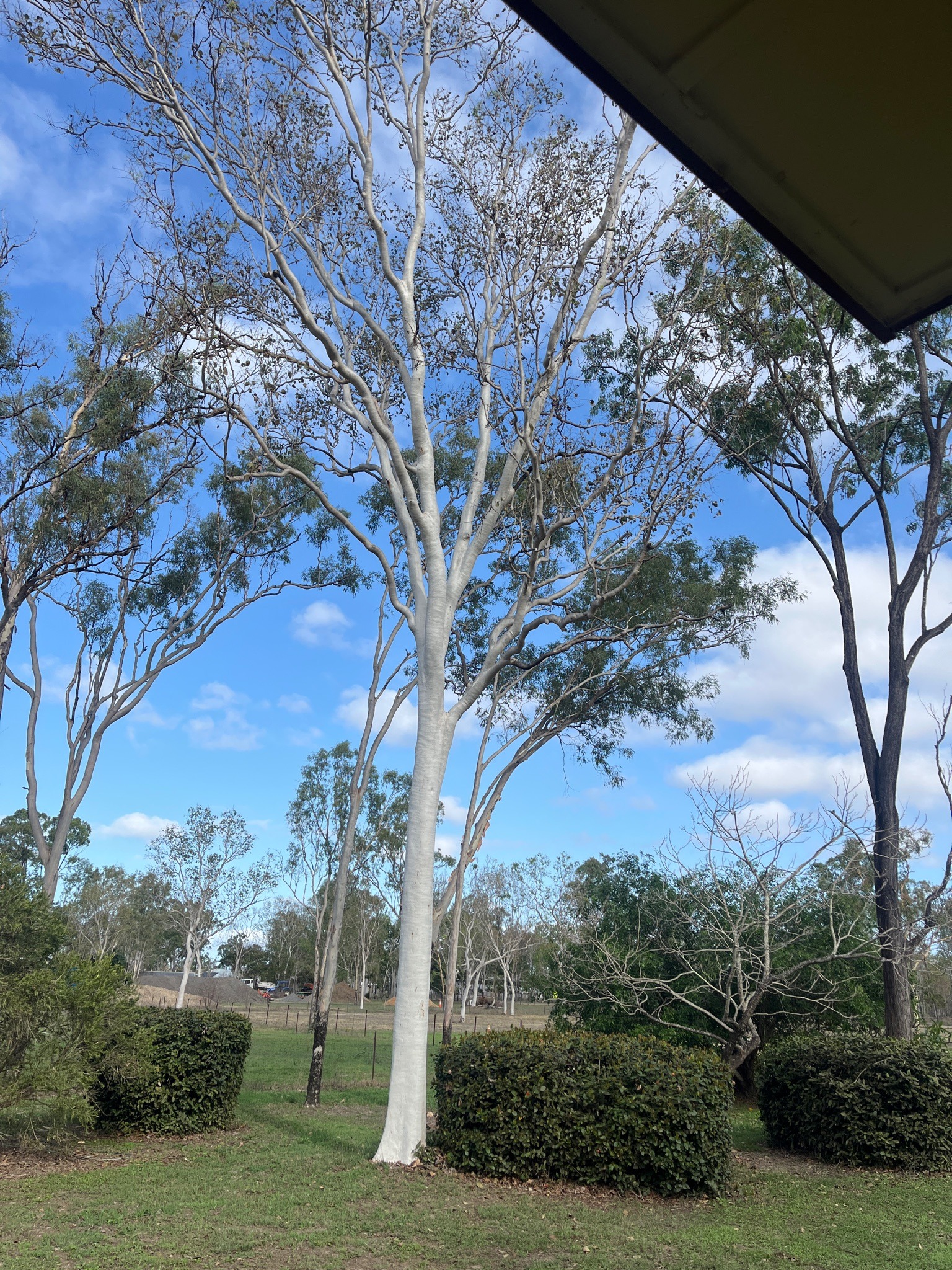
Ghost Gum
Corymbia papuana
A medium to large tree recognized instantly by its smooth, powdery white to pale grey bark that sheds in patches, with an open canopy of narrow, lance-shaped leaves.
- Light
- Full sun, requiring at least 6 to 8 hours of direct sunlight daily
- Water
- Requires regular watering when young to establish root systems. Mature specimens are extremely drought tolerant and prefer dry conditions between infrequent, deep waterings.
- Growth
- Perennial evergreen tree featuring an upright, spreading canopy. Grows at a moderate rate to a mature height of 15 to 20 meters with a proportional spread.
Care instructions
Plant in full sun with well-draining soil. Water deeply during establishment, then reduce significantly as mature trees are highly drought tolerant. Apply a balanced low-phosphorus fertilizer in spring if growth is slow.
Growing details
Sunlight
Full sun, requiring at least 6 to 8 hours of direct sunlight daily
Watering
Requires regular watering when young to establish root systems. Mature specimens are extremely drought tolerant and prefer dry conditions between infrequent, deep waterings.
Soil
Thrives in sandy loams or well-draining gravelly soils with a neutral to slightly acidic pH range of 6.0 to 7.5.
Hardiness zone
USDA Hardiness Zones 9 through 11, preferring warm temperate to tropical climates with mild winters.
Growth habit
Perennial evergreen tree featuring an upright, spreading canopy. Grows at a moderate rate to a mature height of 15 to 20 meters with a proportional spread.
Bloom season
Flowers primarily in the warmer months from spring to summer, producing clusters of small, white, cup-shaped blossoms.
Propagation
Propagated mainly through fresh seeds sown in a well-draining propagation mix during the warm season. Stem cuttings are notoriously difficult to root successfully.
Common pests & issues
Generally resilient, but susceptible to root rot if planted in poorly draining soils. Common pests include lerps, borers, and leaf-chewing insects which can be managed with appropriate horticultural interventions.
Similar species
Often confused with Eucalyptus sp. such as Eucalyptus salmonophloia, but distinguished by Corymbia's characteristic smooth powdery white trunk and differences in capsule and bud morphology.