
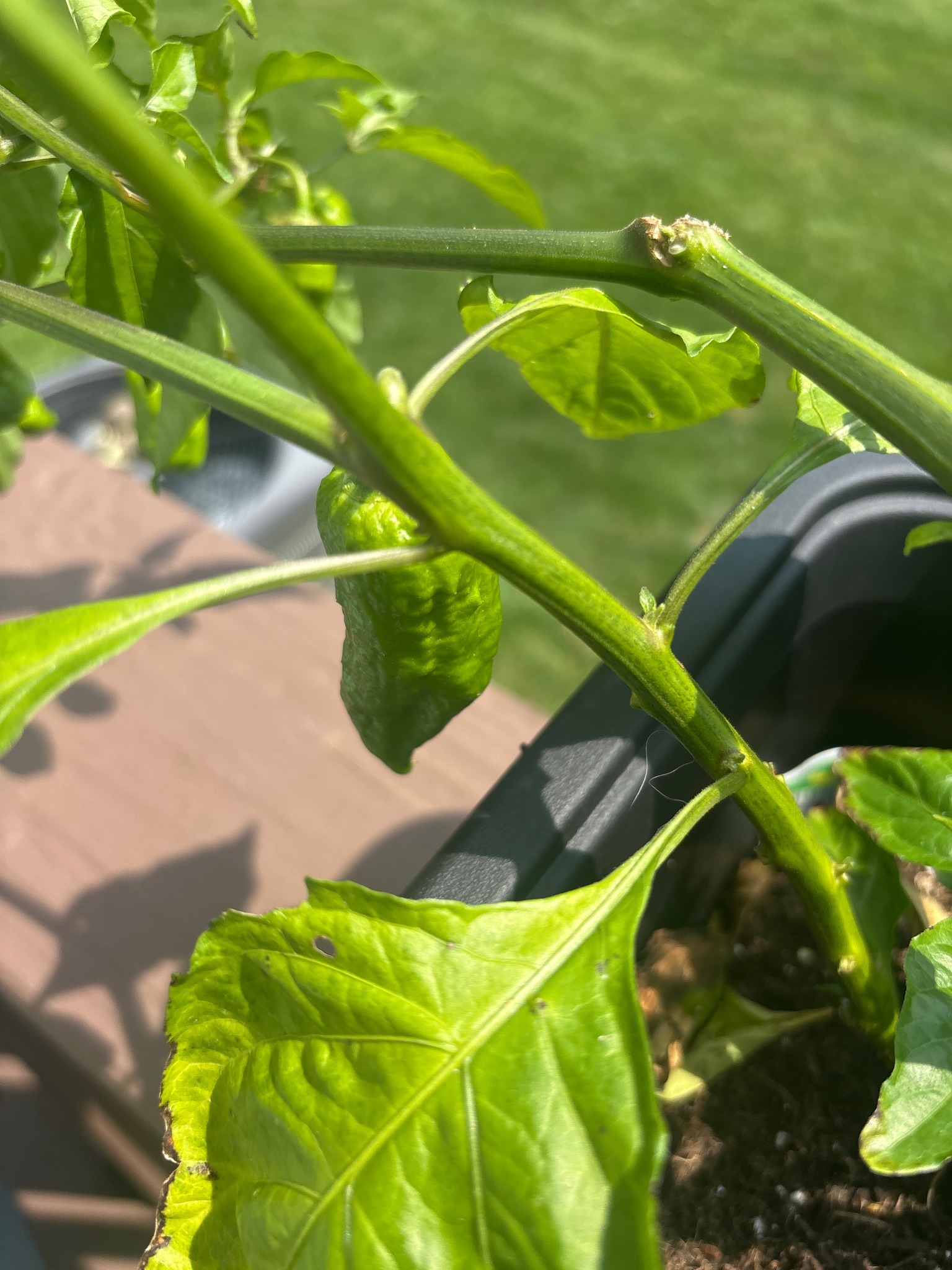
Ghost Pepper
Capsicum chinense
A bushy perennial shrub grown as an annual in cooler climates, featuring smooth green stems, alternate simple leaves, and distinctively wrinkled, pendulous green fruit that transitions through color phases as it matures.
- Light
- Full sun, requiring a minimum of 6 to 8 hours of direct sunlight per day.
- Water
- Moderate watering needs. Allow the soil to dry out slightly between waterings. Drought tolerance is low, and overwatering can lead to root rot.
- Growth
- An upright, branching herbaceous shrub or subshrub, typically reaching a mature height of 2 to 4 feet with a spread of 2 to 3 feet, exhibiting a moderate growth rate.
Care instructions
Provide full sun exposure for at least 6 to 8 hours daily. Water consistently when the top inch of soil becomes dry, avoiding waterlogged conditions. Grow in well-draining, fertile soil with a neutral pH, and apply a balanced liquid fertilizer during the active growing season.
Growing details
Sunlight
Full sun, requiring a minimum of 6 to 8 hours of direct sunlight per day.
Watering
Moderate watering needs. Allow the soil to dry out slightly between waterings. Drought tolerance is low, and overwatering can lead to root rot.
Soil
Rich, loamy, well-draining soil with an optimal pH range between 6.0 and 6.8.
Hardiness zone
USDA Hardiness Zones 9 through 11 as a perennial, typically grown as an annual in zones 3 through 8.
Growth habit
An upright, branching herbaceous shrub or subshrub, typically reaching a mature height of 2 to 4 feet with a spread of 2 to 3 feet, exhibiting a moderate growth rate.
Bloom season
Flowers appear from late spring through summer, producing small, drooping, five-petaled white to greenish-white blossoms.
Propagation
Propagated primarily from seeds started indoors 8 to 10 weeks before the last spring frost, or through stem cuttings taken during the active growing season.
Common pests & issues
Susceptible to pests such as aphids, spider mites, and whiteflies. Fungal diseases such as powdery mildew and root rot may occur in overly humid or poorly drained conditions.
Similar species
Other Capsicum species like Capsicum annuum (such as bell peppers and jalapeños), distinguished primarily by the exceptionally wrinkled texture of the fruit surface and distinct floral characteristics.