
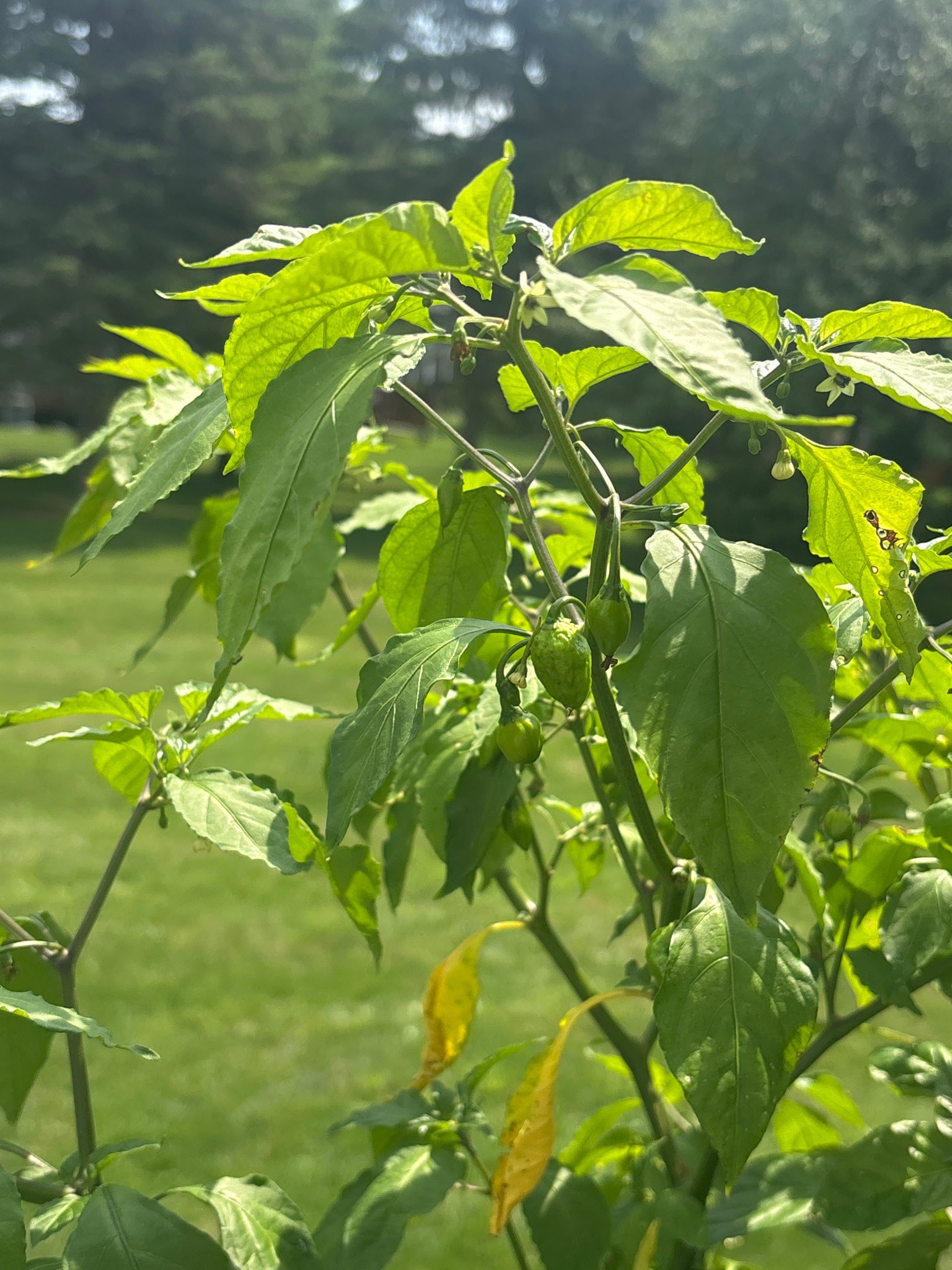
Ghost Pepper
Capsicum chinense
An upright, branching herbaceous shrub featuring dark green, alternate oval leaves, small white or greenish-white star-shaped flowers, and distinctive wrinkled, pendant-shaped immature green fruits that transition in color as they mature.
- Light
- Full sun, requiring a minimum of six to eight hours of direct sunlight daily
- Water
- Moderate watering needs. Keep the soil evenly moist but never waterlogged. Allow the topsoil to dry slightly between watering sessions. Avoid overhead watering to prevent foliage moisture issues.
- Growth
- A bushy, semi-woody annual or short-lived perennial shrub growing upright to a height of 2 to 4 feet with a spread of 2 to 3 feet, exhibiting a moderate growth rate
Care instructions
Provide full sun exposure for at least six to eight hours daily. Water deeply when the top inch of soil feels dry, allowing excess to drain freely. Maintain consistently warm temperatures and apply a balanced, slow-release fertilizer during the active growing season.
Growing details
Sunlight
Full sun, requiring a minimum of six to eight hours of direct sunlight daily
Watering
Moderate watering needs. Keep the soil evenly moist but never waterlogged. Allow the topsoil to dry slightly between watering sessions. Avoid overhead watering to prevent foliage moisture issues.
Soil
Well-draining, fertile loamy soil enriched with organic matter, with an optimal pH range between 6.0 and 6.8
Hardiness zone
USDA hardiness zones 9 through 11 as a perennial, commonly grown as an annual in cooler temperate climates
Growth habit
A bushy, semi-woody annual or short-lived perennial shrub growing upright to a height of 2 to 4 feet with a spread of 2 to 3 feet, exhibiting a moderate growth rate
Bloom season
Blooms from late spring through summer, producing small, pendulous, white to yellowish-white solitary or paired star-shaped flowers
Propagation
Propagated primarily from seeds sown indoors 8 to 10 weeks before the last expected spring frost, kept at warm soil temperatures of 70 to 80 degrees Fahrenheit until germination occurs
Common pests & issues
Susceptible to common garden pests such as aphids, spider mites, and whiteflies, as well as fungal diseases like root rot and powdery mildew caused by excess moisture or poor soil drainage
Similar species
Other members of the Capsicum chinense species, such as the Habanero, which share similar vegetative growth habits, leaf shapes, and flower structures, differing primarily in mature fruit shape, texture, and coloration