
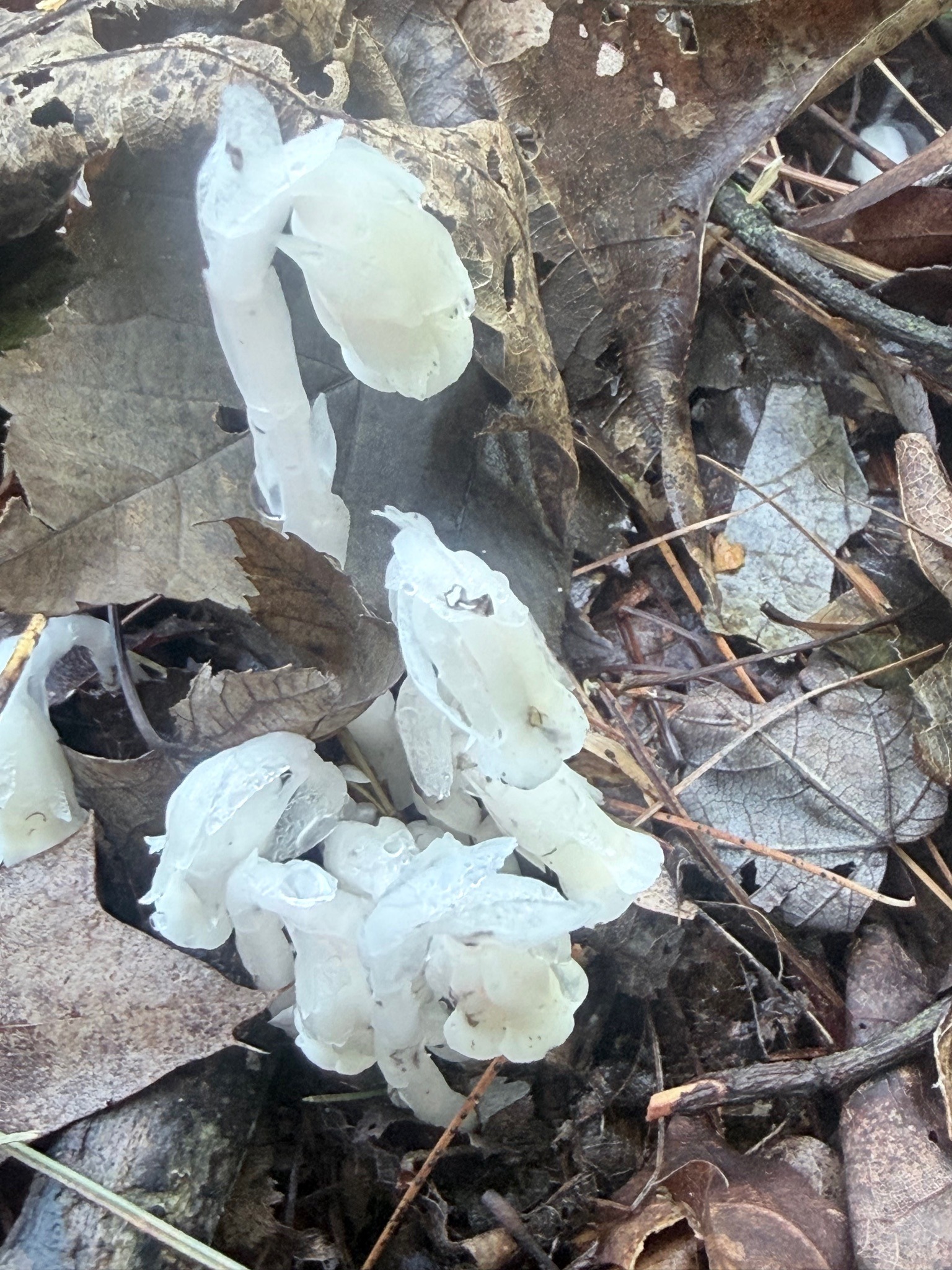
Ghost Pipe
Monotropa uniflora
Ghost Pipe is a unique, perennial herbaceous plant that lacks chlorophyll, giving it a ghostly, translucent white appearance. It features waxy stems covered in small scale-like leaves and produces a single nodding bell-shaped flower at the apex of each stem.
- Light
- Requires deep shade found under dense forest canopies, as direct sunlight can damage its delicate tissues.
- Water
- Relies on the natural moisture of the woodland leaf litter and soil ecosystem where it grows.
- Growth
- Perennial herbaceous plant that emerges from underground rhizomes, growing up to 10 to 30 centimeters tall in small clustered colonies.
Care instructions
Ghost Pipe is a myco-heterotrophic plant that derives its nutrients from fungi attached to tree roots rather than through photosynthesis. Because of this complex symbiotic relationship, it cannot be successfully cultivated in traditional gardens or standard potting soil.
Growing details
Sunlight
Requires deep shade found under dense forest canopies, as direct sunlight can damage its delicate tissues.
Watering
Relies on the natural moisture of the woodland leaf litter and soil ecosystem where it grows.
Soil
Thrives in rich, acidic forest humus and damp leaf mold with high organic matter content.
Hardiness zone
USDA Hardiness Zones 3 through 9
Growth habit
Perennial herbaceous plant that emerges from underground rhizomes, growing up to 10 to 30 centimeters tall in small clustered colonies.
Bloom season
Flowers from early summer to autumn, featuring waxy white or pale pinkish nodding bell-shaped flowers that eventually turn black as they age and set seed.
Propagation
Propagation is extremely difficult outside of its native subterranean fungal network, as it requires specific mycorrhizal fungi and tree hosts to germinate and grow.
Common pests & issues
Generally not subject to typical garden pests or diseases, but highly sensitive to any disturbance of its native woodland floor habitat.
Similar species
Pinedrops (Pterospora andromedea) is another non-chlorophyll plant, but it is taller, yellowish-brown to reddish-brown, and produces multiple flowers on a raceme rather than a single flower per stem.