
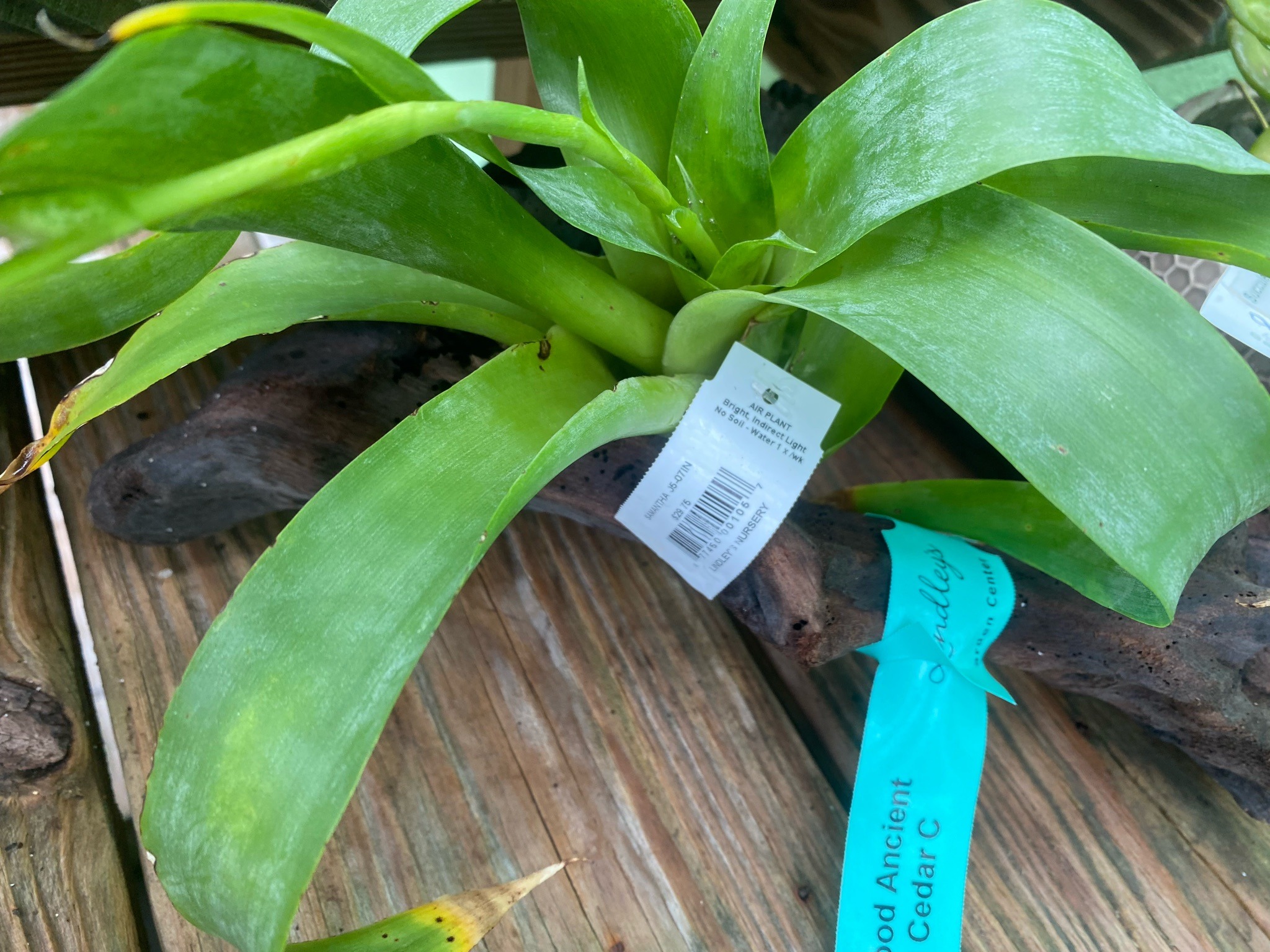
Giant Air Plant
Tillandsia utriculata
A large epiphytic perennial featuring a central rosette of wide, light green leaves attached to a piece of driftwood, with no traditional soil requirements.
- Light
- Bright, indirect light for 6 to 8 hours daily; protect from harsh direct outdoor sunlight.
- Water
- Mist or soak thoroughly once per week depending on ambient humidity; allow to dry completely between waterings.
- Growth
- Epiphytic rosette-forming perennial growing up to 1 to 2 feet across with a slow to moderate growth rate.
Care instructions
Mount on wood or bark in bright, indirect light. Mist or submerge in water weekly, ensuring good airflow so the center does not retain excess water.
Growing details
Sunlight
Bright, indirect light for 6 to 8 hours daily; protect from harsh direct outdoor sunlight.
Watering
Mist or soak thoroughly once per week depending on ambient humidity; allow to dry completely between waterings.
Soil
None required as an epiphyte; can be mounted on bark, wood, or grown in an open, highly porous orchid mix if container-grown.
Hardiness zone
USDA zones 9 to 11 when grown outdoors; typically kept indoors in cooler climates.
Growth habit
Epiphytic rosette-forming perennial growing up to 1 to 2 feet across with a slow to moderate growth rate.
Bloom season
Blooms once in its lifetime after several years, producing a tall central spike with pale green or yellowish flowers.
Propagation
Propagated by offsets (pups) that form around the base of the mother plant after flowering, which can be gently separated once they reach one-third the size of the parent.
Common pests & issues
Susceptible to rot if water is allowed to pool in the center rosette for extended periods; can occasionally attract mealybugs or scale insects.
Similar species
Tillandsia fasciculata, which generally features a more rigid, upright flower spike and stiffer, more densely overlapping leaves.