
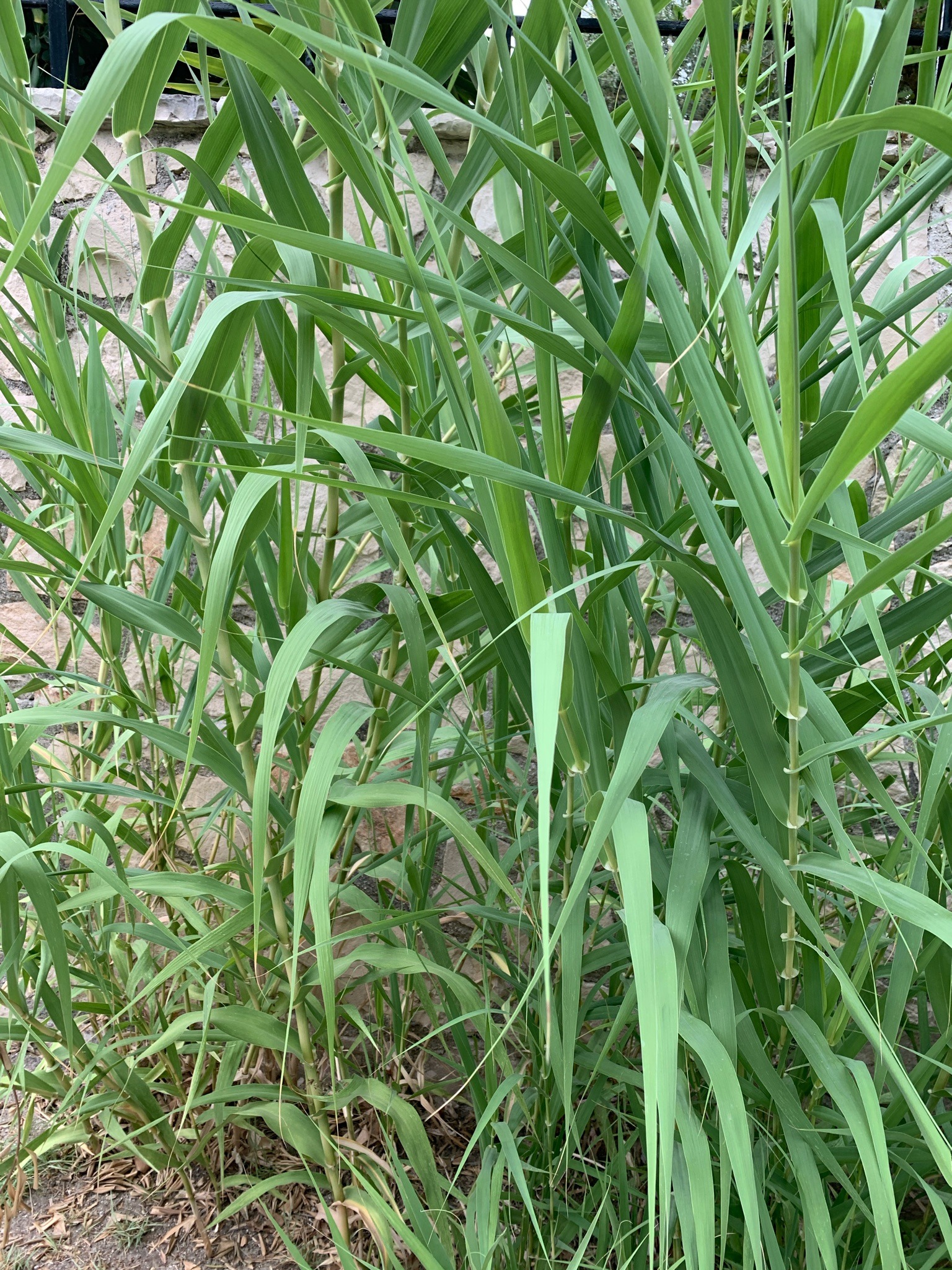
Giant Reed
Arundo donax
A tall, robust, perennial grass with thick, hollow stems resembling bamboo, featuring broad, lance-shaped alternate leaves and large plume-like flower heads.
- Light
- Full sun, requiring at least 6 to 8 hours of direct sunlight per day.
- Water
- High water requirements, especially during the active growing season. Prefers damp or marshy soil conditions.
- Growth
- Perennial grass with an upright, cane-like growth habit, reaching mature heights of 10 to 20 feet (3 to 6 meters) with a vigorous spreading root system.
Care instructions
Grow in full sun with consistently moist to wet soil. Tolerates occasional dry periods once established. Minimal fertilization is needed.
Growing details
Sunlight
Full sun, requiring at least 6 to 8 hours of direct sunlight per day.
Watering
High water requirements, especially during the active growing season. Prefers damp or marshy soil conditions.
Soil
Adapts to a wide range of soil types including clay, loam, and sand, provided there is adequate moisture. Prefers a neutral to slightly alkaline pH.
Hardiness zone
USDA hardiness zones 7 through 10
Growth habit
Perennial grass with an upright, cane-like growth habit, reaching mature heights of 10 to 20 feet (3 to 6 meters) with a vigorous spreading root system.
Bloom season
Late summer to autumn, producing large, feathery, brownish or purplish panicles that can reach up to 2 feet in length.
Propagation
Propagated primarily through rhizome division or stem cuttings, as viable seed production is rare in many regions.
Common pests & issues
Generally resistant to severe pests and diseases, though it can occasionally be affected by aphids or fungal rusts in overly humid conditions.
Similar species
Bamboo and Common Reed (Phragmites australis). Arundo donax is distinguished from bamboos by its herbaceous stems that die back or slow growth in winter, and from Phragmites by its much broader leaves and taller, thicker stems.